Introduction
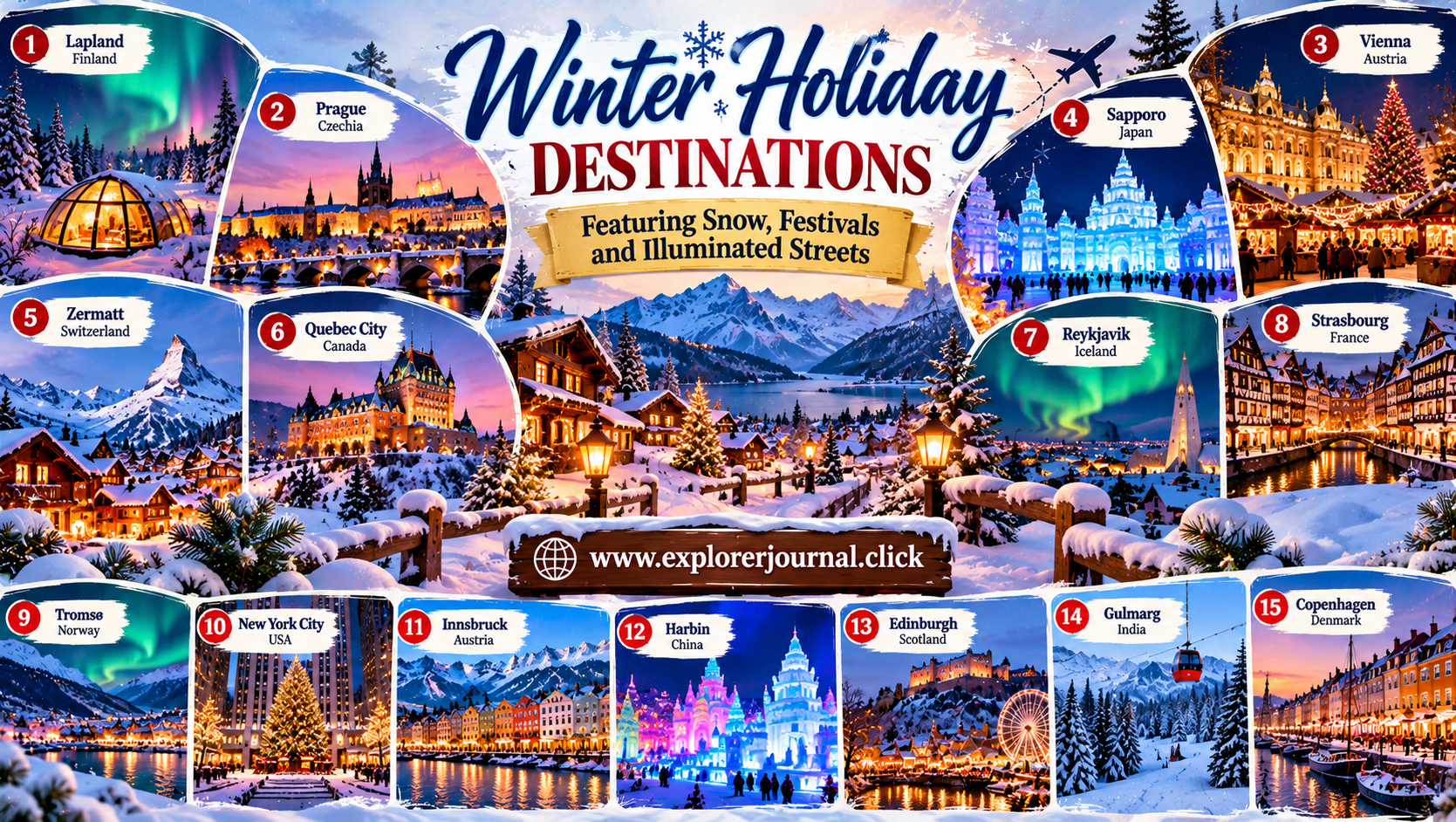
Winter is one of the most magical seasons to explore the world, offering snow-covered landscapes, colorful festivals, festive markets, and streets illuminated by thousands of sparkling lights. From charming European villages surrounded by mountains to lively Asian cities celebrating seasonal traditions, winter destinations provide experiences that feel completely different from those of other seasons.
Some travelers dream of skiing across snowy slopes, while others prefer wandering through decorated streets, enjoying warm drinks at traditional markets, or watching fireworks during winter celebrations. There are also destinations where visitors can experience the Northern Lights, explore frozen lakes, or discover cultural festivals that bring communities together during the coldest months.
Choosing the right winter holiday depends on your interests, travel budget, preferred climate, and available time. Whether you want a snowy adventure, a peaceful mountain escape, or a lively city break filled with lights and celebrations, these destinations offer memorable opportunities for winter travel.
1. Lapland, Finland
Lapland is an extraordinary winter destination known for snow-covered forests, frozen lakes, traditional Finnish experiences, and opportunities to witness the Northern Lights. Located in northern Finland, the region attracts travelers seeking an authentic Arctic atmosphere.
Rovaniemi is a popular starting point, particularly for families interested in visiting Santa Claus Village. Visitors can also enjoy husky sledding, reindeer experiences, snowshoeing, and guided excursions into the surrounding wilderness. Glass-roofed accommodation provides another way to appreciate the winter landscape while watching the night sky.
December brings a festive atmosphere, although January and February can offer excellent snowy scenery as well. Temperatures can fall significantly below freezing, so insulated clothing is essential. Booking accommodation and popular activities early helps travelers manage costs during the busiest holiday period.
2. Prague, Czechia
Prague becomes especially charming during winter, when its historic streets, Gothic towers, and picturesque squares provide a beautiful setting for seasonal celebrations. The Czech capital combines architectural heritage with festive markets and traditional food.
Old Town Square is a major attraction during the Christmas season, featuring decorated stalls, seasonal treats, and a large Christmas tree. Visitors can explore Prague Castle, walk across Charles Bridge, and discover historic neighborhoods illuminated by winter lights.
Local specialties such as roasted meats, pastries, and warm drinks add to the seasonal experience. Snowfall is possible but not guaranteed, so travelers should appreciate Prague for its architecture and festive atmosphere rather than expecting constant snow. Warm clothing and comfortable footwear make sightseeing more enjoyable.
3. Vienna, Austria
Vienna is an excellent destination for travelers who enjoy elegant architecture, classical music, festive markets, and beautifully decorated streets. During winter, the Austrian capital transforms many of its public squares into seasonal gathering places.
The Christmas markets around Rathausplatz and Schönbrunn Palace are especially popular. Visitors can browse handmade decorations, enjoy traditional pastries, and sample warm seasonal drinks while admiring the surrounding architecture.
Beyond the markets, Vienna offers historic palaces, museums, concert halls, and traditional coffeehouses. Attending a classical performance or spending an afternoon in a café can provide a relaxing break from cold weather. December is particularly festive, while January offers opportunities to explore cultural attractions after the busiest holiday period.
4. Sapporo, Japan
Sapporo, located on Japan’s northern island of Hokkaido, is famous for heavy snowfall, winter food traditions, and its spectacular Snow Festival. The city provides a distinctive combination of modern urban attractions and snowy landscapes.
The Sapporo Snow Festival typically takes place in February, displaying enormous snow and ice sculptures across designated venues. These creations range from artistic figures to elaborate architectural replicas, attracting visitors from around the world.
Travelers can also enjoy local ramen, seafood markets, and nearby ski resorts. Winter illuminations add color to selected areas, creating attractive evening photography opportunities. Because snowfall can affect transportation, visitors should allow extra time for airport transfers and check local weather conditions before traveling.
5. Zermatt, Switzerland
Zermatt is a beautiful alpine destination situated beneath the iconic Matterhorn. Its snow-covered mountains, traditional chalets, and scenic railway journeys make it especially appealing to winter travelers.
Skiing and snowboarding are major attractions, but visitors do not need to participate in winter sports to enjoy the scenery. Mountain railways and cable cars provide access to panoramic viewpoints, while village streets offer restaurants, shops, and comfortable places to relax.
The car-free village has a distinctive atmosphere, particularly during snowy evenings when warm lights illuminate wooden buildings. Switzerland can be expensive, so travelers should compare accommodation, lift passes, and dining options in advance. Booking early is especially useful during popular holiday periods.
6. Quebec City, Canada
Quebec City offers a memorable winter experience through its historic architecture, French-Canadian culture, snowy streets, and seasonal celebrations. Its old town features stone buildings, narrow lanes, and the famous Château Frontenac overlooking the St. Lawrence River.
Winter brings opportunities for ice skating, snow activities, and visits to festive markets. The Quebec Winter Carnival, generally held in late January and February, features parades, snow sculptures, outdoor entertainment, and traditional seasonal celebrations.
Visitors can enjoy regional cuisine in cozy restaurants and explore the city’s historic attractions between outdoor activities. Temperatures can become extremely cold, so layered clothing, insulated boots, and warm accessories are essential for comfortable sightseeing.
7. Reykjavik, Iceland
Reykjavik provides an excellent base for exploring Iceland’s dramatic winter scenery. The capital combines colorful buildings, cultural attractions, geothermal bathing experiences, and access to landscapes shaped by volcanoes, glaciers, and waterfalls.
During winter, visitors can join guided excursions to search for the Northern Lights, explore selected sections of the Golden Circle, or relax in geothermal pools. The city’s streets and waterfront areas offer opportunities for evening walks and photography.
Snowfall in Reykjavik varies, and weather conditions can change rapidly. Travelers should check road information before taking trips outside the city, particularly during storms or icy conditions. Warm waterproof clothing and flexible itineraries help make a winter visit more enjoyable.
8. Strasbourg, France
Strasbourg is one of Europe’s most attractive Christmas destinations, combining traditional Alsatian architecture with festive markets and seasonal decorations. Its historic center features timber-framed houses, canals, and narrow streets that become particularly picturesque during winter.
The city’s Christmas market is among its best-known seasonal attractions. Visitors can explore decorated stalls, purchase handmade gifts, and sample regional specialties such as bredele biscuits and traditional Alsatian dishes.
Strasbourg Cathedral provides an impressive architectural centerpiece, while the Petite France district offers scenic walking routes beside historic buildings and waterways. Winter temperatures can be cold and damp, so suitable clothing is useful. Traveling by train makes Strasbourg convenient to combine with other European destinations.
9. Tromsø, Norway
Tromsø is a popular destination for travelers hoping to experience Arctic winter scenery and the Northern Lights. Located in northern Norway, the city is surrounded by mountains, fjords, and coastal landscapes.
Visitors can join guided aurora excursions, experience dog sledding, explore Arctic museums, and enjoy traditional Norwegian food. Snow-covered surroundings create excellent photography opportunities, while guided tours help travelers search for clearer skies away from urban lighting.
The main aurora-viewing season generally extends from autumn through early spring. However, sightings depend on darkness, cloud cover, and solar activity. Spending several nights in Tromsø can improve viewing opportunities, although no sighting is guaranteed. Warm clothing is essential for extended periods outdoors.
10. New York City, United States
New York City becomes especially lively during the winter holiday season, when illuminated streets, decorated department stores, and seasonal attractions transform its famous neighborhoods.
The Rockefeller Center Christmas tree and nearby ice-skating rink are major attractions, while Fifth Avenue is known for elaborate window displays. Visitors can also explore holiday markets, attend Broadway performances, and enjoy seasonal food across the city’s diverse neighborhoods.
Snow sometimes creates beautiful urban scenery, although winter weather varies from year to year. New York can be expensive during December, so travelers should compare accommodation prices and book popular attractions early. Public transportation makes it convenient to explore different neighborhoods without renting a car.
11. Innsbruck, Austria
Innsbruck combines historic architecture with immediate access to the Austrian Alps, making it an excellent destination for travelers who want both city attractions and mountain adventures.
The historic center features colorful buildings, traditional markets, and the famous Golden Roof. During winter, visitors can explore festive streets before taking a cable car toward surrounding mountain viewpoints.
Skiing and snowboarding are popular nearby, but scenic mountain excursions also appeal to visitors who prefer relaxed sightseeing. Innsbruck’s Christmas markets add seasonal charm, while local restaurants serve traditional Austrian dishes. The city’s convenient public transportation makes it relatively easy to combine urban exploration with outdoor activities.
12. Harbin, China
Harbin is famous for its dramatic winter temperatures, Russian-influenced architecture, and large-scale ice and snow attractions. Located in northeastern China, the city becomes a major winter destination for visitors interested in elaborate illuminated sculptures.
The Harbin International Ice and Snow Festival features enormous ice structures, artistic displays, and colorful lighting. Visitors can explore ice-themed attractions, photograph illuminated installations, and experience local winter food traditions.
Harbin’s historic streets also provide opportunities to admire distinctive architecture and discover regional culture. Temperatures can become exceptionally low, so high-quality thermal clothing, gloves, and insulated footwear are essential. Festival dates and attraction arrangements should be confirmed before booking.
13. Edinburgh, Scotland
Edinburgh offers a distinctive winter atmosphere through its historic castle, medieval streets, seasonal markets, and cultural celebrations. The Scottish capital combines architectural beauty with lively public events during the festive season.
Edinburgh’s Christmas celebrations often include market stalls, amusement attractions, seasonal food, and illuminated streets. The city’s historic center provides beautiful views, while museums and galleries offer indoor activities during colder weather.
Hogmanay, Scotland’s New Year celebration, is another major attraction, featuring cultural events and public festivities subject to the year’s program. Visitors should book accommodation early because demand rises during this period. Warm, waterproof clothing is useful for exploring the city’s hills and cobbled streets.
14. Gulmarg, India
Gulmarg in Jammu and Kashmir is one of India’s most famous winter destinations, known for snowy mountain landscapes, skiing opportunities, and panoramic views of the Himalayas.
The region attracts travelers who want to experience snow without traveling internationally. Visitors can enjoy gondola rides when operating, explore designated snow activities, and appreciate the surrounding pine forests and mountain scenery.
Winter conditions can change quickly, and heavy snowfall may affect transport and activity schedules. Travelers should check official weather updates and choose qualified operators for skiing or other adventure activities. Warm clothing, waterproof boots, and advance accommodation planning are particularly important during peak winter periods.
15. Copenhagen, Denmark
Copenhagen offers a relaxed Scandinavian winter experience, combining historic architecture, cozy cafés, seasonal markets, and beautifully illuminated public spaces. The city is particularly appealing to travelers who appreciate design, food, and cultural attractions.
Tivoli Gardens often features seasonal decorations and festive entertainment during its winter holiday opening periods. Visitors can explore Nyhavn’s colorful waterfront buildings, browse local shops, and enjoy Danish pastries in traditional cafés.
Snowfall is possible but not guaranteed, so the city’s appeal rests equally on its architecture, food culture, and festive atmosphere. Public transportation and cycling infrastructure make getting around convenient, although winter weather may affect outdoor plans. Comfortable waterproof clothing helps visitors enjoy the city throughout the season.
Tips for Planning a Winter Holiday
A successful winter holiday begins with choosing a destination that matches your expectations. Travelers seeking snow should research typical seasonal conditions, while those interested in festivals should confirm event dates before booking flights and accommodation.
Packing suitable clothing is essential. Thermal layers, insulated jackets, waterproof footwear, gloves, and warm accessories can make outdoor activities much more comfortable. In colder destinations, carrying extra layers is useful because temperatures can change considerably between daytime sightseeing and evening excursions.
Transportation also deserves attention. Snowstorms may affect flights, trains, and mountain roads, so flexible schedules and travel insurance can provide additional protection. Travelers planning winter driving should check local regulations and ensure that vehicles are properly equipped for icy conditions.
Finally, reserve popular attractions and accommodation early, especially around Christmas, New Year, and major winter festivals. Comparing prices and traveling outside peak dates may help reduce expenses without sacrificing the overall experience.
Conclusion
Winter holiday destinations offer a wonderful combination of snow-covered landscapes, cultural celebrations, festive markets, and illuminated streets. From Lapland’s Arctic scenery and Vienna’s Christmas markets to Sapporo’s snow sculptures and Quebec City’s historic winter atmosphere, every destination offers a different way to experience the season.
Some places are ideal for adventure, while others invite visitors to enjoy food, architecture, music, and relaxed evenings beneath sparkling lights. By considering seasonal conditions, personal interests, and travel budgets, you can choose a destination that matches your ideal winter escape.
With careful preparation and an open mind, a winter holiday can become much more than a seasonal break. It can be an opportunity to discover new traditions, appreciate beautiful landscapes, and create lasting memories in some of the world’s most enchanting destinations.