Introduction
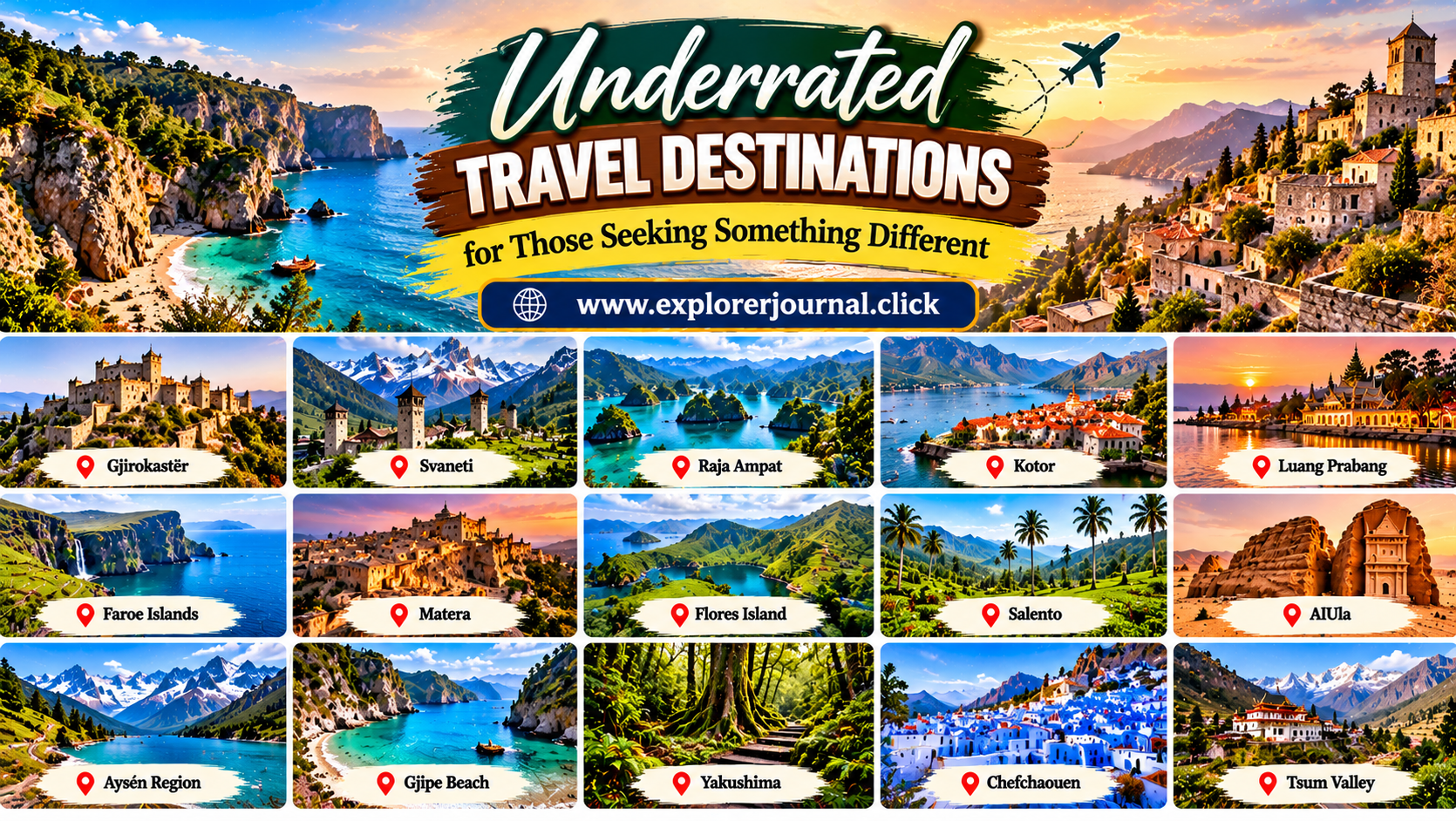
Traveling is an opportunity to discover unfamiliar cultures, explore extraordinary landscapes, and experience places that feel different from everyday life. While famous destinations attract millions of visitors every year, some of the world’s most rewarding travel experiences can be found in lesser-known locations. These underrated destinations offer beautiful scenery, distinctive traditions, fascinating history, and opportunities to explore without following the usual tourist crowds.
Choosing a less familiar destination does not mean sacrificing comfort or memorable experiences. Many overlooked places feature charming accommodation, excellent local cuisine, historic architecture, and outdoor adventures. From peaceful mountain villages and remote islands to colorful historic towns and unusual natural landscapes, these destinations appeal to travelers who value discovery over popularity.
Exploring underrated destinations can also help travelers support local communities and discover different perspectives on the world. With thoughtful planning, the following places offer inspiring alternatives for anyone seeking a more distinctive travel experience.
1. Gjirokastër, Albania
Gjirokastër is a historic town in southern Albania known for its stone-roofed houses, cobbled streets, and impressive hilltop castle. Its traditional architecture creates an atmosphere that feels connected to another era, while the surrounding mountains add to its visual appeal.
Visitors can explore the old bazaar, discover local museums, and learn about the region’s Ottoman-era architectural influences. The castle offers panoramic views across the valley, making it an excellent location for photography. Traditional Albanian restaurants serve regional dishes that provide another way to understand local culture.
Compared with many popular European destinations, Gjirokastër can offer a more relaxed atmosphere. Travelers can combine it with nearby villages and natural attractions for a rewarding journey through southern Albania.
2. Svaneti, Georgia
Svaneti is a mountainous region in northwestern Georgia, celebrated for dramatic Caucasus peaks, medieval defensive towers, and traditional villages. Its remote setting makes it especially appealing to travelers interested in hiking, photography, and cultural discovery.
Mestia serves as a convenient base for exploring the region. Visitors can discover Svan traditions, admire historic architecture, and undertake walking routes through valleys surrounded by snow-covered mountains. Ushguli, one of Europe’s highest permanently inhabited settlements, is another remarkable destination when access conditions permit.
Summer generally offers favorable conditions for hiking, while winter brings snow and more demanding travel conditions. Because mountain weather changes quickly, travelers should check local forecasts and use experienced guides for challenging routes.
3. Raja Ampat, Indonesia
Raja Ampat is an extraordinary archipelago in eastern Indonesia, known for turquoise lagoons, limestone islands, coral reefs, and remarkable marine biodiversity. Although it has gained recognition among diving enthusiasts, it remains less accessible than many mainstream Southeast Asian beach destinations.
Visitors can explore the surrounding waters through snorkeling, diving, kayaking, and guided boat excursions. Above the surface, forest-covered islands and dramatic rock formations create spectacular scenery. Local communities also offer opportunities to learn about regional traditions and conservation efforts.
Reaching Raja Ampat requires careful transportation planning, and accommodation choices may be more limited than in major resort areas. Travelers should select responsible operators, respect marine environments, and avoid touching coral or disturbing wildlife.
4. Kotor, Montenegro
Kotor is a beautiful historic town on Montenegro’s Adriatic coast, surrounded by dramatic mountains and the deep blue waters of the Bay of Kotor. Its medieval streets, stone buildings, and fortified walls make it an attractive destination for travelers who enjoy history and coastal scenery.
Visitors can wander through the old town, explore churches and small museums, or climb the historic fortification route for panoramic views. Boat trips provide another perspective on the bay, while nearby communities offer quieter waterfront experiences.
Kotor is particularly appealing during spring and autumn, when temperatures can be pleasant and crowds may be smaller than in peak summer. Exploring early in the morning allows visitors to appreciate the historic streets at a slower pace.
5. Luang Prabang, Laos
Luang Prabang combines traditional Lao culture, Buddhist temples, French colonial architecture, and a peaceful setting beside the Mekong River. Although it is an established cultural destination, it can still feel more relaxed than many heavily visited Asian cities.
Travelers can explore temple complexes, browse local markets, sample traditional dishes, and visit nearby Kuang Si Falls. The town’s riverside location also creates opportunities for scenic boat journeys and sunset photography.
Respect for local customs is important, particularly when visiting temples or observing religious ceremonies. Visitors should dress appropriately and avoid interrupting private worship. Spending several days in Luang Prabang allows time to appreciate its architecture, food culture, and quieter daily rhythms.
6. Faroe Islands, North Atlantic
The Faroe Islands offer dramatic cliffs, green mountains, remote villages, and waterfalls that descend toward the ocean. Located between Iceland and Norway, this North Atlantic archipelago is ideal for travelers seeking striking landscapes and a quieter atmosphere.
Visitors can explore coastal walking routes, photograph traditional grass-roofed houses, and discover villages surrounded by rugged scenery. Birdwatching is another attraction, particularly in areas known for seabird colonies during suitable seasons.
Weather can change rapidly, with strong winds, fog, and rain affecting outdoor plans. Travelers should wear waterproof clothing, follow marked paths, and avoid exposed cliffs during dangerous conditions. Flexible scheduling helps make the most of the islands’ unpredictable but beautiful environment.
7. Matera, Italy
Matera is one of southern Italy’s most distinctive historic destinations, famous for its ancient cave dwellings and stone-built neighborhoods. Its Sassi districts contain homes, churches, and pathways carved into limestone, creating a remarkable architectural landscape.
Visitors can explore historic cave churches, discover museums, and learn how residents adapted to the region’s rocky environment over centuries. The town’s layered architecture provides exceptional photography opportunities, especially when evening light illuminates the stone buildings.
Matera also offers a strong food culture, with regional breads, pasta dishes, and local specialties available in traditional restaurants. Walking through the old districts is the best way to appreciate the destination, although comfortable shoes are useful because many streets are steep and uneven.
8. Flores Island, Portugal
Flores, part of Portugal’s Azores archipelago, is known for waterfalls, green cliffs, volcanic landscapes, and natural swimming areas. Its relatively remote Atlantic location makes it appealing to travelers seeking outdoor experiences away from large tourist centers.
The island features scenic walking routes, freshwater lakes, and dramatic coastal viewpoints. Waterfalls descend through lush vegetation, while the surrounding ocean provides constantly changing colors and atmospheric views.
Travelers can explore by car, join guided excursions, or follow marked hiking trails. Because weather and transport schedules can change, it is wise to allow flexibility and confirm inter-island connections. Respecting local conservation rules helps protect the island’s fragile ecosystems.
9. Salento, Colombia
Salento is a colorful town in Colombia’s coffee-growing region, surrounded by green hills, agricultural landscapes, and the towering wax palms of the Cocora Valley. Its combination of rural scenery and cultural traditions makes it an appealing alternative to Colombia’s larger cities.
Visitors can explore traditional streets, discover local coffee farms, and learn about coffee production from cultivation to preparation. Hiking in the Cocora Valley provides opportunities to admire unusual palm forests and mountain scenery.
The town also offers regional food, artisan shops, and comfortable small guesthouses. Travelers should prepare for rain and changing temperatures, particularly when hiking. Guided visits can provide useful insight into local farming practices and environmental conservation.
10. AlUla, Saudi Arabia
AlUla is an extraordinary destination in northwestern Saudi Arabia, known for sandstone formations, desert landscapes, archaeological remains, and historic settlements. Its distinctive natural scenery and cultural heritage make it an increasingly interesting choice for travelers seeking something different.
Hegra, an important archaeological site associated with the Nabataean civilization, features monumental tombs carved into sandstone. Visitors can also explore rock formations, historic areas, and designated desert viewpoints through organized excursions.
Because access to certain attractions is regulated, travelers should check current booking requirements and tour arrangements. The climate can become extremely hot, so cooler months are generally more suitable for outdoor exploration. Respecting archaeological sites is essential to preserving their historical value.
11. Aysén Region, Chile
Chile’s Aysén Region offers remote wilderness, turquoise rivers, glaciers, forests, and rugged mountains. Located in northern Patagonia, it is an excellent destination for travelers who enjoy scenic drives, hiking, and outdoor adventures.
The Carretera Austral provides access to many of the region’s landscapes, passing through small settlements and areas of remarkable natural beauty. Visitors can explore national parks, discover lakeside viewpoints, and arrange guided excursions to selected glaciers.
Travel distances can be substantial, and some roads include gravel sections. Travelers should plan fuel stops, confirm ferry schedules where relevant, and allow additional time for weather disruptions. The region rewards those who appreciate slow travel and remote environments.
12. Gjipe Beach, Albania
Gjipe Beach is a scenic coastal destination on Albania’s southern Riviera, known for its clear water, steep cliffs, and relatively undeveloped surroundings. It offers a different atmosphere from busy beach resorts, particularly for travelers who enjoy walking and natural landscapes.
Visitors can reach the beach through a walking route or by suitable local transport arrangements. The surrounding canyon provides opportunities for exploration, while the shoreline is ideal for swimming when sea conditions are safe.
Facilities may be limited compared with larger coastal towns, so visitors should bring water, sun protection, and necessary supplies. Travelers should also avoid leaving rubbish behind and respect the surrounding natural environment.
13. Yakushima, Japan
Yakushima is a forested island in southern Japan, famous for ancient cedar trees, moss-covered trails, waterfalls, and a humid subtropical environment. Its landscapes feel very different from Japan’s large cities and provide excellent opportunities for nature-focused travel.
Hiking is the island’s main attraction, with routes passing through dense forests and mountainous terrain. Some trails lead to ancient cedar trees that have become symbols of Yakushima’s natural heritage. Visitors can also explore coastal scenery and observe local wildlife.
Rain is frequent, so waterproof clothing and appropriate footwear are essential. Hikers should choose routes suited to their experience and check local trail conditions. Staying several days allows travelers to adapt plans around weather and explore different parts of the island.
14. Chefchaouen, Morocco
Chefchaouen is a picturesque mountain town in northern Morocco, famous for its blue-painted buildings, narrow streets, and relaxed atmosphere. Set against the Rif Mountains, it offers a colorful alternative to Morocco’s busier urban destinations.
Visitors can explore the old medina, browse artisan shops, enjoy traditional Moroccan food, and photograph the town’s distinctive architecture. Nearby walking routes provide views across the surrounding hills, while local markets offer opportunities to discover crafts and regional products.
Early mornings are ideal for exploring quieter streets and capturing photographs without heavy crowds. Travelers should respect residents’ privacy when taking pictures and ask permission before photographing people. A few days in Chefchaouen can be combined with visits to other northern Moroccan destinations.
15. Tsum Valley, Nepal
Tsum Valley is a remote Himalayan region in northern Nepal, known for its mountain scenery, Buddhist monasteries, traditional settlements, and peaceful atmosphere. Its location away from many mainstream trekking routes makes it especially appealing to travelers seeking cultural immersion.
Trekking through the valley reveals stone villages, prayer flags, mountain streams, and monasteries that reflect longstanding Tibetan Buddhist traditions. Local communities maintain distinctive customs, and visitors can learn about their way of life through respectful interactions.
The journey requires preparation because of high elevations, limited facilities, and demanding walking conditions. Travelers should use experienced guides, allow time for acclimatization, and obtain any required permits. Visiting responsibly helps support local communities while protecting the region’s cultural and natural heritage.
Tips for Exploring Underrated Destinations
Choosing a less familiar destination requires thoughtful research. Transportation may be limited, accommodation options can be fewer, and some attractions may operate seasonally. Check entry requirements, local travel advice, weather patterns, and available services before booking.
Traveling slowly can improve the experience. Staying several nights in one location allows time to understand local customs, support small businesses, and explore beyond the main attractions. Learning a few local phrases and asking residents for recommendations can also lead to meaningful discoveries.
Responsible tourism is particularly important in remote areas. Follow marked trails, reduce waste, respect religious traditions, and choose guides who support local communities. These simple practices help preserve the qualities that make underrated destinations special.
Conclusion
Underrated travel destinations offer a refreshing alternative to familiar tourist hotspots. From the mountain villages of Georgia and Nepal to the tropical waters of Raja Ampat and the historic streets of Matera, these places reveal the extraordinary diversity of experiences available around the world.
Traveling somewhere less familiar can encourage curiosity, create opportunities for meaningful cultural encounters, and provide a more personal connection with a destination. With careful planning and respect for local communities, these journeys can be rewarding without requiring luxury budgets or complicated itineraries.
For travelers seeking something different, the best destination may be one that has not yet appeared on every travel list. Sometimes the most memorable adventures begin when you choose an unfamiliar road and remain open to the discoveries waiting along the way.