Table of Contents
- Introduction
- Discover Thailand’s Unique Travel Experiences
- Best Thai Islands for a Relaxing Escape
- Experience the Energy of Thailand’s Cities
- Explore Thailand’s Cultural Heritage and Traditions
- Thai Food Every Traveller Should Try
- Best Time to Visit Thailand
- Transportation and Travel Planning Tips
- How to Travel Responsibly in Thailand
- Key Takeaways
- Frequently Asked Questions
- Conclusion
Introduction
Thailand offers a memorable mix of tropical beaches, lively cities, historic temples, colourful markets and welcoming local communities. Whether you want to spend quiet mornings beside turquoise water or enjoy exciting evenings in a busy city, the country provides plenty of ways to shape your journey.
For many travellers, Thailand stands out because different experiences fit naturally into one holiday. You can begin with a few days on a peaceful island, continue to Bangkok for street food and shopping, and finish in northern Thailand among traditional villages and mountain landscapes.
However, the country offers much more than its famous beaches and nightlife. Its regional cuisines, Buddhist temples, festivals and everyday customs reveal a deeper side of Thai life. Understanding these traditions can make your visit more rewarding.
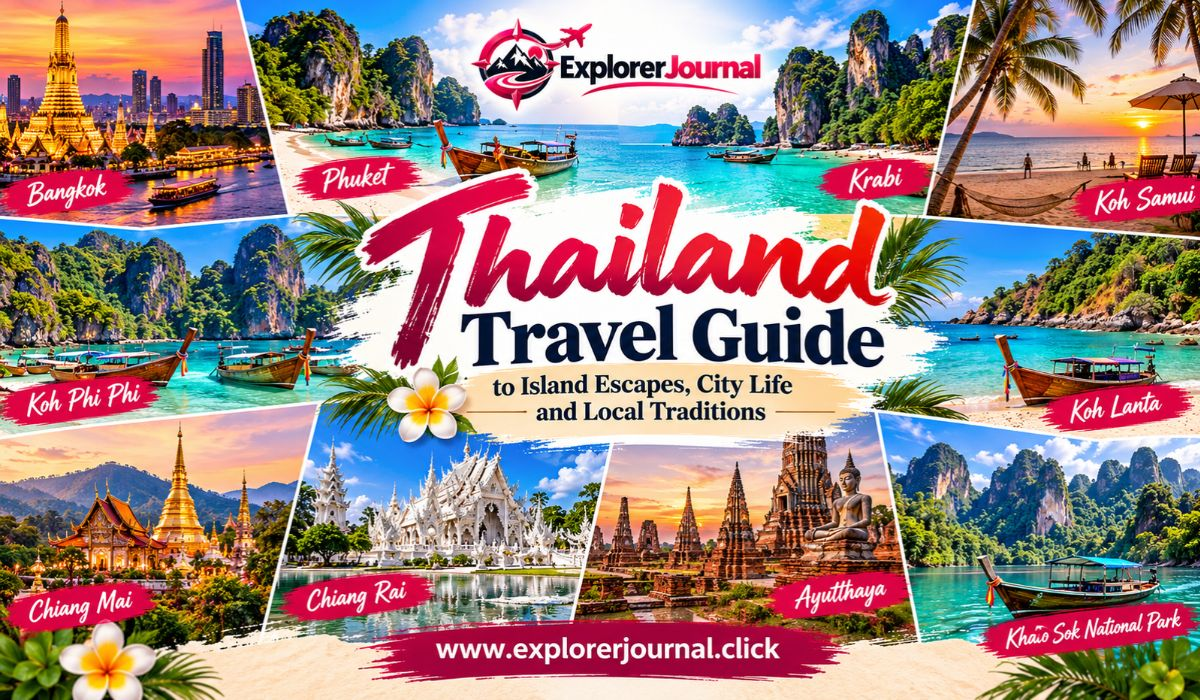
This Thailand travel guide to island escapes, city life and local traditions explains where to go, what to experience, when to travel and how to plan a trip that balances relaxation with cultural discovery.
1. Discover Thailand’s Unique Travel Experiences
Thailand sits in Southeast Asia and has a varied landscape that includes tropical islands, forested mountains, fertile plains and large urban centres. Each region offers a different atmosphere, so choosing destinations that complement one another can improve your travel experience.
Southern Thailand attracts visitors with its beaches, limestone cliffs and clear waters. Meanwhile, central Thailand combines historic landmarks with modern city life, while the northern region offers mountain scenery, traditional crafts and distinctive food.
Bangkok is often the starting point for international travellers. From there, domestic flights, trains, buses and ferries can connect you with other parts of the country.
First-time visitors should avoid squeezing too many destinations into a short holiday. Instead, choose two or three areas and allow enough time to enjoy each one without constantly packing and travelling.
2. Best Thai Islands for a Relaxing Escape
Thailand’s islands appeal to different types of travellers. Some are known for their lively nightlife, while others suit families, couples, snorkellers and visitors seeking quieter surroundings.
Phuket: Beaches, Culture and Entertainment
Phuket is one of Thailand’s best-known island destinations. It combines beach resorts, boat excursions, local markets, seafood restaurants and a historic old town.
Patong attracts visitors looking for nightlife and entertainment. In contrast, beaches such as Kata and Karon offer opportunities to swim, relax and enjoy coastal scenery when conditions are suitable.
Phuket Old Town deserves attention as well. Its colourful Sino-Portuguese buildings, cafés and local shops provide a different perspective on the island beyond its resort areas.
Because Phuket is relatively large, travellers should consider where they stay before booking accommodation. Choosing a location close to preferred beaches and activities can reduce travel time.
Koh Samui: Comfort and Tropical Scenery
Koh Samui is popular with travellers seeking comfortable accommodation, palm-lined beaches and a variety of leisure activities. The island features beachside restaurants, wellness retreats, waterfalls and cultural attractions.
Chaweng is known for its restaurants, shopping and entertainment, whereas quieter coastal areas can suit visitors who prefer a slower pace.
Travellers can also visit temples and explore the island’s inland scenery. For a balanced itinerary, combine beach time with a local market visit or a short excursion around the island.
Krabi and Railay: Limestone Cliffs and Natural Beauty
Krabi, on Thailand’s Andaman coast, provides access to dramatic limestone formations, beaches and island-hopping excursions. Railay is particularly appealing because its towering cliffs create a striking coastal setting.
Visitors can enjoy kayaking, rock climbing, boat trips and walks between scenic beaches. Railay is accessible by boat, which adds to its distinctive atmosphere.
Nearby islands, including the Phi Phi Islands, are popular for their clear waters and dramatic landscapes. However, these locations can become crowded during peak travel periods. Arriving early or choosing less-busy excursions can create a more comfortable experience.
Koh Lanta: A Slower Island Experience
Koh Lanta is worth considering if you prefer a relaxed atmosphere over busy entertainment districts. The island offers long beaches, small restaurants, coastal viewpoints and access to marine activities.
It works particularly well for travellers who want to spend several days in one place rather than change accommodation frequently.
Before planning snorkelling or diving trips, check seasonal conditions and marine park access. Weather, sea conditions and local conservation rules can affect available activities.
3. Experience the Energy of Thailand’s Cities
Thailand’s cities reveal another side of the country. Modern shopping areas, historic neighbourhoods, street markets and traditional temples often exist within a short journey of one another.
Bangkok: A City of Contrasts
Bangkok brings together contemporary urban life and long-standing cultural traditions. Visitors can explore grand temples, riverside communities, shopping centres, night markets and neighbourhood food stalls.
The Grand Palace is among the city’s most recognisable attractions. Wat Pho is famous for its Reclining Buddha, while Wat Arun stands out for its riverside setting and distinctive architecture.
A boat ride along the Chao Phraya River provides a different view of the city. It can also help visitors reach selected riverside attractions without relying entirely on road transport.
Food is another major reason to spend time in Bangkok. From small noodle shops to modern restaurants, the city offers a wide range of regional Thai dishes and international cuisine.
Bangkok traffic can be heavy, especially during commuting hours. Using the BTS Skytrain, MRT metro and river boats where practical can make sightseeing easier.
Chiang Mai: Heritage and Northern Thai Culture
Chiang Mai offers a more relaxed urban atmosphere, with historic temples, traditional markets and access to northern Thailand’s mountain scenery.
The Old City is a useful starting point for exploring temples and historic streets. Wat Phra Singh and Wat Chedi Luang are among its notable religious landmarks.
Night markets provide opportunities to sample local dishes, browse handicrafts and observe everyday community life. Travellers interested in traditional arts can also look for locally operated workshops featuring textiles, ceramics or other regional crafts.
Chiang Mai is an excellent base for day trips into the surrounding countryside. Choose responsible activities that respect local communities and avoid attractions that exploit wildlife.
Ayutthaya: A Journey Through Thai History
Ayutthaya, the former capital of the Kingdom of Siam, is known for its historic ruins and Buddhist monuments. Its archaeological park contains the remains of temples, palaces and other structures that reflect the city’s former importance.
Visitors can explore selected sites by bicycle, tuk-tuk or local transport. Because the historical area covers a substantial area, planning a route before arrival helps make the most of a day trip.
Ayutthaya is particularly suitable for travellers who want to understand Thailand’s history beyond its modern cities and beach resorts.
4. Explore Thailand’s Cultural Heritage and Traditions
Thai culture is shaped by regional history, Buddhist traditions, family relationships, local craftsmanship and community celebrations. Taking time to understand these customs helps visitors engage respectfully with the places they visit.
Visit Temples Respectfully
Temples, commonly called wats, are important religious and community spaces. Visitors should dress modestly, covering their shoulders and knees where required, and remove their shoes before entering designated areas.
Remain quiet during prayer and avoid disturbing people who are worshipping. Follow signs and photography restrictions, particularly around sacred objects.
The traditional Thai greeting, known as the wai, involves placing the palms together and inclining the head. A polite smile and respectful behaviour are usually appreciated, although visitors do not need to imitate every local custom perfectly.
Celebrate Songkran and Loy Krathong
Songkran, the traditional Thai New Year festival in April, is widely associated with water celebrations. It also has important family and religious dimensions, including temple visits and ceremonies expressing respect for older relatives.
Travellers attending Songkran should protect electronic devices, follow local safety guidance and respect people who do not wish to participate in water activities.
Loy Krathong, generally celebrated around November, involves floating decorated offerings on water in many communities. The festival is associated with gratitude and symbolic acts of letting go.
Celebrations vary by location, so check local dates and arrangements before planning a visit. Choose environmentally responsible activities and avoid releasing lanterns or other items where they could create fire risks or harm wildlife.
Discover Traditional Crafts and Local Markets
Thai handicrafts reflect regional skills and cultural influences. Depending on the destination, travellers may find handwoven textiles, ceramics, carved wooden objects, silverwork and locally produced decorative items.
Markets are useful places to learn about local ingredients and everyday shopping habits. They also offer opportunities to support independent vendors and small businesses.
When buying handmade products, ask about their origin and production methods. Purchasing directly from craftspeople or established local cooperatives can help support traditional skills and community livelihoods.
5. Thai Food Every Traveller Should Try
Thai cuisine balances flavours such as sweet, sour, salty, spicy and savoury. Ingredients vary by region, which makes food an important part of travelling across the country.
Pad Thai is a popular stir-fried noodle dish commonly prepared with tamarind, eggs, vegetables and peanuts. Tom yum offers a hot and sour soup experience, while green curry combines aromatic herbs, spices and coconut milk.
Som tam, a green papaya salad, is particularly associated with northeastern Thai cuisine. It can be very spicy, so ask for a milder preparation if necessary.
Northern Thailand has its own distinctive food traditions. Khao soi, a curry-based noodle dish often served with crispy noodles, is a regional favourite. Meanwhile, southern Thai cooking frequently features bold spices, seafood and rich curries.
Street food is part of everyday life in many Thai communities. Select vendors with good food turnover and clean preparation practices. If you have allergies or dietary restrictions, communicate them clearly because sauces, pastes and shared cooking equipment may contain ingredients that are not immediately visible.
Vegetarian travellers should also remember that fish sauce, shrimp paste and meat-based stocks are common ingredients in Thai cooking. Confirm ingredients rather than relying only on a dish’s appearance.
6. Best Time to Visit Thailand
Thailand’s weather varies by region, so the best time to visit depends on your destinations and planned activities.
The cooler, generally drier months from November to February are popular for visiting many parts of the country. Temperatures can be more comfortable for sightseeing, although busy destinations may have higher accommodation prices and larger crowds.
March to May can bring considerable heat, particularly in central and northern areas. Travellers visiting during this period should plan outdoor activities for the morning, carry water and take breaks in shaded or air-conditioned places.
The rainy season varies across the country. The Andaman coast and the Gulf of Thailand do not always experience the same rainfall patterns, meaning conditions on one island group may differ from those on another.
Rain does not necessarily prevent a successful holiday. However, heavy showers can affect ferry schedules, boat excursions and outdoor activities.
Before booking, compare seasonal conditions for each destination rather than assuming that the whole country experiences identical weather. Check local forecasts and transport updates shortly before departure.
7. Transportation and Travel Planning Tips
A well-planned itinerary helps you spend more time enjoying Thailand and less time moving between destinations.
Choose the Right Transport
Domestic flights can save time when travelling between distant regions. Trains are useful for selected routes, while buses and minivans connect many towns and tourist areas.
Ferries and speedboats serve numerous islands, but schedules can change because of weather and sea conditions. If you have an international flight to catch, avoid scheduling a tight connection immediately after a ferry journey.
In cities, public transport can be more convenient than travelling by car through heavy traffic. For shorter journeys, use licensed taxis or reputable ride-hailing services where available.
Plan Your Budget
Thailand can suit different budgets, depending on accommodation, transport and activities. Guesthouses and local eateries can help reduce costs, while private transfers, island resorts and organised excursions may require a larger budget.
Account for ferry tickets, entrance fees, travel insurance, local transport and occasional weather-related changes. Booking popular accommodation in advance can also provide more choices during busy periods.
Pack for the Climate
Lightweight, breathable clothing is useful in warm weather. Carry comfortable walking shoes, sun protection, insect repellent and a reusable water bottle.
A light rain jacket can help during wet periods. Include modest clothing for temple visits and waterproof protection for devices if you plan to spend time on boats.
Check baggage limits before taking domestic flights, especially if your itinerary includes several airlines.
8. How to Travel Responsibly in Thailand
Responsible travel helps protect Thailand’s natural environments and cultural heritage while supporting the communities that welcome visitors.
Choose marine excursions that follow wildlife protection rules and avoid touching coral or feeding wild animals. When visiting national parks, follow marked trails and leave natural objects where they belong.
Elephant-related attractions require particular care. Research animal welfare practices before booking, and avoid experiences involving performances, forced bathing or direct contact that causes stress to animals.
Support locally owned accommodation, restaurants and tour operators when practical. Respect residents’ privacy when taking photographs, and ask permission before photographing individuals in markets, villages or religious settings.
Reduce single-use plastic where possible and dispose of rubbish responsibly. On islands, where waste management may be limited, small choices can have a meaningful impact.
Travellers should also respect local laws and customs. Check current entry requirements, visa conditions and transport regulations before departure, and carry appropriate travel insurance.
Key Takeaways
- Thailand combines tropical islands, lively cities, historic landmarks and regional cultural experiences.
- Phuket, Koh Samui, Krabi and Koh Lanta offer different styles of island holidays.
- Bangkok is ideal for urban sightseeing, while Chiang Mai and Ayutthaya provide valuable cultural and historical experiences.
- Thai cuisine varies by region and deserves a place in every itinerary.
- Weather patterns differ across the country, so select destinations according to seasonal conditions.
- Responsible wildlife tourism, respectful temple visits and support for local businesses can make your trip more meaningful.
Frequently Asked Questions
1. How many days are enough for a Thailand holiday?
Seven to ten days can provide enough time to experience one major city and one island destination, while two weeks allow a more relaxed itinerary with additional cultural stops.
2. Which Thai islands are best for first-time visitors?
Phuket is a convenient choice for a broad range of activities, while Koh Samui suits travellers seeking a mix of comfort and beaches, and Krabi appeals to visitors interested in dramatic coastal scenery.
3. What is the best month to visit Thailand?
November to February is a popular period for visiting many Thai destinations, although the best month depends on regional weather, travel costs and the activities you want to enjoy.
4. Is Thailand suitable for cultural travel as well as beach holidays?
Yes, because the country offers historic cities, Buddhist temples, traditional markets, regional cuisine, festivals and craft experiences alongside its beaches and islands.
5. What should travellers wear when visiting Thai temples?
Wear clothing that covers your shoulders and knees where required, remove your shoes before entering designated areas and follow the rules displayed at each temple.
Conclusion
Thailand offers a travel experience that extends far beyond its famous coastlines. Its islands provide opportunities for swimming, boat excursions and peaceful days by the sea, while its cities introduce visitors to modern lifestyles, traditional markets and historic landmarks.
The country’s cultural traditions and regional food add another layer to every journey. From exploring Bangkok’s riverside temples to discovering Chiang Mai’s northern Thai heritage, travellers can experience different sides of the country within a single holiday.
The most rewarding approach is to balance sightseeing with time to slow down. Choose destinations that match your interests, consider seasonal weather and leave room for unexpected discoveries.
With thoughtful planning and respect for local communities, Thailand can offer a holiday filled with beautiful scenery, memorable meals, cultural learning and experiences that stay with you long after you return home.
Create sample Thailand itinerariesStrengthen regional island comparisons