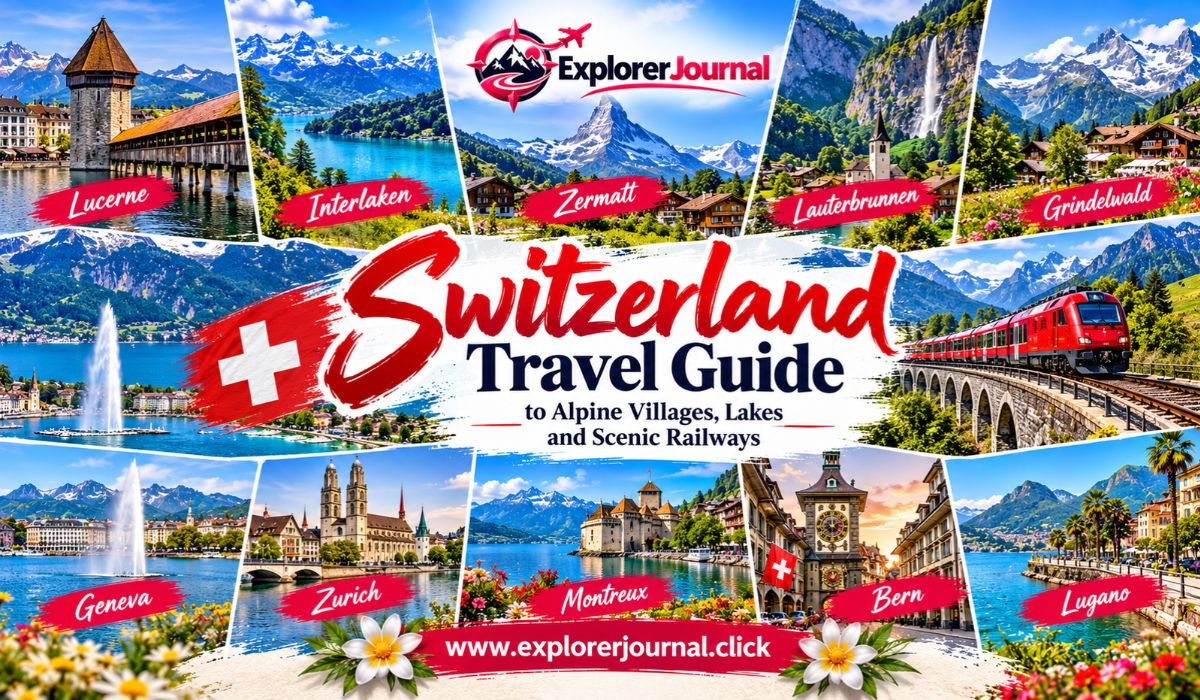
Switzerland is one of Europe’s most beautiful travel destinations, famous for its snow-covered mountains, peaceful alpine villages, crystal-clear lakes, and scenic railway journeys. From the dramatic peaks of the Swiss Alps to the historic streets of Lucerne and the elegant waterfront of Geneva, the country offers a remarkable combination of natural beauty, cultural heritage, and modern convenience.
Whether you are planning a romantic holiday, a family vacation, an outdoor adventure, or a relaxing journey through the countryside, Switzerland has something special to offer. Travelers can enjoy mountain viewpoints in the morning, explore charming villages in the afternoon, and watch the sunset over a beautiful lake in the evening.
The country’s railway network makes exploring particularly convenient. Panoramic trains pass through mountain valleys, cross impressive bridges, and travel beside lakes and forests, allowing visitors to experience spectacular scenery without driving.
This Switzerland travel guide explores the best destinations, alpine villages, lakes, scenic railways, seasonal highlights, and practical budgeting tips to help you plan an unforgettable trip.
1. Lucerne: A Beautiful Lakeside City
Lucerne is an excellent starting point for discovering Switzerland. Located beside Lake Lucerne and surrounded by mountains, the city combines historic architecture, waterfront scenery, and easy access to alpine excursions.
Chapel Bridge is Lucerne’s most recognizable landmark. This covered wooden bridge crosses the Reuss River and features historic painted panels. The nearby Old Town contains colorful buildings, traditional squares, cafés, and small shops that are enjoyable to explore on foot.
Lake Lucerne is another major attraction. Visitors can take boat cruises to admire the surrounding mountains or use the lake as part of a day trip into the countryside. Mount Pilatus and Mount Rigi provide opportunities for mountain excursions, with access depending on the season and weather.
Lucerne is suitable for couples, families, and first-time visitors. Spending two days here provides enough time to explore the historic center, enjoy the lake, and take a mountain excursion.
2. Interlaken: A Gateway to Alpine Adventures
Interlaken is a popular destination for travelers who want to experience the Swiss Alps while staying in a convenient town. Situated between Lake Thun and Lake Brienz, it offers beautiful scenery and access to several mountain villages.
Visitors can enjoy boat trips, cycling routes, scenic walks, and panoramic viewpoints. Adventure enthusiasts can consider paragliding, canyoning, or other outdoor activities through qualified operators.
Interlaken also serves as a base for exploring the Jungfrau region, including Lauterbrunnen, Grindelwald, and Wengen. These destinations offer waterfalls, mountain trails, and traditional alpine architecture.
Summer is popular for hiking and water activities, while winter attracts visitors interested in snow sports. Mountain weather can change quickly, so check forecasts and transport conditions before planning excursions.
3. Zermatt: Home of the Matterhorn
Zermatt is one of Switzerland’s most famous mountain destinations, best known for its views of the Matterhorn. The village has a distinctive alpine atmosphere, with traditional chalets, mountain restaurants, and pedestrian-friendly streets.
Visitors can take mountain railways and cable cars to scenic viewpoints, subject to weather and operating schedules. The Gornergrat Railway is particularly popular because its journey offers remarkable views of surrounding peaks and glaciers.
Zermatt also attracts hikers, photographers, and winter sports enthusiasts. The surrounding trails provide different levels of difficulty, while ski areas offer activities during the colder months.
The village is reached by rail from Täsch, where many visitors leave their cars because Zermatt restricts ordinary private vehicle access. Booking accommodation early is advisable during busy holiday periods.
4. Lauterbrunnen: A Valley of Waterfalls
Lauterbrunnen is a picturesque alpine village surrounded by steep cliffs, green meadows, and waterfalls. Its dramatic valley scenery makes it a favorite destination for nature lovers and photographers.
Staubbach Falls is one of the village’s most recognizable landmarks, descending from a high cliff near the settlement. Visitors can walk through the valley, enjoy mountain views, and explore nearby villages by train or cable car.
The surrounding region also provides access to Wengen and Mürren, two mountain villages with beautiful views and a quieter atmosphere than some larger resorts.
Lauterbrunnen is particularly attractive from late spring through autumn, when the valley is green and many walking routes are accessible. Weather conditions can still affect higher trails, so check local information before setting out.
5. Grindelwald: Mountain Views and Outdoor Activities
Grindelwald is a traditional alpine village surrounded by striking mountain scenery, including the famous Eiger. It is a rewarding destination for travelers who enjoy hiking, cable-car excursions, and outdoor experiences.
The Grindelwald First area offers panoramic viewpoints and walking routes during suitable seasons. The region also provides access to the Jungfraujoch excursion, often marketed as the “Top of Europe,” where visitors can experience high-altitude mountain scenery.
In winter, Grindelwald becomes a popular base for skiing and snowboarding. During warmer months, green meadows and mountain trails attract hikers and photographers.
Because many excursions involve significant elevation, pack layers and suitable footwear. Some mountain activities require advance reservations, particularly during busy periods.
6. Geneva: International Culture and Lakeside Bea
Geneva combines international culture, historic neighborhoods, lakeside promenades, and mountain views. Located in the French-speaking region of Switzerland, it offers a different atmosphere from the country’s alpine villages.
The Jet d’Eau fountain is one of the city’s best-known landmarks. Visitors can stroll along Lake Geneva, explore the Old Town, and visit museums and galleries. The city is also home to important international institutions, including the European headquarters of the United Nations.
Geneva offers a variety of dining experiences, from traditional Swiss dishes to international cuisine. Travelers can use it as a base for exploring nearby lakeside towns and scenic areas along the French-Swiss border.
Spring and summer are especially pleasant for waterfront walks, while the city’s museums and cultural attractions remain appealing throughout the year.
7. Zurich: Historic Streets and Modern City Life
Zurich is Switzerland’s largest city and an important transport hub. It offers historic architecture, excellent shopping, museums, waterfront walks, and convenient connections to other regions.
The Old Town features narrow streets, traditional buildings, and landmarks such as Grossmünster. Bahnhofstrasse is known for shopping, while Lake Zurich provides opportunities for boat trips and relaxed walks.
Travelers interested in culture can visit art museums, explore independent galleries, and enjoy the city’s café scene. Zurich is also a useful starting point for day trips to nearby towns and countryside destinations.
Although Zurich is often associated with high prices, visitors can manage expenses by using public transport, exploring free outdoor attractions, and choosing casual dining options.
8. Montreux: Vineyards and Lake Geneva Views
Montreux is a scenic lakeside town known for its waterfront promenade, mountain backdrop, and nearby vineyards. Its location along Lake Geneva makes it particularly attractive for relaxed sightseeing and photography.
Visitors can walk along the lake, explore the town center, and visit Chillon Castle, a historic lakeside fortress with impressive rooms and courtyards. The surrounding Lavaux vineyard region is also worth exploring for its terraced slopes and beautiful views.
Montreux is famous for its summer jazz festival, which attracts international performers and visitors. If you plan to travel during festival dates, reserve accommodation well in advance.
The town also provides access to mountain excursions, including scenic railway journeys into nearby alpine areas.
9. Bern: A Historic Swiss Capital
Bern, Switzerland’s federal city, is known for its well-preserved medieval Old Town, distinctive arcades, and scenic setting beside the Aare River.
The Zytglogge clock tower is a major landmark, while the historic streets feature fountains, cafés, shops, and traditional buildings. The city’s arcades provide sheltered walking routes, making it enjoyable to explore in different weather conditions.
Visitors can also discover museums, gardens, and viewpoints overlooking the river. Bern offers a more relaxed atmosphere than larger international cities and can easily be included in a rail-based itinerary.
A day or two is usually enough to experience its main attractions, although travelers interested in museums and nearby countryside may want to stay longer.
10. Lugano: Mediterranean Atmosphere in Switzerland
Lugano lies in the Italian-speaking canton of Ticino and offers a distinctive combination of Swiss organization and Mediterranean atmosphere. Its lakefront setting, palm-lined promenades, and surrounding hills make it particularly attractive in warmer months.
Visitors can walk around Lake Lugano, explore the historic center, and take funiculars to nearby viewpoints. Boat trips provide another way to appreciate the surrounding mountains and villages.
The region also offers Italian-influenced cuisine, including risotto, pasta, and local specialties. Lugano is a useful destination for travelers who want a gentler pace and a warmer climate than many high-altitude alpine areas.
Scenic Railways: A Memorable Way to Explore Switzerland
Switzerland’s railway network is one of the country’s greatest travel attractions. Trains connect major cities, lakeside towns, and mountain villages while providing access to some spectacular landscapes.
Glacier Express: This celebrated panoramic route connects Zermatt and St. Moritz, passing through mountain valleys, tunnels, and impressive bridges. It is especially popular with travelers who want to experience the Alps from comfortable panoramic carriages.
Bernina Express: This route connects the Engadin region with Tirano in Italy, crossing dramatic alpine landscapes and the famous Landwasser Viaduct area. Its scenery changes from mountain peaks to lower valleys.
GoldenPass routes: These railway connections link destinations around Montreux, Gstaad, and the Interlaken region, depending on the selected service. They are particularly appealing for lake views and traditional alpine scenery.
Gornergrat Railway: Departing from Zermatt, this mountain railway climbs to a viewpoint with remarkable views of the Matterhorn and surrounding peaks.
Panoramic trains may require separate seat reservations, and some journeys operate according to seasonal schedules. Compare individual tickets with regional or national travel passes before purchasing.
Switzerland’s Most Beautiful Lakes
Switzerland’s lakes are among its most memorable natural attractions. Their clear waters, surrounding mountains, and peaceful waterfront towns offer excellent opportunities for sightseeing and relaxation.
Lake Lucerne is known for its irregular shoreline and mountain surroundings. Boat cruises connect different lakeside communities and can be combined with mountain excursions.
Lake Brienz is famous for its striking turquoise color and dramatic alpine scenery. It is particularly beautiful on clear days, when the surrounding mountains reflect in the water.
Lake Geneva is one of Europe’s largest lakes and offers waterfront walks, boat excursions, and views of vineyards and distant mountains.
Lake Zurich provides a convenient escape from city life, with promenades, swimming areas, and boat trips during suitable weather.
Swimming conditions vary by season and location, so check local facilities and water safety information before entering the lake.
Alpine Villages Worth Exploring
Beyond Switzerland’s larger cities, smaller alpine villages provide some of the country’s most memorable experiences.
Wengen is a car-free village above the Lauterbrunnen Valley, known for mountain views and walking routes.
Mürren offers a peaceful setting overlooking the surrounding peaks, with access by cable car and mountain railway.
Appenzell is known for traditional architecture, regional crafts, and countryside scenery.
Grimentz features historic wooden chalets and a charming village atmosphere in the Valais region.
These destinations are particularly appealing for travelers who prefer scenic walks, local traditions, and quiet surroundings. Accommodation options can be limited in smaller villages, so advance booking is useful during popular seasons.
Understanding Switzerland Travel Costs
Switzerland is generally more expensive than many European destinations, especially for accommodation, restaurant meals, and mountain excursions. However, travelers can manage their spending by planning transport carefully and balancing paid attractions with free outdoor experiences.
The following are approximate daily budgets per person in Swiss francs (CHF), excluding international flights.
| Travel style | Estimated daily budget |
| Budget travel | CHF 100–160 |
| Mid-range travel | CHF 180–320 |
| Premium travel | CHF 400+ |
These are indicative planning ranges rather than fixed prices. Major cities, ski resorts, and popular alpine destinations can cost more during peak periods.
Budget travelers can consider hostels, guesthouses, supermarket meals, and scenic walks. Mid-range visitors may choose private hotel rooms, restaurant dining, and selected mountain excursions. Premium travel can include luxury hotels, fine dining, private guides, and first-class rail experiences.
A Swiss Travel Pass may be useful for travelers planning frequent train, bus, boat, and museum visits, but it is not automatically the cheapest option. Compare the pass price against your intended itinerary, and check which mountain excursions are included or discounted.
Best Time to Visit Switzerland
Switzerland offers different experiences throughout the year, and the best season depends on your interests.
Spring: March to May
Spring brings melting snow at lower elevations, fresh greenery, and flowering landscapes. Some high-altitude trails may remain closed, and mountain transport can operate on reduced seasonal schedules.
Summer: June to August
Summer is popular for hiking, lake cruises, mountain railways, and alpine village exploration. Accommodation and excursions can be expensive in popular destinations, so advance planning is advisable.
Autumn: September to November
Autumn offers colorful forests, vineyard scenery, and generally quieter conditions after the summer rush. Mountain weather becomes less predictable as the season progresses.
Winter: December to February
Winter is ideal for skiing, snowboarding, snowy village scenery, and seasonal markets. Visitors should pack warm clothing and check transport conditions during periods of heavy snowfall.
Mountain weather can differ significantly from conditions in nearby cities. Always check local forecasts before planning outdoor activities.
Practical Tips for a Smooth Switzerland Trip
A few simple preparations can make traveling around Switzerland easier.
- Plan your route geographically: Combine nearby destinations to avoid unnecessary backtracking.
- Book accommodation early: Popular alpine villages and ski resorts can fill up quickly.
- Use public transport: Trains, buses, and boats make many destinations accessible without a rental car.
- Pack layers: Weather can change quickly in the mountains, even during summer.
- Check hiking conditions: Confirm trail openings, difficulty levels, and local safety recommendations.
- Respect nature: Stay on marked paths, take rubbish with you, and follow wildlife guidance.
- Carry a payment backup: Cards are widely accepted, but it is useful to have an alternative payment option available.
Suggested Seven-Day Switzerland Itinerary
For a first visit, a week can provide a balanced introduction to Swiss cities, lakes, and mountain scenery.
Days 1–2: Zurich and Lucerne
Explore Zurich’s Old Town, then travel to Lucerne for Chapel Bridge, lakeside walks, and a possible mountain excursion.
Days 3–4: Interlaken and Lauterbrunnen
Discover the Jungfrau region, visit Lauterbrunnen Valley, and explore nearby alpine villages according to weather and transport availability.
Days 5–6: Zermatt
Travel to Zermatt, enjoy views of the Matterhorn, and consider the Gornergrat Railway.
Day 7: Return journey
Return toward Zurich or Geneva by train, allowing sufficient time for transfers and your departure.
This itinerary involves several rail journeys, so check travel times and ticket options before booking. If you prefer a slower holiday, spend more time in the Interlaken region or choose fewer overnight stops.
Switzerland offers an extraordinary combination of alpine scenery, beautiful lakes, traditional villages, historic cities, and memorable railway journeys. Lucerne and Geneva provide attractive lakeside experiences, Zermatt and Lauterbrunnen reveal the beauty of the mountains, and scenic trains make it easier to appreciate the country’s landscapes along the way.
Although Switzerland can be expensive, careful planning allows travelers to choose experiences that match their budget and interests. Comparing transport passes, booking accommodation early, and balancing paid attractions with outdoor exploration can make a significant difference.
Whether you visit during summer’s hiking season, autumn’s colorful landscapes, or winter’s snowy months, Switzerland offers countless opportunities to slow down, discover local culture, and appreciate some of Europe’s most spectacular scenery.
Thailand Travel Guide to Island Escapes, City Life and Local Traditions