Introduction
Planning an international holiday involves more than choosing destinations, booking flights, and reserving hotels. For many travelers, obtaining a tourist visa is an essential part of preparing for the journey. A tourist visa allows eligible visitors to enter a foreign country for permitted short-term purposes, such as sightseeing, visiting friends, or enjoying a vacation. However, requirements vary considerably depending on the destination, the applicant’s nationality, and the intended length of stay.
Understanding the visa application process can help travelers avoid unnecessary delays, reduce errors, and prepare the correct documents before submitting their applications. Some countries offer electronic visas, while others require applications through embassies, consulates, or authorized visa centers. Certain destinations also permit eligible travelers to enter without a traditional visa.
This guide explains how to research tourist visa requirements, organize supporting documents, complete applications, prepare for appointments, and avoid common mistakes. Careful preparation can make the process more manageable and help you begin your international journey with greater confidence.
1. Understand the Tourist Visa Requirements
The first step is determining whether you need a visa for your chosen destination. Requirements depend on your passport, travel purpose, intended stay, and sometimes your previous travel history.
Visit the destination country’s official immigration website or the website of its embassy or consulate to identify the applicable rules. Avoid relying exclusively on social media posts, outdated travel blogs, or information intended for travelers with different nationalities.
Check whether you need a traditional visa, an electronic visa, an electronic travel authorization, or no advance permission under the applicable entry rules. These documents are not interchangeable, and each may involve different procedures.
Review the permitted length of stay, number of entries, passport validity requirements, and restrictions on activities. Tourist visas generally do not authorize ordinary employment, and activities such as studying or volunteering may have separate requirements.
Confirm the information again before applying because immigration policies can change. Starting with accurate requirements prevents wasted effort and helps you prepare an application that matches your circumstances.
2. Check Passport Validity and Eligibility
Your passport is one of the most important documents in a tourist visa application. Many destinations require it to remain valid for a specified period beyond your planned arrival or departure date.
Check the destination’s exact validity rules rather than assuming that an unexpired passport will automatically be accepted. Some countries also require blank passport pages or impose conditions relating to passport type and previous travel documents.
If your passport is close to expiry, investigate renewal options before submitting your visa application. Renewing it later may require changes to application details or supporting documents.
You should also confirm whether your nationality is eligible for the particular visa category. Certain destinations have different application procedures depending on citizenship or legal residence.
If you live outside your country of citizenship, check whether you can apply through the local embassy or authorized visa center. Some authorities require evidence of lawful residence in the country where the application is submitted.
3. Prepare the Required Documents
Document requirements vary by destination, but tourist visa applications commonly involve several categories of supporting evidence. Preparing these materials in advance makes the process more organized.
A typical application may require:
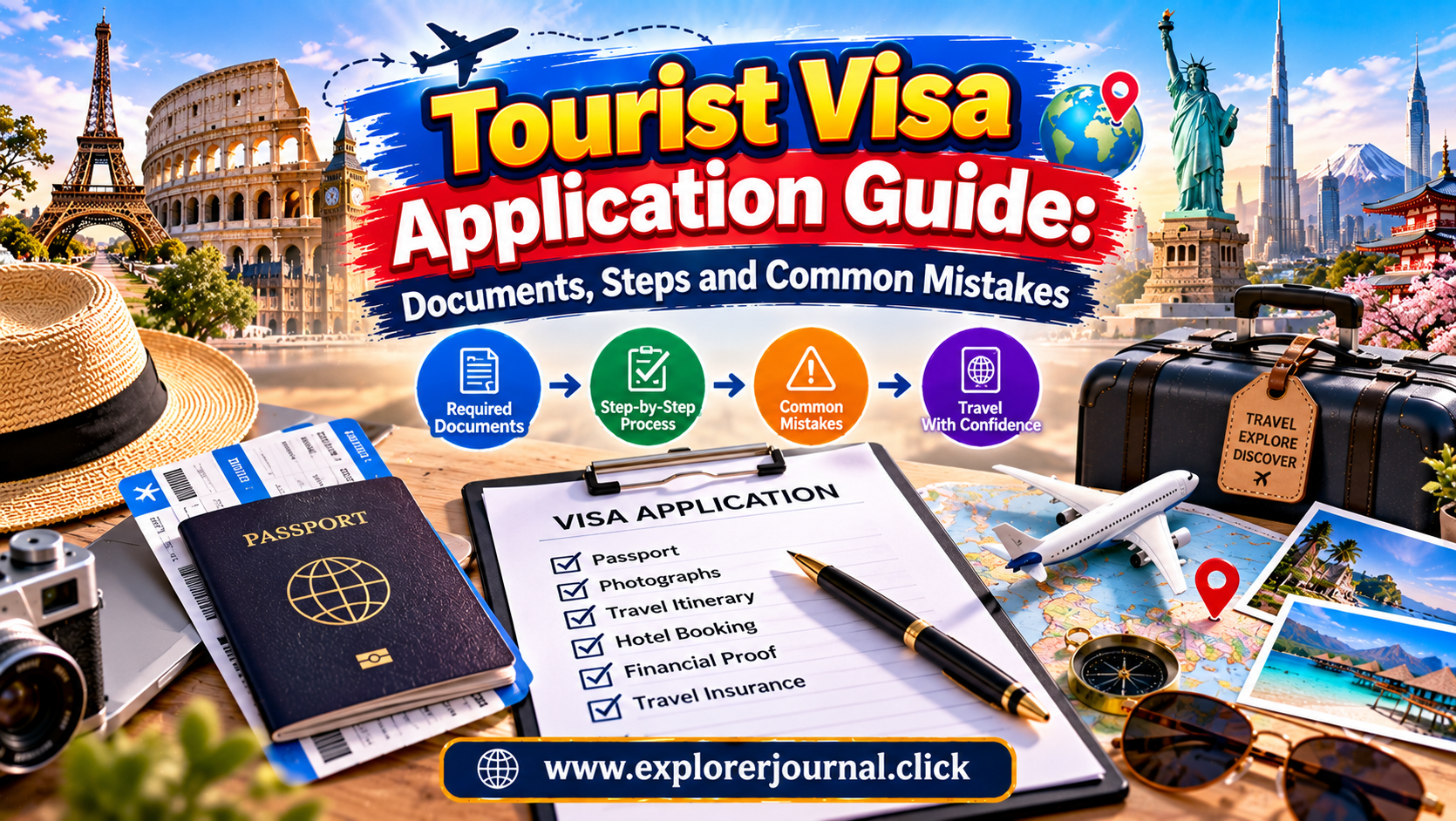
- A valid passport and completed application form.
- Recent passport photographs that meet the required specifications.
- Flight itinerary or proposed travel arrangements.
- Hotel reservations or information about accommodation.
- Evidence of sufficient funds for the planned stay.
- Travel medical insurance, where required.
- Evidence of employment, education, business activity, or other relevant circumstances.
- Supporting documents explaining the purpose and duration of the visit.
Some applications may also require invitation letters, proof of family relationships, previous passports, or additional declarations.
Use the official checklist for your particular visa category. Do not submit documents simply because another traveler needed them for a different country.
Check file formats, translation requirements, document dates, and certification rules. Documents in languages not accepted by the relevant authority may need an approved translation.
4. Complete the Visa Application Form Carefully
The application form provides immigration authorities with essential information about your identity, travel plans, background, and intended activities. Incorrect or inconsistent information can delay processing or create concerns about the reliability of your application.
Read each question carefully and provide accurate answers. Enter your name, passport number, date of birth, nationality, and contact information exactly as required by the form.
Pay particular attention to travel dates, previous visits, employment details, and questions about the purpose of your trip. If a question does not apply, follow the form’s instructions rather than entering an invented answer.
Before submitting, compare the information against your passport and supporting documents. Check spelling, date formats, passport expiry dates, and accommodation details.
If you discover a mistake after submission, consult the relevant authority about the correction procedure. Do not submit multiple applications unnecessarily or assume that an incorrect form can always be edited.
5. Demonstrate Your Ability to Finance the Trip
Many tourist visa applications require evidence that visitors can cover their expenses during the proposed stay. The purpose is to establish that the trip is financially realistic and that the applicant has appropriate resources.
Accepted evidence may include bank statements, salary slips, employment letters, pension records, or other documents relevant to the applicant’s circumstances. Self-employed applicants may need business records or other evidence of income.
Requirements differ by destination, and there is no universal bank balance that guarantees visa approval. The amount needed depends on factors such as trip duration, accommodation arrangements, local living costs, and whether another person is paying for the visit.
If a family member or another sponsor will cover your expenses, check whether sponsorship is permitted and what supporting evidence is required. This may include a sponsorship letter, proof of relationship, and the sponsor’s financial documents.
Present genuine, consistent information. Artificially moving money into an account to create a misleading impression can raise questions about the source and availability of funds.
6. Provide Clear Travel and Accommodation Details
Visa authorities may ask applicants to explain where they intend to stay and how they plan to travel. Clear arrangements help demonstrate that the proposed visit has a coherent purpose and realistic schedule.
Prepare an itinerary showing your intended arrival and departure dates, major destinations, and planned activities. The level of detail required depends on the destination and application category.
Accommodation evidence may include hotel reservations, a permitted rental booking, or an invitation from a host. If staying with friends or relatives, check whether the host must provide identification, proof of address, or an invitation letter.
Do not assume that every visa application requires fully paid flights or nonrefundable hotel bookings. Some authorities accept proposed itineraries, and purchasing expensive nonrefundable arrangements before a decision can create unnecessary financial risk.
Follow the official instructions about reservation evidence. Make sure your travel dates are consistent across the application, itinerary, accommodation documents, and other supporting materials.
7. Book an Appointment When Required
Some tourist visa applications can be completed online, while others require an appointment at an embassy, consulate, or authorized visa application center.
If an appointment is necessary, use the official booking system and check which location handles applications for your destination and place of residence. Appointment availability may become limited during busy travel seasons.
Review the appointment instructions carefully. You may need to bring your passport, printed application, photographs, supporting documents, appointment confirmation, and payment receipt.
Arrive early enough to complete the required procedures without rushing. Check restrictions on electronic devices, bags, and accompanying visitors before leaving home.
Some application centers collect biometric information, such as fingerprints and photographs, where applicable. Follow staff instructions and ask for clarification if you are uncertain about any step.
An appointment does not guarantee approval. It is one part of the application process, and the final decision rests with the relevant immigration authority.
8. Understand Visa Fees and Processing Times
Visa application fees vary according to the destination, nationality, visa category, and processing arrangements. Additional service charges may apply when using an authorized application center.
Check the official fee schedule before submitting your application. Confirm the accepted payment methods and whether fees are refundable if an application is refused or withdrawn.
Processing times also vary. Some electronic applications receive decisions relatively quickly, while other cases require additional checks or supporting information.
Apply early enough to account for appointment availability, document preparation, public holidays, and possible processing delays. Avoid making essential travel arrangements based on an assumed decision date.
If expedited processing is offered, verify its availability and conditions through official channels. Paying an additional fee does not necessarily guarantee approval or eliminate every possible delay.
Monitor your application through the designated tracking system and respond promptly if the authorities request further information.
9. Avoid Common Application Mistakes
Several preventable mistakes can complicate tourist visa applications. One of the most common is submitting incomplete documentation. Missing financial evidence, unsigned forms, incorrect photographs, or absent translations can delay processing.
Another problem is inconsistency. If your application lists one travel period while your accommodation documents show another, the authorities may request clarification.
Submitting false documents or concealing relevant information can have serious consequences, including refusal and possible future immigration difficulties. Always provide truthful answers and genuine evidence.
Applicants sometimes select the wrong visa category because they assume every short visit follows the same rules. Confirm that the category matches your actual purpose, particularly if your plans include business meetings, study, volunteering, or other activities.
Avoid relying on unofficial agents who promise guaranteed approval. No legitimate intermediary can guarantee a positive decision when the authority retains control over the application.
Finally, review every document before submission. A short final check can prevent errors that might otherwise require additional appointments or applications.
10. Prepare for a Visa Interview
Some destinations require or may request an interview as part of the tourist visa process. The purpose and format vary, but applicants may be asked about their travel plans, finances, employment, and reasons for visiting.
Prepare by reviewing your submitted application and supporting documents. Be ready to explain your itinerary, accommodation arrangements, trip duration, and who will pay for your expenses.
Answer questions honestly and directly. If you do not understand a question, politely ask for clarification rather than guessing.
Bring any documents specified in the interview instructions. Additional evidence may be useful only when it is relevant and permitted under the applicable procedure.
Do not memorize artificial answers or exaggerate your circumstances. Clear, consistent explanations are more appropriate than trying to provide what you believe an officer wants to hear.
An interview does not automatically indicate a problem with an application. It may simply be a standard part of the process or a way to clarify particular details.
11. Track Your Application and Check the Decision
After submitting your application, retain the reference number, payment confirmation, and any receipt issued by the application center.
Use the official tracking system to monitor progress. Processing updates may be limited, so the absence of frequent notifications does not necessarily indicate a problem.
If additional documents are requested, follow the stated deadline and submission method. Make sure the materials directly address the request and comply with the required format.
When a decision is issued, follow the instructions for collecting your passport or accessing your electronic visa. If approved, check the visa details carefully, including your name, validity dates, permitted entries, and any stated conditions.
Approval does not necessarily mean you can stay for the entire validity period. The permitted duration of each visit may be different from the period during which the visa can be used.
If refused, review the decision notice and any available explanation. Follow the destination’s official procedures for clarification, review, appeal, or a future application where applicable.
12. Prepare for Travel After Approval
Receiving a tourist visa is an important milestone, but travelers must still meet the destination’s entry requirements. Border officials may ask about accommodation, return or onward travel, financial resources, and the purpose of the visit.
Carry the documents required to support your entry, including your passport, visa or authorization, accommodation details, and relevant travel confirmations.
Review any conditions attached to your visa. Observe the permitted length of stay and avoid activities that are not authorized under your immigration status.
Keep digital and physical copies of important documents where practical. Store your passport securely during the trip and know how to contact the relevant embassy or consulate if it is lost.
Before departure, check for updated entry rules, transit requirements, or public health measures that may affect your journey. Requirements can change even after a visa has been issued.
Conclusion
Applying for a tourist visa becomes more manageable when you understand the requirements, prepare genuine documents, and follow the official process carefully. Begin by confirming your eligibility, checking passport validity, and identifying the correct visa category. Then organize your financial evidence, travel arrangements, application form, and any appointment requirements.
Avoid common mistakes by reviewing every detail, ensuring that documents are consistent, and submitting accurate information. Allow sufficient processing time and avoid relying on guaranteed approval claims from unofficial sources.
Most importantly, remember that visa requirements differ between countries and individual circumstances. Official immigration websites and authorized application centers should remain your primary sources of guidance.
With careful preparation and realistic planning, you can approach the tourist visa process with greater confidence and focus on enjoying the international journey ahead.