Introduction
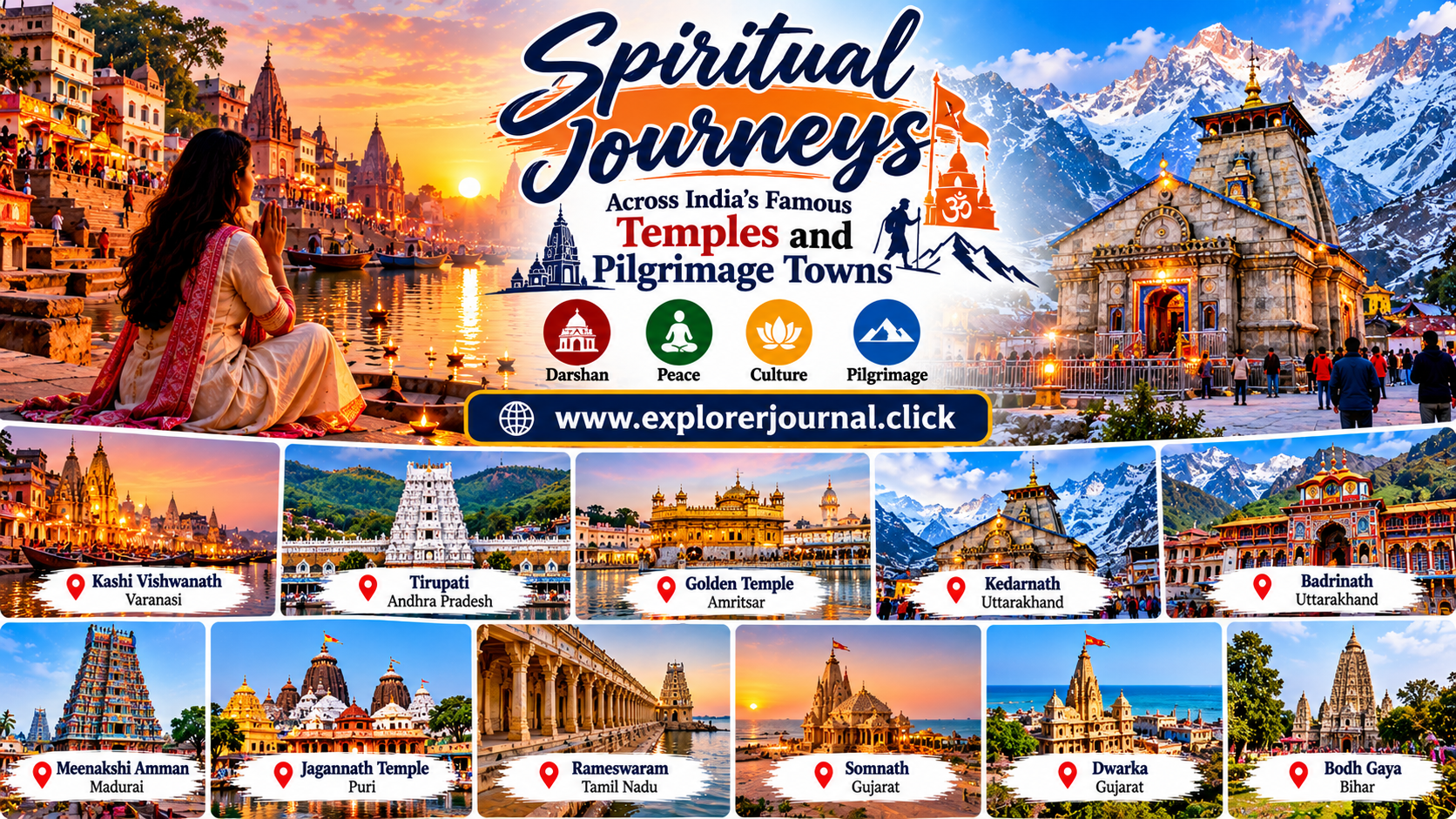
India is a land where spirituality, history, architecture, and cultural traditions come together to create meaningful travel experiences. Across its mountains, riverbanks, coastal regions, and historic cities, ancient temples and pilgrimage towns attract visitors seeking peace, devotion, knowledge, and a deeper connection with local traditions. These destinations are not simply religious landmarks; they are living centers of community life, artistic heritage, and centuries-old customs.
A spiritual journey through India can take many forms. Some travelers visit magnificent temple complexes to admire their architecture, while others participate in traditional ceremonies, walk along sacred riverbanks, or explore peaceful mountain retreats. Every destination offers a different atmosphere, shaped by regional traditions, historical events, and the beliefs of its communities.
From the Himalayan shrines of Uttarakhand to the magnificent temples of Tamil Nadu and the sacred ghats of Varanasi, India provides countless opportunities for spiritual exploration. Understanding the history and customs of each destination makes these journeys more rewarding, allowing travelers to appreciate both the religious significance and cultural richness of the places they visit.
1. Varanasi, Uttar Pradesh
Varanasi is one of India’s oldest continuously inhabited cities and an important destination for Hindu pilgrimage. Situated along the River Ganges, the city is renowned for its sacred ghats, historic temples, narrow streets, and distinctive spiritual atmosphere.
The Kashi Vishwanath Temple, dedicated to Lord Shiva, is among its most significant religious landmarks. Pilgrims also visit the riverfront to participate in rituals, offer prayers, and observe the evening Ganga Aarti, when lamps illuminate the riverbanks and devotional music fills the surroundings.
Beyond its religious attractions, Varanasi offers opportunities to discover traditional silk weaving, regional cuisine, classical music, and local craftsmanship. Early morning boat rides provide a different perspective of the city’s ghats and daily activities. Visitors should dress respectfully, follow temple regulations, and remain sensitive when encountering private ceremonies.
2. Tirupati, Andhra Pradesh
Tirupati is one of India’s most important pilgrimage destinations, attracting millions of devotees to the Sri Venkateswara Temple at Tirumala. Dedicated to Lord Venkateswara, a form of Vishnu, the temple stands among the forested hills of the Eastern Ghats.
Pilgrims visit to offer prayers, express gratitude, and participate in traditional religious practices. The temple is particularly known for its elaborate rituals, organized arrangements for devotees, and the preparation of Tirupati laddu, a famous religious offering.
The surrounding region also contains other temples and scenic landscapes that can enrich a visit. Because visitor numbers are high, advance planning is important, especially during festivals and holidays. Travelers should check official arrangements, accommodation availability, and current entry requirements before beginning their pilgrimage.
3. Golden Temple, Amritsar, Punjab
The Golden Temple, officially known as Sri Harmandir Sahib, is the spiritual center of Sikhism and one of India’s most welcoming religious destinations. Located in Amritsar, the shrine is surrounded by the sacred Amrit Sarovar, whose reflective waters create a peaceful setting.
The temple’s golden exterior, marble pathways, and carefully maintained complex attract visitors interested in religion, architecture, and cultural history. The continuous recitation of Gurbani creates a distinctive atmosphere, while the community kitchen, or langar, serves free meals to visitors regardless of background.
Visitors can learn about Sikh principles of equality, service, and community participation. Covering the head, removing footwear, and dressing appropriately are important customs when entering the complex. Observing these traditions helps travelers show respect while experiencing the site’s welcoming environment.
4. Kedarnath Temple, Uttarakhand
Kedarnath Temple is a revered Hindu shrine located high in the Garhwal Himalayas. Dedicated to Lord Shiva, it forms part of the Char Dham pilgrimage circuit in Uttarakhand and is traditionally associated with the Pandavas and the Mahabharata.
Surrounded by dramatic mountain peaks, the temple offers a spiritual experience shaped by its remote location and extraordinary natural environment. Reaching the shrine generally involves a substantial uphill journey from Gaurikund, making physical preparation an important part of planning.
The temple is typically accessible during a limited season because of heavy snowfall and severe winter conditions. Visitors should check official opening dates, weather forecasts, registration requirements, and route information. Suitable clothing, sturdy footwear, and gradual preparation for the altitude can make the journey safer and more comfortable.
5. Badrinath Temple, Uttarakhand
Badrinath Temple stands along the Alaknanda River in the Himalayan town of Badrinath. Dedicated to Lord Vishnu, it is one of the four principal destinations in the Char Dham pilgrimage tradition.
The temple’s colorful architecture contrasts with the surrounding mountains, creating an impressive setting for worship and sightseeing. Pilgrims visit to participate in prayers and rituals, while the surrounding region offers views of alpine landscapes and traditional settlements.
Nearby attractions include Mana village and natural features associated with local religious traditions. The high-altitude location means that weather can change quickly, and travel schedules may be affected by road conditions. Visiting during the official pilgrimage season and checking local advisories are essential for a well-organized journey.
6. Meenakshi Amman Temple, Madurai, Tamil Nadu
Madurai’s Meenakshi Amman Temple is a magnificent example of Dravidian architecture and one of southern India’s most important religious landmarks. Dedicated to Goddess Meenakshi and Lord Sundareswarar, the complex is famous for its colorful gateway towers, detailed sculptures, and expansive halls.
The temple reflects centuries of artistic development and continues to play a central role in the city’s religious and cultural life. Visitors can appreciate its sculptural details, observe traditional rituals, and learn about the stories associated with its deities.
Madurai itself offers a rich cultural experience, including historic markets, traditional Tamil cuisine, and local handicrafts. Exploring the temple with a knowledgeable guide can provide a deeper understanding of its architectural features and religious symbolism. Visitors should check photography rules and follow instructions regarding access to different areas.
7. Jagannath Temple, Puri, Odisha
The Jagannath Temple in Puri is an important pilgrimage destination dedicated to Lord Jagannath, a form of Vishnu worshipped alongside Balabhadra and Subhadra. Its towering architecture and long-standing religious traditions make it one of eastern India’s most significant temples.
The temple is especially famous for the annual Rath Yatra, during which the deities are taken through the streets in enormous decorated chariots. The festival attracts vast crowds and demonstrates the importance of community participation in regional religious life.
Puri also offers a coastal setting, traditional food, and opportunities to explore nearby cultural attractions. Non-Hindu visitors should note that entry to the main temple is restricted to Hindus under established rules, although the surrounding area offers other ways to appreciate the destination’s heritage.
8. Rameswaram, Tamil Nadu
Rameswaram is a sacred island town associated with the Ramayana and one of the principal pilgrimage destinations in Hindu tradition. The Ramanathaswamy Temple is renowned for its elaborate corridors, impressive pillars, and religious significance connected with Lord Shiva.
Pilgrims traditionally visit the temple and its sacred water sources as part of established worship practices. The town’s coastal setting adds another dimension to the experience, with beaches, fishing communities, and views across the surrounding waters.
Rameswaram is connected to mainland India by a bridge and can be incorporated into a wider journey through Tamil Nadu. Visitors should allow sufficient time for temple visits and travel arrangements, particularly during major festivals when the town becomes crowded.
9. Vaishno Devi, Jammu and Kashmir
The Vaishno Devi shrine, located in the Trikuta Mountains near Katra, is one of India’s most visited Hindu pilgrimage destinations. Dedicated to Mata Vaishno Devi, the shrine attracts devotees who undertake a mountain journey as an expression of faith.
The pilgrimage route passes through mountainous scenery and includes resting facilities, viewpoints, and services for visitors. Many pilgrims complete the journey on foot, while authorized transport and assistance options may be available under current arrangements.
Weather and crowd conditions can influence the experience, so advance registration and preparation are important. Comfortable walking shoes, appropriate clothing, and sufficient time can help make the pilgrimage more manageable. Visitors should follow official instructions and consider their physical abilities before beginning the route.
10. Somnath Temple, Gujarat
Somnath Temple stands along the Arabian Sea in Gujarat and is among the most important Shiva temples in India. Its coastal location creates a dramatic setting, with the sound of waves adding to the atmosphere around the shrine.
The temple has a long history of destruction and reconstruction, making it a significant symbol of religious continuity and architectural renewal. Its present structure features traditional design elements and offers views across the surrounding coastline.
Visitors can explore the temple complex, observe worship practices, and learn about its historical importance. The nearby town of Veraval and other regional attractions can be included in a broader Gujarat itinerary. Respectful behavior and attention to temple rules help preserve the experience for all visitors.
11. Dwarka, Gujarat
Dwarka is traditionally associated with Lord Krishna and is an important pilgrimage destination on Gujarat’s western coast. The Dwarkadhish Temple, dedicated to Krishna, attracts devotees who come to offer prayers and participate in religious festivals.
The city’s religious significance is connected with ancient traditions describing Dwarka as Krishna’s kingdom. Although these narratives belong to religious tradition, the town’s temples and customs continue to shape its identity today.
Visitors can explore the main temple, walk along the coastal areas, and discover other religious sites in the surrounding region. Seasonal festivals can bring large crowds, making advance accommodation arrangements useful. Dwarka is also an appealing destination for travelers interested in the relationship between religious traditions and coastal culture.
12. Bodh Gaya, Bihar
Bodh Gaya is one of the world’s most important Buddhist pilgrimage destinations because it is traditionally recognized as the place where Siddhartha Gautama attained enlightenment and became the Buddha.
The Mahabodhi Temple complex stands at the heart of the town and includes the sacred Bodhi Tree, meditation areas, and architectural features associated with Buddhist history. Pilgrims and visitors from many countries come to meditate, study Buddhist teachings, and participate in religious observances.
The town also contains monasteries established by Buddhist communities from different nations, creating a diverse international atmosphere. Visitors can explore the complex quietly, learn about Buddhist philosophy, and observe meditation practices without disturbing worshippers.
13. Sarnath, Uttar Pradesh
Sarnath, located near Varanasi, is a major Buddhist pilgrimage destination associated with the Buddha’s first sermon after enlightenment. The site preserves archaeological remains that reveal the development of Buddhism and its influence across Asia.
The Dhamek Stupa is one of its most prominent monuments, while the surrounding archaeological area includes remains of monasteries and other religious structures. The Sarnath Archaeological Museum contains important historical objects, including the famous Lion Capital associated with India’s national emblem.
Sarnath offers a quieter atmosphere than nearby Varanasi, making it suitable for reflective walks and historical exploration. Visitors can combine both destinations to understand different aspects of India’s religious heritage.
Planning a Spiritual Journey Across India
A meaningful pilgrimage begins with researching the traditions, customs, and practical requirements of each destination. Temple opening hours, dress codes, entry restrictions, registration procedures, and festival schedules can vary considerably.
Travelers should choose comfortable clothing, carry essential medicines, and plan transportation according to the destination’s geography. Himalayan shrines may require physical preparation and careful attention to weather, while major city temples can involve crowds and waiting periods.
Respect for local communities is equally important. Follow photography rules, avoid interrupting ceremonies, and ask permission before photographing individuals. Understanding the significance of religious practices can turn a simple visit into a more thoughtful cultural experience.
Conclusion
India’s famous temples and pilgrimage towns offer journeys that connect spirituality with history, architecture, and regional culture. From the sacred ghats of Varanasi and the mountain shrines of Kedarnath to the peaceful Buddhist heritage of Bodh Gaya and the community spirit of the Golden Temple, every destination provides a distinctive experience.
Whether traveling for religious devotion, cultural discovery, or personal reflection, visitors can gain a deeper appreciation of India’s diverse traditions by approaching each place with curiosity and respect. Careful planning, awareness of local customs, and responsible travel help ensure that these journeys remain meaningful and rewarding.
A spiritual journey across India is ultimately more than a visit to famous landmarks. It is an opportunity to understand the beliefs, stories, and communities that continue to shape the country’s cultural identity.