Table of Contents
- Introduction
- Why Visit Meghalaya and Northeast India?
- Discover the Natural Beauty of Meghalaya
- Living Root Bridges: A Unique Cultural Heritage
- Explore the Famous Waterfalls of Meghalaya
- Scenic Villages and Local Traditions
- Discover Other Beautiful Destinations in Northeast India
- Best Time to Visit Meghalaya and Northeast India
- Local Food and Cultural Experiences
- Travel Tips for a Memorable Journey
- Key Takeaways
- Frequently Asked Questions
Introduction
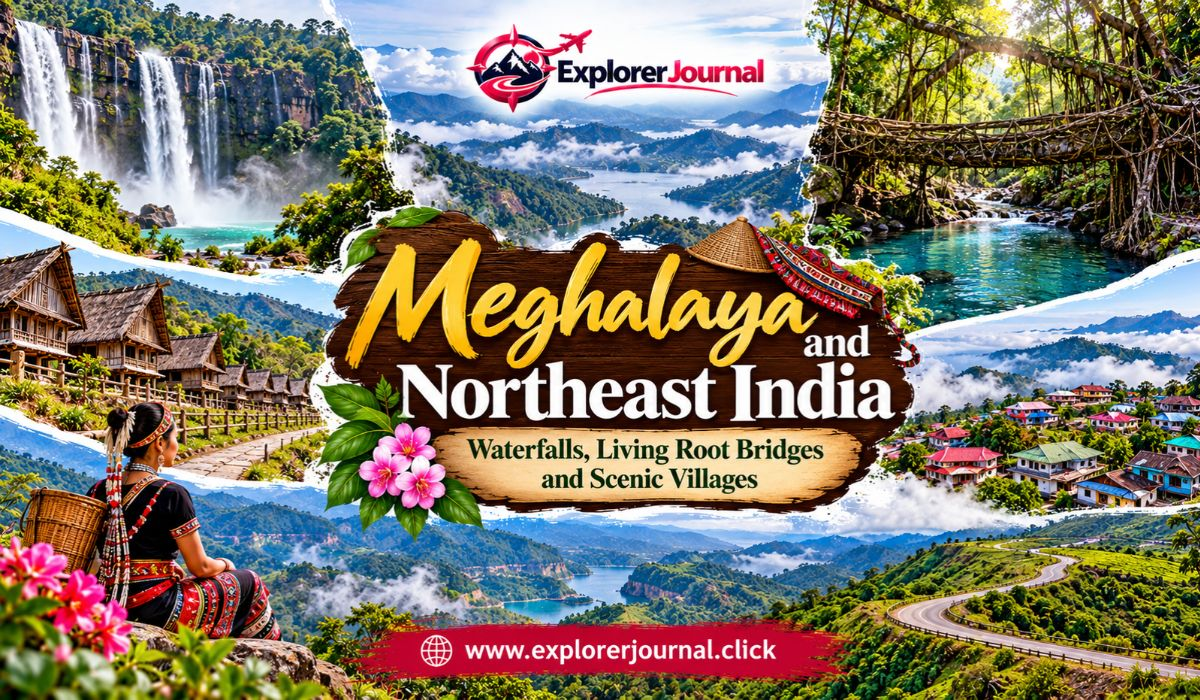
Meghalaya and Northeast India offer a refreshing travel experience for visitors who enjoy green landscapes, peaceful villages, dramatic waterfalls, and rich cultural traditions. Located in the northeastern part of India, this region is known for its mist-covered hills, forest-covered mountains, clear rivers, and remarkable natural attractions.
Meghalaya, often called the Abode of Clouds, is one of the most appealing destinations in the region. Its living root bridges, beautiful waterfalls, limestone caves, and charming villages attract travellers seeking nature and adventure. Beyond Meghalaya, states such as Assam, Arunachal Pradesh, Nagaland, Manipur, Mizoram, and Tripura offer their own landscapes, traditions, and memorable experiences.
Whether you want to walk through forest trails, photograph waterfalls, learn about local communities, or relax in a quiet village, Northeast India has something special to offer. With thoughtful planning, you can discover its natural beauty while gaining a deeper appreciation of the region’s diverse cultures.
Why Visit Meghalaya and Northeast India?
Northeast India stands apart from many other Indian travel destinations because of its varied geography and cultural diversity. Mountains, valleys, forests, rivers, wetlands, and traditional settlements create a landscape that changes from one state to another.
Meghalaya is an excellent starting point for a regional journey. Shillong combines a lively hill-town atmosphere with access to scenic viewpoints and nearby villages. Cherrapunji, also known as Sohra, is famous for its heavy rainfall, waterfalls, caves, and dramatic cliffs. Meanwhile, Dawki attracts visitors with its clear river waters and peaceful surroundings.
However, the region offers much more than famous sightseeing spots. Travellers can discover traditional markets, taste local dishes, attend cultural festivals, and learn how communities maintain their relationship with the surrounding environment.
Another reason to visit is the opportunity to travel at a slower pace. Instead of rushing between crowded attractions, you can spend time walking through villages, enjoying mountain views, and meeting local people. This approach makes the journey more meaningful and allows you to appreciate the region beyond its photographs.
Discover the Natural Beauty of Meghalaya
Meghalaya is known for its rolling hills, dense forests, deep valleys, and cloud-covered landscapes. The scenery can change quickly as sunlight, mist, and rain move across the mountains.
Shillong: The Gateway to Meghalaya
Shillong is a popular starting point for exploring Meghalaya. The city offers a blend of natural scenery, local food, shopping areas, and cultural experiences. Its pleasant hill-town setting makes it a convenient base for day trips to nearby attractions.
Visitors can spend time around Ward’s Lake, enjoy views from Shillong Peak when conditions permit, or explore local markets for traditional clothing, handicrafts, and regional snacks. The city also provides opportunities to experience the music and café culture that contribute to its distinctive character.
Shillong is especially useful for travellers who want access to both urban comforts and the quieter landscapes beyond the city.
Cherrapunji and Its Dramatic Landscapes
Cherrapunji, or Sohra, is among Meghalaya’s best-known destinations. The area is famous for substantial rainfall, deep valleys, limestone formations, and impressive waterfalls.
The surrounding hills offer viewpoints overlooking green slopes and distant plains. During and after the monsoon, the scenery can appear especially lush, although heavy rain and low visibility may affect outdoor activities.
Travellers can also explore nearby caves and walking trails, depending on local conditions. Since some routes involve steep steps or uneven ground, suitable footwear and enough time are essential.
Mawlynnong: A Village Surrounded by Greenery
Mawlynnong is widely known for its community-led cleanliness efforts and attractive village surroundings. Located in the East Khasi Hills, it provides an opportunity to experience a quieter side of Meghalaya.
Visitors can walk along village lanes, observe traditional homes, and appreciate the carefully maintained surroundings. Nearby attractions and viewpoints can add variety to a short visit.
The village is more than a sightseeing stop. It also demonstrates how community participation can contribute to maintaining public spaces and supporting local tourism. Travellers should respect residents’ privacy and follow local guidance when visiting homes or community areas.
Living Root Bridges: A Unique Cultural Heritage
One of Meghalaya’s most remarkable attractions is its living root bridges. Unlike ordinary bridges made from concrete, steel, or timber, these structures are created by guiding the aerial roots of rubber fig trees across streams and gaps.
Local communities, particularly in parts of the Khasi and Jaintia Hills, have developed this traditional technique over generations. The roots are carefully directed through support structures until they grow into strong, interconnected forms. With continued care, a bridge can become increasingly sturdy over time.
Nongriat and the Double-Decker Living Root Bridge
Nongriat is famous for its double-decker living root bridge, one of Meghalaya’s most distinctive natural and cultural attractions. Reaching the village generally involves a demanding descent through a long series of steps, followed by a return climb.
The journey takes visitors through forested slopes, small settlements, and scenic river areas. The bridge itself offers a memorable example of how traditional knowledge and the natural environment can work together.
Travellers should assess their fitness before beginning the hike. Carry drinking water, wear shoes with a good grip, and allow enough time for both directions. Rain can make steps slippery, so local advice is particularly important during the monsoon.
Why Living Root Bridges Matter
Living root bridges represent more than an unusual engineering achievement. They reflect patience, ecological knowledge, and a long-term approach to building infrastructure.
Because the structures continue to grow, their development depends on regular maintenance and the knowledge of local communities. They also show how traditional practices can provide practical solutions in challenging landscapes.
Visitors can help preserve this heritage by staying on designated routes, avoiding damage to roots, and following community rules. Responsible tourism supports the people who maintain these extraordinary structures.
Explore the Famous Waterfalls of Meghalaya
Waterfalls are among the most memorable features of Meghalaya’s landscape. Heavy rainfall, forested hills, and steep terrain create many dramatic cascades throughout the state.
Nohkalikai Falls
Nohkalikai Falls near Sohra is one of India’s most famous waterfalls. Water plunges from a high cliff into a pool below, creating a striking scene surrounded by green hills.
The viewpoint is a popular stop for photography and sightseeing. During wetter months, the waterfall can be especially powerful, although mist may obscure the view. Travellers should remain behind safety barriers and avoid approaching exposed cliff edges.
Seven Sisters Falls
Seven Sisters Falls, also known as Nohsngithiang Falls, is another celebrated attraction near Sohra. Its wide cascade flows down a cliff face, with the different streams creating an impressive sight during periods of abundant rainfall.
The waterfall is particularly associated with the monsoon season, when water flows can become more dramatic. However, cloudy weather may limit visibility, so flexible plans can help visitors make the most of their trip.
Elephant Falls
Located near Shillong, Elephant Falls is a convenient attraction for travellers with limited time. The waterfall is arranged in multiple stages, with paths and steps allowing visitors to view its different sections.
The surrounding vegetation creates a pleasant setting, especially during the rainy season. Nevertheless, the steps can become slippery, and visitors should move carefully.
Wei Sawdong Falls
Wei Sawdong Falls is known for its striking tiers and turquoise-looking pools under suitable lighting and water conditions. The viewpoint and access route can involve steep steps, so the visit requires care.
Water colour varies with weather, sunlight, sediment, and seasonal conditions. It is best to appreciate the waterfall as a natural feature rather than expect the same appearance in every photograph.
Scenic Villages and Local Traditions
Meghalaya’s villages offer opportunities to understand the relationship between people, land, and local customs. Traditional architecture, farming practices, community spaces, and regional food all contribute to the area’s character.
Dawki and the Umngot River
Dawki is a popular destination near the India-Bangladesh border. The nearby Umngot River is known for its clear water, which can create the impression that boats are floating above the riverbed when conditions are favourable.
Visitors may enjoy boating or spend time admiring the surrounding hills. Water clarity changes with rainfall, river flow, and other environmental conditions, so the river may not always look as transparent as it appears in photographs.
Travellers should use authorised boating services, follow safety instructions, and avoid littering along the riverbanks.
Mawphlang and Its Sacred Forest
Mawphlang is known for its sacred forest, an area protected through traditional Khasi beliefs and community customs. The forest contains diverse plant life and provides insight into local approaches to conservation.
Guided walks can help visitors understand the area’s cultural significance and ecological importance. Since the forest is a sacred place, visitors should follow the guide’s instructions and respect restrictions on removing plants or other natural materials.
Traditional Life in the Khasi and Jaintia Hills
The Khasi and Jaintia Hills contain villages where community traditions remain an important part of everyday life. Local markets, festivals, farming, and traditional crafts offer glimpses into these cultures.
Meghalaya is also known for matrilineal traditions among Khasi, Jaintia, and Garo communities, although customs and family practices vary. Learning about these traditions through respectful conversations or cultural interpretation can make a visit more informative.
Always ask permission before photographing people, private homes, or cultural ceremonies.
Discover Other Beautiful Destinations in Northeast India
Although Meghalaya deserves several days of exploration, neighbouring states provide additional experiences for travellers who have more time.
Assam: Wildlife, Tea Gardens, and River Landscapes
Assam is known for its tea-growing regions, the Brahmaputra River, and rich biodiversity. Kaziranga National Park is particularly famous for its greater one-horned rhinoceroses and other wildlife.
Travellers can also visit Guwahati, explore local markets, or learn about Assam’s tea heritage. River islands and cultural sites add further variety to an itinerary.
Wildlife experiences should always follow park rules and authorised guide instructions. Animal sightings are never guaranteed, and responsible observation is more important than getting close to wildlife.
Arunachal Pradesh: Mountains and Remote Valleys
Arunachal Pradesh offers mountain scenery, forested valleys, monasteries, and culturally diverse communities. Tawang is a prominent destination, known for its monastery and Himalayan surroundings.
The state’s landscapes can be especially appealing to travellers interested in road journeys, photography, and quieter mountain destinations. However, travel distances may be long, and mountain roads can be affected by weather.
Some areas require permits for Indian and foreign visitors under applicable rules. Check the current requirements before planning travel.
Nagaland: Hills and Cultural Experiences
Nagaland is known for its green hills, distinctive cultural traditions, and community festivals. Kohima offers access to historical sites and nearby villages, while the Hornbill Festival is a major cultural event held annually in December.
The festival provides opportunities to experience traditional performances, crafts, food, and music from different Naga communities. Visitors should remember that cultural practices differ across communities and should be approached with respect rather than treated as entertainment alone.
Manipur, Mizoram, and Tripura
Manipur is known for Loktak Lake, whose floating vegetation islands are called phumdis. The lake supports a distinctive ecosystem and offers a different landscape from Meghalaya’s forested hills.
Mizoram features rolling mountains, scenic roads, and a strong community culture. Aizawl is a useful base for learning about the state’s urban life and local traditions.
Tripura offers historical landmarks, temples, palaces, and archaeological sites. Ujjayanta Palace in Agartala is among its notable attractions.
Before including several states in one journey, review current travel advisories, road conditions, entry requirements, and local arrangements. A focused itinerary often provides a better experience than attempting to cover the entire region in a short visit.
Best Time to Visit Meghalaya and Northeast India
The best time to visit depends on the activities you prefer and the destinations included in your itinerary.
October to April: These months are generally suitable for sightseeing, village walks, and many outdoor activities. Conditions are often less rainy than during the monsoon, although winter mornings can be cold in higher areas.
May to September: The monsoon brings abundant rainfall and vibrant greenery to Meghalaya. Waterfalls can become especially impressive, but heavy rain may affect road travel, hiking, visibility, and access to attractions.
November to February: This period can be appealing for cultural festivals, comfortable sightseeing, and mountain views in suitable weather. Temperatures vary considerably between the plains and higher elevations.
For living root bridge hikes and waterfall viewpoints, check local weather conditions before setting out. Rainfall can change travel plans quickly, so it is wise to keep some flexibility in your schedule.
Local Food and Cultural Experiences
Food is an important part of discovering Meghalaya and Northeast India. Each state has its own ingredients, cooking methods, and traditional dishes.
In Meghalaya, visitors may find jadoh, a rice-based dish often prepared with meat, along with tungrymbai, a fermented soybean preparation. Dohneiiong, a pork dish made with black sesame, is another traditional Khasi speciality. Ingredients and preparation methods vary between households and restaurants.
Assamese cuisine includes rice, fish, seasonal vegetables, and a variety of local herbs. Nagaland is known for dishes featuring smoked meat, bamboo shoots, and regional chillies. Manipur and Mizoram also offer distinctive rice-based meals and vegetable preparations.
Travellers should ask about ingredients and spice levels, particularly when they have dietary restrictions. Vegetarian and vegan choices may be available, but options can differ by location.
Beyond food, visiting local markets, learning about crafts, and attending public cultural events can deepen your understanding of the region. Buying handmade products directly from local artisans, where possible, can also support small businesses.
Travel Tips for a Memorable Journey
A little preparation can make travelling through Meghalaya and Northeast India more comfortable.
- Plan realistic travel distances: Mountain roads can make short distances take longer than expected. Avoid scheduling too many stops in one day.
- Pack for changing weather: Carry a waterproof jacket, quick-drying clothing, and shoes with good traction.
- Check permits and entry requirements: Some destinations have special requirements for visitors. Verify current rules before departure.
- Book local transport in advance: Shared transport may be limited in remote areas, while private vehicles can provide more flexibility.
- Respect village customs: Ask before taking photographs and follow guidance at sacred forests, religious sites, and private properties.
- Travel responsibly: Avoid littering, use marked trails, and do not disturb wildlife or natural formations.
- Carry essential supplies: Keep drinking water, basic medicines, cash, and offline maps available, especially when visiting remote areas.
- Allow time for unexpected changes: Heavy rain, road conditions, and limited transport options can affect schedules.
For a first visit, consider spending four to six days in Meghalaya, focusing on Shillong, Sohra, Nongriat, Mawlynnong, and Dawki. If you have additional time, extend the trip to Assam or another nearby state rather than rushing through several distant destinations.
Key Takeaways
- Meghalaya is known for waterfalls, living root bridges, forests, and scenic villages.
- Shillong and Sohra provide convenient bases for exploring many of the state’s major attractions.
- Nongriat’s double-decker living root bridge offers a memorable hike and a glimpse into traditional ecological knowledge.
- Dawki, Mawlynnong, and Mawphlang combine natural beauty with cultural experiences.
- Assam, Arunachal Pradesh, Nagaland, Manipur, Mizoram, and Tripura provide additional landscapes and traditions.
- The monsoon creates lush scenery but can also bring challenging travel conditions.
- Responsible tourism helps protect local communities, cultural heritage, and fragile environments.
Frequently Asked Questions
1. What is Meghalaya famous for?
Meghalaya is famous for its living root bridges, spectacular waterfalls, heavy rainfall, limestone caves, green hills, and scenic villages.
2. How many days are enough to explore Meghalaya?
Four to six days can cover several major attractions, while a longer trip allows more time for hiking, village visits, and relaxed sightseeing.
3. What is the best time to visit Meghalaya?
October to April is generally suitable for sightseeing and outdoor activities, while the monsoon season offers lush landscapes and powerful waterfalls with greater weather-related challenges.
4. Is the double-decker living root bridge difficult to reach?
Yes, reaching the bridge in Nongriat usually requires a long walk involving many steps, so visitors should prepare for a physically demanding return climb.
5. Can Meghalaya be combined with other Northeast Indian states?
Yes, Meghalaya can be combined with Assam or other northeastern states, depending on your available time, transport connections, permits, and current travel conditions.
Meghalaya and Northeast India offer a remarkable combination of natural beauty, traditional knowledge, and cultural diversity. From the waterfalls of Sohra to the living root bridges of Nongriat, the region encourages visitors to slow down and appreciate the landscapes around them.
Scenic villages such as Mawlynnong, the clear waters near Dawki, and the sacred forest at Mawphlang add cultural depth to the journey. Meanwhile, Assam’s wildlife, Arunachal Pradesh’s mountain valleys, and the distinctive traditions of Nagaland, Manipur, Mizoram, and Tripura provide reasons to extend your travels.
The most rewarding way to discover this region is to travel thoughtfully, respect local customs, and leave enough time to enjoy each destination. With a flexible itinerary and a responsible approach, your journey through Meghalaya and Northeast India can become an unforgettable experience filled with waterfalls, forest trails, village encounters, and extraordinary views.
Maharashtra Travel Guide to Historic Forts, Beaches and Hill Retreats