Introduction
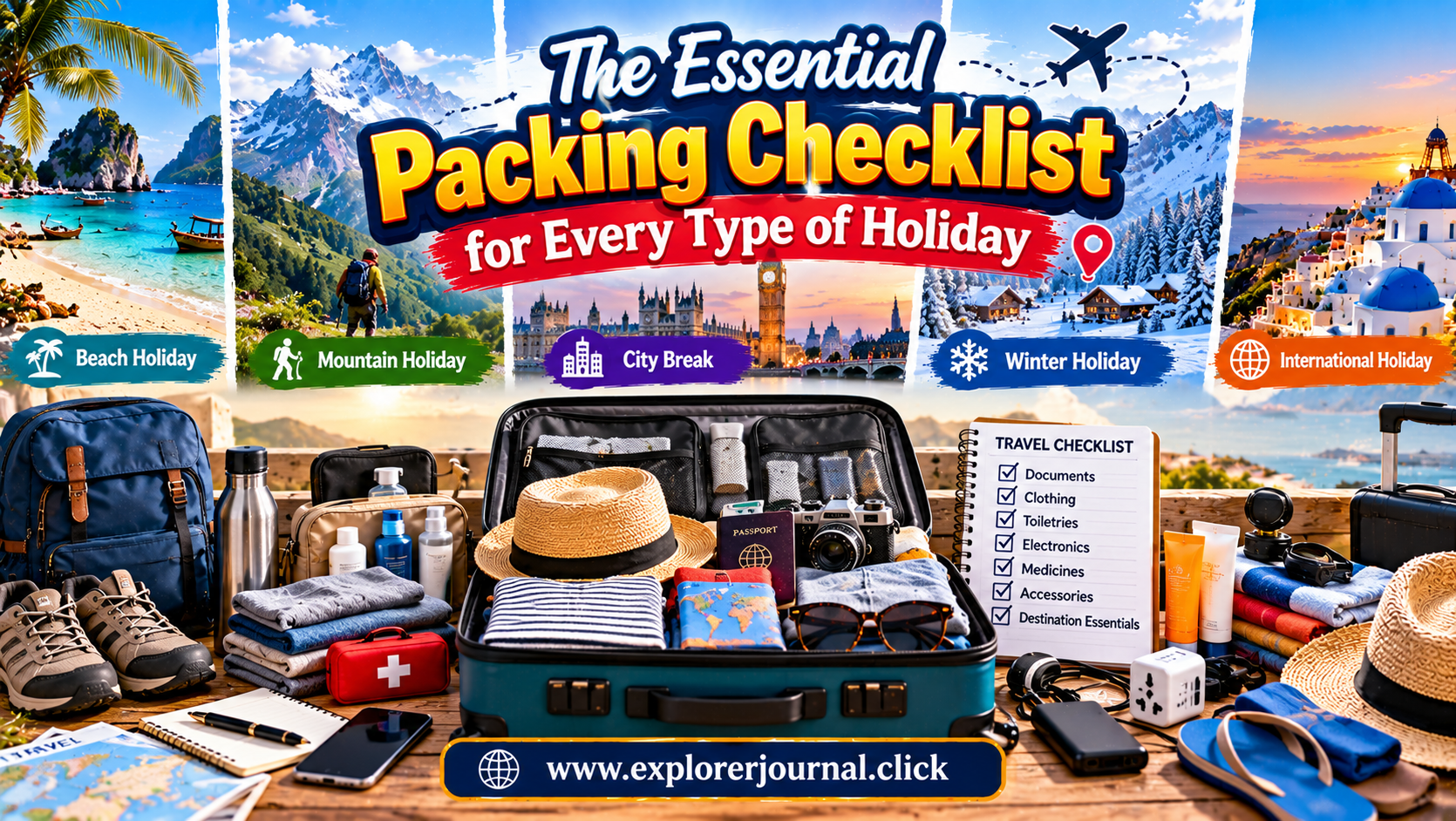
Packing for a holiday can be exciting, but forgetting essential items may create unnecessary stress, extra expenses, and inconvenience during your journey. Whether you are planning a relaxing beach escape, a mountain adventure, a city break, or an international vacation, having a practical packing checklist helps you prepare confidently and travel comfortably.
The ideal packing list depends on your destination, trip duration, weather conditions, planned activities, and personal requirements. A beach holiday requires swimwear and sun protection, while a winter trip demands insulated clothing and suitable footwear. International journeys also require careful preparation of travel documents, electronic devices, and essential medications.
The goal is not to pack everything you own. Instead, choose versatile items that serve multiple purposes, organize your belongings efficiently, and leave room for souvenirs. This guide covers the essential packing checklist for different types of holidays, helping you avoid unnecessary luggage while ensuring you have what you need.
1. Essential Travel Documents
Travel documents should be the first items on your packing checklist because losing access to them can disrupt your entire journey. Before departure, confirm that all necessary documents are valid and readily accessible.
For international travel, carry your passport, required visa, flight tickets, accommodation confirmations, and travel insurance information. Depending on your destination, you may also need vaccination records, driving permits, or other official documents.
Keep digital copies of important documents in a secure account that you can access when needed. Physical copies can provide additional convenience if your phone battery runs out or internet access becomes unavailable.
Store your passport and essential paperwork in a secure travel organizer. Avoid placing every important document in the same bag, and keep emergency contact details somewhere separate.
For domestic holidays, identification, transportation tickets, hotel reservations, and relevant insurance details are generally sufficient, depending on the journey.
2. Clothing for Different Destinations
Clothing often occupies the largest portion of a suitcase, making it important to pack strategically. Begin by checking the destination’s weather forecast and selecting clothes appropriate for the expected conditions.
For ordinary sightseeing, pack comfortable tops, trousers, underwear, socks, sleepwear, and a few versatile outfits. Choose colors and styles that can be mixed and matched, allowing you to create several combinations with fewer garments.
Beach holidays require swimwear, lightweight clothing, sandals, and a cover-up. Mountain trips may require thermal layers, waterproof jackets, hiking trousers, and warm accessories. Winter destinations call for insulated coats, gloves, scarves, and appropriate footwear.
Include one slightly formal outfit if you expect to visit a restaurant or attend a special event. However, avoid packing multiple outfits for activities you may never attend.
A useful approach is to plan your outfits by day before packing. This prevents unnecessary clothing from filling your suitcase and makes getting dressed easier during the holiday.
3. Comfortable and Suitable Footwear
The right footwear can make a significant difference to your travel experience. Uncomfortable shoes may cause blisters, soreness, and fatigue, especially when your itinerary involves walking long distances.
For city breaks, choose comfortable walking shoes that you have already worn. Beach holidays may require sandals or water-friendly footwear, while hiking trips need supportive shoes suitable for the terrain.
Cold-weather destinations may require insulated, water-resistant boots with good grip. If you plan to visit restaurants or special events, consider bringing one additional pair that matches your planned outfits.
Avoid packing too many pairs because footwear can be heavy and bulky. Wear your largest pair during travel to save suitcase space.
Check your destination’s activities before deciding what to bring. A carefully selected pair of walking shoes and one practical alternative will often cover most ordinary holiday needs.
4. Toiletries and Personal Care Products
Personal care essentials help you maintain your usual routine while traveling. Prepare a compact toiletry bag containing a toothbrush, toothpaste, shampoo, conditioner, soap, deodorant, hairbrush, and other products you regularly use.
Include sunscreen and moisturizer, particularly when visiting sunny destinations or spending significant time outdoors. Lip balm can also be useful in dry, windy, or cold environments.
Travel-sized containers can reduce luggage weight and save space. For flights, check current airline restrictions concerning liquids in cabin baggage, including container sizes and transparent-bag requirements where applicable.
Pack personal hygiene products according to your needs and the length of your trip. If you use particular skincare products, contact lenses, or other specialized supplies, bring enough for the journey plus a small reserve.
Place liquids in sealed bags to prevent leaks from damaging clothing and electronics.
5. Medicines and a Basic First-Aid Kit
Health essentials deserve careful attention, especially when visiting remote destinations or traveling internationally. Pack any prescribed medication you require and carry enough for the entire trip, with an additional supply if appropriate.
Keep medicines in their original packaging when practical, and carry prescriptions or supporting documentation when necessary. Research destination-specific restrictions because certain medicines may be controlled or prohibited in other countries.
A basic first-aid kit can include adhesive bandages, antiseptic wipes, blister protection, and other suitable items. Depending on your destination and personal needs, you may also consider insect repellent, motion-sickness remedies, or familiar over-the-counter products.
Store essential medication in your cabin bag rather than relying entirely on checked luggage. This keeps important supplies accessible if baggage is delayed.
Before traveling to remote areas, research nearby healthcare facilities and consider whether additional medical preparations are recommended.
6. Electronics and Charging Accessories
Electronic devices help travelers navigate unfamiliar places, manage bookings, capture photographs, and stay connected with family and friends.
Your packing checklist may include a smartphone, charging cable, power adapter, headphones, camera, and power bank. Bring only the devices you genuinely expect to use.
International travelers should check whether their destination uses different electrical sockets or voltage standards. A suitable travel adapter may be necessary, and some devices may require compatible voltage support.
Download maps, tickets, accommodation details, and essential documents before leaving reliable internet access. This is particularly helpful in remote regions or areas with limited mobile coverage.
Keep electronics protected from moisture and physical damage. Check airline rules for power banks and spare batteries, which generally need to be carried in cabin baggage subject to applicable restrictions.
7. Packing for a Beach Holiday
Beach holidays require items that protect you from the sun and help you enjoy the water comfortably. Begin with swimwear, lightweight clothing, sandals, sunglasses, and a wide-brimmed hat.
Sunscreen, a reusable water bottle, and a beach bag are useful for spending extended periods outdoors. A quick-drying towel can save luggage space, especially if your accommodation does not provide beach towels.
If you plan to snorkel or participate in water activities, check whether equipment is provided by the operator before packing your own. Water-resistant pouches can help protect your phone and other small belongings.
Pack a lightweight cover-up for restaurants, shops, and public areas where swimwear may be inappropriate. Include a change of dry clothing for the return journey from the beach.
Finally, check local conditions and any restrictions concerning swimming, marine activities, or protected coastal environments.
8. Packing for a Mountain or Hiking Holiday
Mountain holidays require clothing and equipment suited to changing weather and outdoor activities. Temperatures can drop quickly at higher elevations, even when conditions are warm at lower altitudes.
Pack moisture-managing base layers, comfortable hiking trousers, warm layers, and a waterproof outer jacket. Sturdy footwear with appropriate grip is essential for uneven or slippery trails.
A small daypack can carry water, snacks, sunscreen, a map, a first-aid kit, and spare clothing. Depending on the activity, a headlamp, trekking poles, or other specialized equipment may also be useful.
Check the difficulty of your planned routes before deciding what to bring. Technical hikes may require equipment and preparation beyond an ordinary sightseeing trip.
Research weather forecasts, trail conditions, and local safety guidance. Avoid carrying unnecessary weight, but never remove essential safety equipment simply to make your bag lighter.
9. Packing for a Winter Holiday
Winter holidays require special attention to warmth, comfort, and protection from wet or icy conditions. Begin with thermal base layers, insulating mid-layers, a suitable winter coat, and warm trousers.
Gloves, a scarf, a hat, and thick socks help protect exposed areas from cold temperatures. Waterproof footwear with good traction is useful when walking through snow or slush.
For skiing or snowboarding, confirm whether equipment can be rented at your destination. Renting may be more convenient than transporting bulky items, particularly for occasional winter travelers.
Pack lip balm, moisturizer, and sunglasses because cold winds and bright reflections from snow can affect comfort. A compact day bag can carry extra layers and personal essentials.
Check the expected temperatures before departure and choose clothing according to the activities planned. Proper layering is generally more versatile than relying on one extremely heavy garment.
10. Packing for a City Break
City breaks often involve museums, restaurants, shopping districts, public transportation, and long walking days. The best packing strategy emphasizes comfort, versatility, and easy access to everyday essentials.
Pack several mix-and-match outfits, comfortable walking shoes, a light jacket, and a small bag that closes securely. A compact umbrella or lightweight raincoat can be useful when weather conditions are unpredictable.
Carry a phone, charger, payment cards, identification, and any required tickets. If you plan to visit religious buildings, research clothing expectations and bring suitable attire.
Avoid packing excessive accessories or valuable items that require unnecessary attention. A small day bag should be sufficient for water, a power bank, and essential belongings.
Before departure, check local transportation arrangements and whether major attractions require advance reservations. Keeping tickets and booking confirmations accessible can make sightseeing more convenient.
11. Packing for an International Holiday
International travel involves additional preparation because entry requirements, climate, communication, and payment systems may differ from those at home.
Check your passport validity and visa requirements well before departure. Carry relevant confirmations and understand any customs regulations concerning medication, food, or restricted items.
Bring payment methods that work internationally and check foreign transaction charges. Depending on your destination, you may need a small amount of local currency for transportation or minor purchases.
Research mobile connectivity options, including roaming plans, local SIM cards, or compatible eSIM services. Download essential information before departure in case internet access becomes unavailable.
Pack a small set of important items in your cabin bag, including medication, a change of clothing, toiletries permitted by airline rules, and valuable electronics. This provides a practical backup if checked luggage is delayed.
12. Organize Your Suitcase Efficiently
An organized suitcase makes it easier to find items and reduces the chance of forgetting essentials. Start by laying everything out before packing, then remove items that do not serve a clear purpose.
Packing cubes can separate clothing by category, while small pouches help organize cables, toiletries, and accessories. Rolling suitable garments can save space, although folding may work better for some fabrics.
Place heavier items near the suitcase wheels and protect fragile belongings with appropriate padding. Keep items needed during travel in an accessible compartment.
Leave some space for souvenirs and avoid forcing the suitcase beyond its intended capacity. Weigh your luggage before departure and compare it with your airline’s allowance.
A final review of your checklist helps confirm that essential documents, medication, chargers, and other important items are packed.
13. Final Checks Before Leaving Home
Before leaving, confirm your transportation bookings, accommodation reservations, and departure times. Check airline baggage rules and review any recent schedule changes.
Charge your electronic devices and power bank according to applicable safety requirements. Download necessary documents and maps, and ensure you can access booking details without an internet connection.
Check the weather forecast again and adjust clothing if necessary. Secure your home, switch off unnecessary appliances where appropriate, and arrange care for pets or plants if required.
Keep your wallet, identification, travel documents, and essential medication accessible. Leave enough time to reach the airport or station without rushing.
Most importantly, do not allow packing to become unnecessarily complicated. A clear checklist and a final review are usually more effective than adding more items at the last minute.
Conclusion
The essential packing checklist for every type of holiday begins with understanding your destination, planned activities, and personal requirements. Travel documents, suitable clothing, comfortable footwear, toiletries, medication, and electronic accessories form the foundation of most packing lists.
From there, customize your luggage according to your holiday. Beach trips require sun protection, mountain adventures demand suitable outdoor equipment, winter escapes need insulated clothing, and international journeys require careful attention to documents and travel rules.
Packing efficiently means choosing useful items rather than carrying everything you might possibly need. With a practical checklist, organized luggage, and a few final preparations, you can travel more comfortably, avoid unnecessary expenses, and focus on enjoying your holiday from the moment your journey begins.