Introduction
The Northern Lights, also known as the aurora borealis, are among the most extraordinary natural phenomena on Earth. Their glowing ribbons of green, purple, pink, and occasionally red light move across dark skies, creating a spectacle that attracts travelers from around the world. Watching this natural display in person is an unforgettable experience, especially when it appears above snowy mountains, frozen lakes, or remote Arctic landscapes.
The Northern Lights occur when charged particles from the Sun interact with Earth’s magnetic field and atmosphere. These interactions release energy in the form of colorful light, producing the moving patterns visible in the night sky. Although auroras can sometimes be seen from lower latitudes during strong geomagnetic activity, destinations near the Arctic Circle generally offer better opportunities for observation.
Planning an aurora trip requires more than choosing a destination. Travelers must consider seasonal darkness, weather conditions, accommodation, transportation, and the possibility that the lights may not appear on a particular night. With realistic expectations and flexible planning, however, it is possible to create a memorable winter adventure.
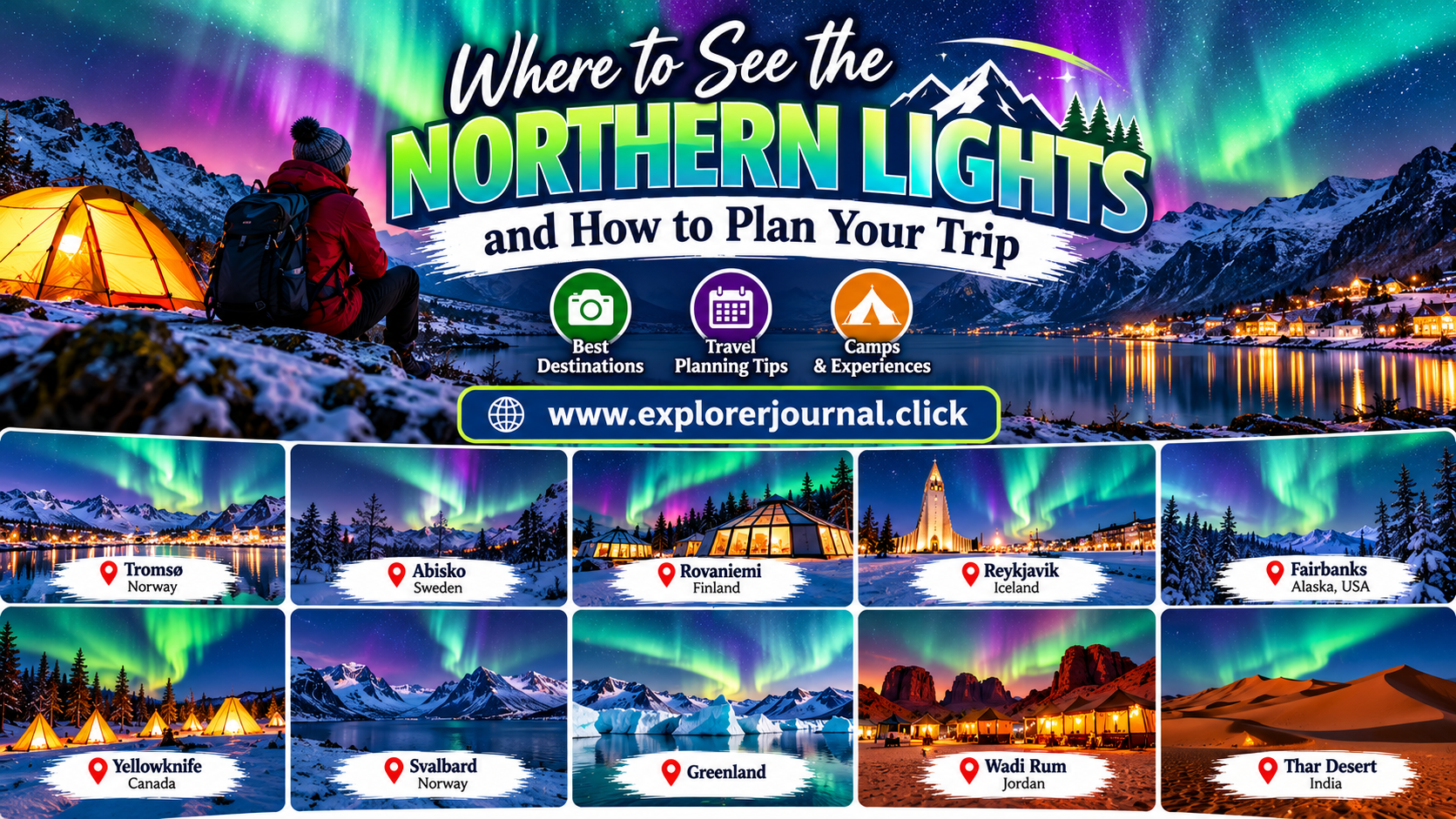
1. Tromsø, Norway
Tromsø is one of the most popular destinations for Northern Lights travelers. Located in northern Norway, this Arctic city combines accessible tourism facilities with dramatic natural scenery, making it suitable for both first-time aurora hunters and experienced photographers.
The surrounding region features mountains, fjords, coastal villages, and open landscapes that provide attractive settings for viewing the aurora. Guided tours frequently travel away from city lights in search of clearer skies. Visitors can also enjoy dog sledding, reindeer experiences, Arctic museums, and traditional Norwegian cuisine.
The main aurora season generally extends from September through early April, when nights are sufficiently dark. Weather can change rapidly, so staying several nights increases the opportunity to experience favorable conditions. Tromsø is especially convenient for travelers who want Arctic scenery without completely sacrificing urban comforts.
2. Abisko, Sweden
Abisko, located in Swedish Lapland, is renowned for its Arctic wilderness and reputation for favorable aurora-viewing conditions. The surrounding mountains and relatively dry regional climate can sometimes provide clearer skies than nearby areas, although no location guarantees a Northern Lights sighting.
Abisko National Park offers scenic surroundings, including Lake Torneträsk, mountain valleys, and snowy landscapes during winter. Visitors can explore designated trails, participate in guided excursions, and enjoy the quiet atmosphere of the Swedish Arctic.
Winter is popular for aurora viewing, while autumn and early spring offer different combinations of darkness and outdoor accessibility. Travelers should prepare for very cold temperatures and limited daylight during midwinter. Warm clothing, insulated footwear, and suitable accommodation are essential for spending extended periods outdoors.
3. Rovaniemi, Finland
Rovaniemi is a well-known gateway to Finnish Lapland and a convenient destination for travelers seeking Northern Lights experiences alongside winter activities. Situated near the Arctic Circle, the city offers access to forests, frozen lakes, and snowy countryside.
Visitors can join guided aurora excursions, stay in glass-roofed cabins, experience Finnish saunas, and explore local cultural attractions. Winter activities may include snowshoeing, cross-country skiing, and husky sledding, depending on conditions and available services.
The aurora season generally runs from late summer or early autumn through early spring, with darkness providing opportunities for observation. Rovaniemi’s convenient transport connections and range of accommodation make it particularly appealing for families and travelers planning their first Arctic holiday.
4. Iceland
Iceland combines Northern Lights viewing with volcanoes, glaciers, waterfalls, black-sand beaches, and dramatic coastal scenery. Its diverse landscapes make it an excellent destination for travelers who want to combine aurora hunting with daytime exploration.
Reykjavik offers accommodation, restaurants, and guided excursions, while rural areas provide darker skies away from urban lighting. Popular locations include the countryside around the Golden Circle and selected coastal regions, although the best viewing spot depends on cloud cover and road conditions.
The Northern Lights can generally be observed from September through April when darkness and weather conditions cooperate. Winter driving requires particular care because snow, ice, and strong winds can affect travel plans. Travelers should monitor road information and avoid driving into unfamiliar areas during dangerous weather.
5. Fairbanks, Alaska, United States
Fairbanks is a prominent Northern Lights destination in Alaska, offering long winter nights and access to remote landscapes. Its inland location provides a different climate from Alaska’s coastal regions, and clear conditions can create excellent viewing opportunities.
Visitors can join guided aurora tours, relax in hot springs, explore winter trails, and learn about local history and culture. The surrounding countryside offers opportunities to view the aurora away from artificial lighting.
The viewing season usually extends from late August into April, with winter providing especially long periods of darkness. Temperatures can become extremely low, so visitors need high-quality insulated clothing and suitable outdoor equipment. Booking several nights and allowing flexibility can improve the overall experience.
6. Yellowknife, Canada
Yellowknife, the capital of Canada’s Northwest Territories, is famous for its expansive skies and opportunities to observe the aurora. Its location beneath the auroral oval makes it an attractive destination for travelers hoping to experience the Northern Lights.
Organized excursions often take visitors to viewing sites outside the city, where dark surroundings make the colors easier to appreciate. Depending on the season, travelers can also enjoy winter festivals, snow-based activities, and cultural experiences connected with northern communities.
The viewing season typically runs from late summer through early spring. Clear skies remain essential, regardless of auroral activity. Because winter temperatures can be severe, travelers should confirm that tours provide appropriate shelter and prepare for extended periods outdoors.
7. Svalbard, Norway
Svalbard is a remote Arctic archipelago situated between mainland Norway and the North Pole. Its extraordinary polar environment, rugged mountains, glaciers, and frozen landscapes create a distinctive setting for winter travel.
During the polar night, the Sun remains below the horizon for an extended period, providing unusually long hours of darkness. This creates many potential opportunities for aurora observation, although cloud cover and atmospheric conditions still determine visibility.
Longyearbyen serves as the main settlement and starting point for guided excursions. Travelers should explore with qualified local operators because the surrounding wilderness presents serious safety challenges. Cold temperatures, changing weather, and polar wildlife require careful preparation and respect for local safety regulations.
8. Kiruna, Sweden
Kiruna is a northern Swedish town surrounded by forests, mountains, and Arctic wilderness. It provides access to aurora-viewing locations, winter activities, and the distinctive culture of Swedish Lapland.
Travelers can explore nearby Abisko National Park, participate in guided snowmobile excursions, and discover regional attractions. The surrounding countryside offers numerous possibilities for photography when the sky is clear and artificial lighting is limited.
The best viewing opportunities generally occur during the darker months between autumn and early spring. Visitors should allow time for weather changes and consider accommodation that makes it easy to reach suitable viewing locations. Warm layers and reliable transport arrangements are particularly important during winter.
9. Greenland
Greenland offers a remarkable setting for Northern Lights viewing, combining enormous icebergs, glaciers, remote settlements, and Arctic wilderness. Its relatively low population density provides access to dark skies in many locations away from artificial lighting.
Destinations such as Kangerlussuaq and Ilulissat attract travelers interested in aurora photography and dramatic natural scenery. Visitors can combine evening aurora excursions with daytime activities such as guided walks, boat trips when available, and cultural visits.
The viewing season generally begins in late summer and continues through spring, depending on local darkness and weather. Transportation between settlements can be limited, so itineraries require careful organization. Travelers should check seasonal flight schedules, accommodation availability, and local excursion options before booking.
10. The Faroe Islands
The Faroe Islands, located in the North Atlantic between Iceland and Norway, offer a less conventional destination for travelers hoping to photograph the Northern Lights. Their rugged coastlines, green cliffs, waterfalls, and small villages create distinctive foregrounds for night photography.
Aurora sightings are possible during periods of sufficient darkness and suitable geomagnetic activity, but cloudy and changeable weather can make observation difficult. The islands are therefore better suited to flexible travelers who value scenery and outdoor exploration even when the lights remain hidden.
Autumn and winter provide dark nights, while other seasons offer excellent opportunities for landscape photography. Visitors should monitor weather forecasts carefully and avoid exposed coastal areas during strong winds or dangerous conditions.
How to Plan Your Northern Lights Trip
Choose the Right Season
The Northern Lights require dark skies, making autumn, winter, and early spring the main travel seasons in Arctic destinations. Many travelers choose between September and March, although the precise season varies by location.
Midwinter provides long nights but can bring extreme cold and limited daylight. Early autumn and late winter may offer a useful balance between darkness and outdoor activities. Choose dates according to your preferred climate, budget, and available experiences.
Understand Aurora Forecasts
Aurora forecasts estimate geomagnetic activity, while weather forecasts indicate cloud cover and precipitation. Both are important because strong auroral activity cannot be seen through thick clouds.
Check forecasts regularly, but avoid treating them as guarantees. Aurora conditions can change quickly, and displays may appear unexpectedly. Local guides can help identify viewing locations with better sky conditions.
Book Multiple Nights
One of the most effective planning strategies is to spend several nights in a suitable destination. A single evening may be cloudy or have limited auroral activity, while additional nights provide more opportunities.
If possible, avoid scheduling your only aurora excursion immediately before departure. A flexible itinerary reduces disappointment and allows you to adjust plans according to the weather.
Pack Appropriate Clothing
Arctic temperatures can become dangerously cold, especially when travelers remain stationary outdoors for long periods. Bring insulated outerwear, thermal base layers, warm gloves, a suitable hat, and waterproof winter footwear.
Hand warmers and insulated layers can improve comfort during photography sessions. Keep spare batteries warm because cold temperatures can reduce battery performance. A small headlamp can also help when walking in dark environments.
Prepare for Photography
You do not need professional equipment to enjoy the Northern Lights. Modern smartphones can capture auroras under suitable conditions, while cameras with manual settings provide greater control over exposure.
A tripod helps prevent blurred images during long exposures. Use a wide-angle lens when available, focus carefully on distant lights, and experiment with exposure settings. Photographing mountains, trees, or buildings in the foreground can add depth and scale to your images.
Remember to spend some time watching the display without a camera. Experiencing the colors and movement directly can be more memorable than concentrating entirely on photographs.
Set a Realistic Budget
Northern Lights trips can involve significant expenses, including flights, winter accommodation, guided excursions, transportation, meals, and suitable clothing. Popular Arctic destinations may become more expensive during peak winter periods.
Compare package inclusions carefully and check whether airport transfers, winter equipment, and guided tours are included. Independent travel may offer flexibility, but remote locations can require specialized transportation and additional planning.
Conclusion
Seeing the Northern Lights is a remarkable travel experience that combines natural beauty, scientific wonder, and the excitement of exploring unfamiliar landscapes. From Tromsø and Abisko to Fairbanks, Yellowknife, Iceland, and Greenland, numerous destinations offer opportunities to witness this extraordinary phenomenon.
The most successful aurora trips rely on flexibility, suitable preparation, and realistic expectations. Darkness, clear skies, and geomagnetic activity must align, so no destination can guarantee a sighting on a specific night. Spending several nights in an appropriate region can improve your chances while allowing time to enjoy other attractions.
Choose a destination that matches your budget, preferred activities, and comfort level with cold weather. Prepare suitable clothing, monitor forecasts, and consider guided excursions when exploring unfamiliar terrain. With thoughtful planning, your journey can become much more than a search for colorful lights. It can be an unforgettable adventure through Arctic landscapes, local cultures, and some of the world’s most beautiful night skies.