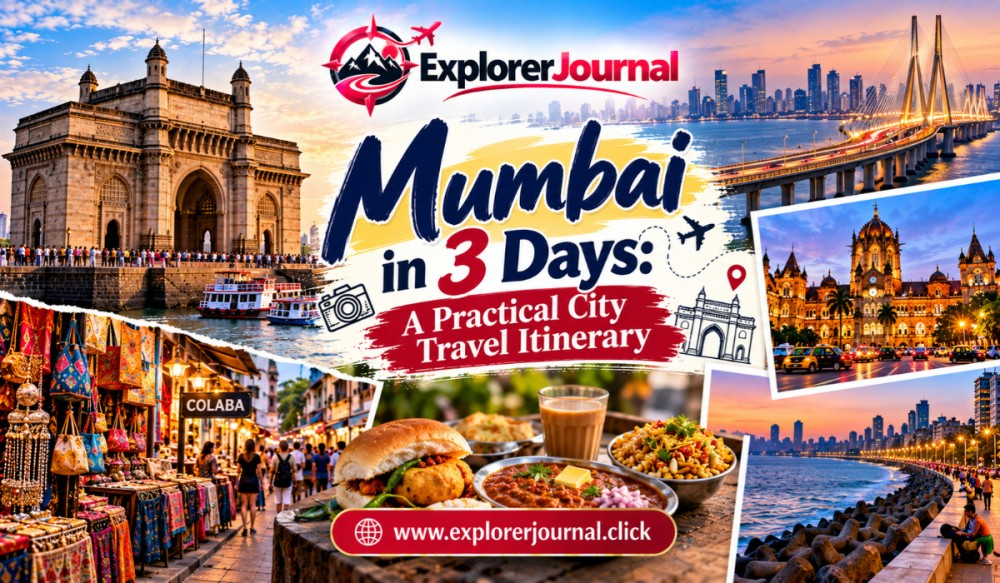
Mumbai is a city where historic architecture, coastal views, lively markets, modern entertainment, and diverse food traditions come together. Known as India’s financial capital and the heart of its Hindi film industry, Mumbai offers a fascinating travel experience for visitors who want to explore urban culture, heritage, shopping, and local life. From the iconic Gateway of India to the lively lanes of Colaba and the peaceful atmosphere of Marine Drive, the city provides plenty of memorable experiences.
Planning a short visit can feel challenging because Mumbai is spread across a large area, and traffic can affect travel times. A practical three-day itinerary helps travelers explore the city’s major attractions without spending the entire trip on the road. This guide covers the best places to visit, local food to try, shopping areas, transport options, and useful tips for making the most of a three-day stay.
Day 1: Discover South Mumbai’s Historic Landmarks
The first day is best spent exploring South Mumbai, where colonial-era buildings, waterfront attractions, art spaces, and traditional markets reveal the city’s historical character. Many popular landmarks are located relatively close to one another, making this area suitable for walking between selected stops.
Morning: Gateway of India and the Taj Mahal Palace
Begin your Mumbai journey at the Gateway of India, one of the city’s most recognizable landmarks. Built during the British period and completed in 1924, this monumental arch stands beside the Arabian Sea. Its impressive architecture and waterfront setting make it a popular place for photographs and a useful starting point for exploring South Mumbai.
Arrive early if you prefer a quieter atmosphere. Morning visits can also provide comfortable conditions for walking around the waterfront before the busiest hours begin. You can watch boats moving across the harbor and observe the daily activities of visitors, vendors, and local residents.
Across from the Gateway stands the famous Taj Mahal Palace hotel, known for its distinctive architecture and long association with Mumbai’s history. Visitors can admire its exterior and enjoy the surrounding streets, while access to hotel interiors depends on the hotel’s policies and arrangements.
After exploring the area, take some time to walk through nearby Colaba. The neighborhood combines old buildings, small shops, cafés, restaurants, and busy streets, offering an introduction to Mumbai’s varied urban atmosphere.
Late Morning: Chhatrapati Shivaji Maharaj Vastu Sangrahalaya
Continue to Chhatrapati Shivaji Maharaj Vastu Sangrahalaya, one of India’s prominent museums. The museum houses collections covering art, archaeology, decorative objects, and historical artifacts. Its architecture and landscaped surroundings also make it an interesting stop for travelers who appreciate heritage buildings.
Allow around two hours if you want to explore the collections at a relaxed pace. Check the museum’s official visitor information before your trip for current opening hours, admission details, and any temporary exhibitions.
If museums are not your main interest, you can shorten this visit and spend more time exploring the surrounding heritage district.
Afternoon: Kala Ghoda and Fort
Head toward Kala Ghoda, an area known for galleries, cultural spaces, cafés, and distinctive architecture. It is particularly appealing to travelers interested in art, design, photography, and Mumbai’s creative community.
Walk through the neighborhood to appreciate its old buildings and public spaces. Depending on your interests, you can visit an art gallery, browse a bookshop, or stop for coffee. The area is also associated with cultural events and art festivals, although schedules vary throughout the year.
Next, explore the Fort district, where historic commercial buildings and busy streets reflect Mumbai’s development as a major trading center. Look for architectural details around heritage structures rather than rushing from one attraction to another.
Evening: Marine Drive and Girgaon Chowpatty
End your first day at Marine Drive, the sweeping coastal road that curves along Back Bay. Its promenade is especially popular in the late afternoon and evening, when people gather to walk, relax, and watch the changing colors of the sky.
Marine Drive is an excellent place to experience Mumbai’s everyday rhythm. Office workers, families, students, and travelers share the waterfront, creating an atmosphere that feels both lively and relaxed.
If time and energy permit, continue toward Girgaon Chowpatty, a well-known beach area. You can enjoy the sea breeze, observe the evening crowd, and sample local snacks from established food stalls. Swimming is generally not recommended because water conditions and pollution can be unsafe.
For dinner, choose a nearby restaurant serving Maharashtrian, North Indian, or coastal Indian cuisine. After a full day of sightseeing, return to your hotel without adding too many distant destinations to the schedule.
Day 2: Explore Markets, Street Food, and Local Culture
The second day focuses on Mumbai’s markets, religious landmarks, and neighborhood experiences. This part of the itinerary offers a closer look at how the city shops, eats, and moves through its daily routines.
Morning: Crawford Market and the Surrounding Streets
Start the day at Crawford Market, officially known as Mahatma Jyotiba Phule Mandai. This historic market is famous for its busy atmosphere, varied merchandise, and distinctive building. Depending on the stalls and sections you explore, you may find fresh produce, household items, spices, and other everyday goods.
The surrounding streets are equally interesting. They contain small shops, traditional businesses, and vendors serving local customers. Walk at a comfortable pace and observe how the market operates rather than treating it only as a shopping destination.
The area can be crowded, so keep your belongings secure and avoid blocking narrow walkways while taking photographs. If you plan to buy anything, compare prices and confirm the final amount before paying.
Late Morning: Chhatrapati Shivaji Maharaj Terminus
From the market area, travel toward Chhatrapati Shivaji Maharaj Terminus, one of Mumbai’s most remarkable architectural landmarks. This major railway station is recognized as a UNESCO World Heritage Site and combines Victorian Gothic design with Indian architectural influences.
Its decorative stonework, towers, arches, and detailed exterior make it an important stop for architecture enthusiasts. The station remains an active transport hub, so visitors should respect railway rules and avoid entering restricted areas.
The exterior is particularly rewarding to photograph from permitted public viewpoints. Because this is a working station, keep your visit focused on observing the architecture without interfering with commuters.
Afternoon: Dabbawalas, Local Lunch, and Haji Ali
For lunch, choose a local restaurant offering a traditional thali, a simple vegetarian meal, or a regional seafood dish. Mumbai’s food scene reflects influences from Maharashtra, Gujarat, South India, and communities that have made the city their home.
After lunch, travel toward Haji Ali Dargah, a prominent religious site situated on an islet off the Worli coast. The complex is associated with the Sufi saint Pir Haji Ali Shah Bukhari and attracts visitors from different backgrounds.
Access to the causeway depends on tides and weather conditions, so check local conditions before planning your visit. Dress respectfully, follow site-specific rules, and be mindful of people visiting for religious reasons.
If the causeway is inaccessible or the weather is unsuitable, enjoy the surrounding coastal views instead. Avoid trying to cross during unsafe conditions.
Late Afternoon: Shopping at Colaba Causeway
Spend the late afternoon shopping along Colaba Causeway, a popular area for souvenirs, accessories, clothing, decorative items, and street shopping. It is a good place to browse for small gifts and experience one of Mumbai’s well-known shopping streets.
Prices may vary between vendors, so compare products before purchasing. Polite bargaining may be possible at some stalls, but it is not appropriate everywhere. Check the quality of items carefully, especially if you are buying accessories or products that imitate branded designs.
If you prefer established stores, cafés, or quieter browsing, explore the surrounding Colaba lanes instead of concentrating entirely on street stalls.
Evening: Experience Mumbai’s Street Food
Dedicate the evening to sampling Mumbai’s famous snacks. The city’s street food is an important part of its identity, with dishes that combine regional ingredients, bold flavors, and convenient preparation.
Vada pav is one of the best-known local specialties. It consists of a spiced potato fritter served inside a bread roll, often accompanied by chutneys and fried green chili. Pav bhaji is another popular choice, featuring a spiced vegetable mash served with buttered bread rolls.
You may also encounter bhel puri, sev puri, and other chaat dishes that combine crisp ingredients, chutneys, vegetables, and spices. For a sweet finish, consider kulfi or traditional Indian desserts from a reputable shop.
Choose vendors with good food turnover and visibly clean preparation practices. Travelers with sensitive stomachs may prefer freshly cooked food served hot and bottled or safely filtered drinking water.
Day 3: Coastal Views, Green Spaces, and Modern Mumbai
The third day combines coastal scenery with a different side of Mumbai. Depending on your interests, you can choose between a nature-focused outing, a visit to a major cultural attraction, or a more relaxed exploration of the city’s neighborhoods.
Morning Option 1: Bandra and Bandra Fort
Begin the day in Bandra, a neighborhood known for its coastal setting, cafés, shopping streets, and blend of older residential areas with modern city life.
Visit Bandra Fort, also called Castella de Aguada, to enjoy views of the Arabian Sea and the Bandra-Worli Sea Link. The area offers a different perspective from South Mumbai’s historic waterfront, particularly for visitors interested in photography and coastal landscapes.
Afterward, explore selected streets in Bandra. The neighborhood features independent cafés, bakeries, boutiques, and public spaces. You can stop for breakfast or coffee and spend time observing the area’s relaxed atmosphere.
Morning Option 2: Sanjay Gandhi National Park
If you prefer nature to city neighborhoods, consider Sanjay Gandhi National Park in the northern part of Mumbai. The park offers green landscapes, walking opportunities, and access to the Kanheri Caves, a historic Buddhist cave complex.
The caves contain rock-cut structures, inscriptions, and features associated with the development of Buddhism in western India. Exploring the site can provide a striking contrast to Mumbai’s crowded streets and modern buildings.
This excursion requires more planning than a visit to Bandra. Check current park timings, cave access, ticket arrangements, and transport options before leaving. Allow several hours for travel and exploration, and avoid attempting to combine the park with too many distant attractions on the same day.
Afternoon: Lunch and a Neighborhood Walk
After your morning activity, enjoy lunch in the area you are visiting. Bandra has cafés and restaurants offering Indian and international food, while areas near the national park may provide simpler dining options.
If you selected Bandra, spend some time exploring its older streets and local shopping areas. You may notice a mix of traditional homes, churches, street art, and newer commercial developments. Respect residential privacy when taking photographs, particularly in narrow lanes.
If you selected Sanjay Gandhi National Park, keep the afternoon schedule flexible because walking and travel can take longer than expected. Return toward central Mumbai and choose a convenient restaurant rather than adding several distant attractions.
Late Afternoon: Worli Sea Face or a Relaxed Café Visit
For a quieter end to the sightseeing portion of your trip, visit Worli Sea Face if you are already in the area and conditions are suitable. The promenade offers coastal views and a chance to observe the city’s changing skyline.
Alternatively, spend the late afternoon at a café in Bandra or another neighborhood near your hotel. A slower schedule is often useful on the final day, especially if you have an evening train or flight.
Avoid scheduling an attraction far from your departure point if you need to collect luggage or travel to the airport. Mumbai traffic can be unpredictable, so keep a generous time buffer.
Evening: A Final Mumbai Dinner
Finish your trip with a meal that reflects your personal interests. You could choose a traditional Maharashtrian restaurant, a seafood establishment, a vegetarian thali restaurant, or a café serving modern Indian dishes.
If you have not yet tried local specialties, use your final meal to sample one or two dishes you missed earlier. Alternatively, choose a restaurant with a view if that suits your budget and location.
A final evening walk along a nearby promenade or through a lively commercial street can provide a fitting conclusion to your visit.
Getting Around Mumbai in Three Days
Mumbai has several transport options, and choosing the right one can make a major difference to your itinerary. Local trains connect many parts of the city and are useful for longer journeys, but they can become extremely crowded during peak commuting hours. First-time visitors should plan routes carefully and consider avoiding rush periods when possible.
Mumbai Metro services cover selected corridors and can be convenient for destinations near their stations. BEST buses provide broad city coverage, while taxis and app-based cabs offer more direct travel, particularly when carrying luggage or visiting places that are not close to railway or metro stations.
Walking is practical in parts of South Mumbai, including sections around Colaba, Kala Ghoda, and Fort. However, distances can be longer than they appear on a map, and weather conditions may make extended walks tiring.
For the most efficient three-day trip, group attractions by neighborhood. Explore South Mumbai on the first day, focus on central markets and nearby cultural stops on the second, and reserve the third day for Bandra or Sanjay Gandhi National Park. Check live traffic and public transport information before setting out.
Best Time to Visit Mumbai
The period from November to February is generally comfortable for sightseeing, with comparatively pleasant temperatures and lower humidity than the hotter months. These conditions are suitable for walking around heritage districts, exploring markets, and spending time along the coast.
March to May can be hot and humid, so schedule outdoor activities early in the morning or later in the afternoon. The monsoon season, usually from June to September, brings heavy rainfall that can affect transport and outdoor plans. Rain can make the city atmospheric, but flooding and delays are possible.
Before traveling during the monsoon, monitor weather advisories and transport updates. Carry suitable footwear, a compact rain jacket or umbrella, and a flexible itinerary that allows indoor alternatives.
Practical Tips for First-Time Visitors
Book accommodation according to your itinerary rather than choosing a hotel solely because it looks close on a map. Staying near a convenient railway or metro connection can reduce travel time, while accommodation in South Mumbai may be useful if heritage attractions are your priority.
Carry a small amount of cash for local purchases, although digital payments are widely used in many businesses. Keep your phone charged, save your hotel address, and use trusted transport services. During crowded commutes and market visits, keep valuables secure.
Dress comfortably for walking and dress respectfully when entering religious places. Ask permission before photographing people in close-up, and follow restrictions at monuments, museums, and transport facilities.
Most importantly, avoid trying to see every attraction in three days. Mumbai rewards travelers who leave room for an unplanned café stop, a market discovery, or a longer evening by the sea.
Mumbai in three days can be an exciting introduction to one of India’s most dynamic cities. The first day offers historic landmarks and waterfront views, the second brings markets, architecture, religious heritage, and street food, while the third allows you to discover coastal neighborhoods or escape into a green landscape.
The key to a successful visit is thoughtful planning. Group attractions by location, use public transport where convenient, allow extra time for traffic, and choose experiences that match your interests. Whether you are admiring the Gateway of India, tasting vada pav, exploring Colaba’s shops, or watching the sunset along the coast, Mumbai offers a memorable mix of history, food, culture, and everyday city life.