Introduction
Train travel in India offers a remarkable way to explore the country’s diverse landscapes, historic cities, mountain regions, and coastal destinations. From busy metropolitan stations to quiet countryside platforms, Indian railways connect travelers with places that reveal the country’s culture, traditions, and natural beauty. For many passengers, the journey itself becomes as memorable as the destination.
India’s extensive railway network serves millions of passengers and offers different travel experiences, including affordable everyday trains, comfortable express services, premium long-distance journeys, and scenic mountain railways. Whether you are planning a family holiday, a solo adventure, or a cross-country trip, understanding ticket booking procedures and route options can make your experience smoother.
Planning ahead is particularly important during festivals, school holidays, and popular tourist seasons when seats may become difficult to obtain. Choosing the right train, understanding ticket classes, checking reservation rules, and packing appropriately can help you travel with greater confidence.
This guide explores practical ticket booking tips, essential railway information, and some of India’s most scenic rail journeys for travelers seeking memorable experiences.
1. Understanding India’s Railway Network
Indian Railways connects major cities, small towns, industrial centers, pilgrimage destinations, and remote regions. Its extensive network makes trains a practical transportation choice for both short journeys and long-distance travel.
Different services operate according to route length, demand, and passenger requirements. Express trains connect cities with fewer stops, while passenger and local services often serve smaller communities. Premium services may offer faster journeys, upgraded seating, or additional onboard facilities.
Before selecting a train, compare the departure station, arrival station, journey duration, and scheduled stops. Large cities sometimes have several railway stations, so confirming the correct location is essential.
Travelers should also check whether the selected service operates daily or only on particular days. A suitable route with a convenient departure time can reduce waiting, simplify connections, and make the overall journey more comfortable.
2. Booking Train Tickets Online
Online booking has made train travel more convenient for passengers who want to reserve seats before arriving at a station. The official Indian Railway Catering and Tourism Corporation platform, commonly known as IRCTC, is a major option for booking reserved train tickets.
Passengers generally need an account to complete online reservations. After signing in, enter the departure station, destination, travel date, and preferred class to review available trains.
Compare departure times, arrival schedules, seat availability, and journey duration before selecting a service. Enter passenger information carefully and review the booking details before completing payment.
Once the reservation is confirmed, save the ticket information and booking reference. Keep the details accessible on your phone and retain a backup where practical.
Use official railway services or reputable authorized booking providers. Avoid unfamiliar websites that request unnecessary personal information or promise guaranteed reservations without transparent terms.
3. Choose the Right Ticket Class
Indian trains offer several travel classes, allowing passengers to select an option according to their budget and comfort preferences.
General or unreserved accommodation may suit certain short journeys, but availability and crowding can vary significantly. Reserved seating classes provide assigned seats on applicable services, while sleeper accommodation is common on many longer routes.
Air-conditioned classes offer different levels of comfort and privacy. Depending on the train, options may include AC three-tier, AC two-tier, and first-class AC compartments. Chair-car services are also available on selected routes, particularly for daytime journeys.
Before booking, check the facilities provided by the specific train rather than assuming every service offers the same arrangements. Consider journey length, overnight travel, privacy, air conditioning, and luggage requirements.
The cheapest option is not always the most comfortable, while the most expensive class may not be necessary for a short trip. Choose the arrangement that best matches your needs.
4. Understand Seat Availability and Waiting Lists
Popular trains can fill quickly, particularly during major festivals, summer holidays, and busy tourist periods. Checking availability early gives travelers more time to compare alternatives.
If confirmed seats are unavailable, the booking system may display a waiting-list status or another reservation category. The meaning and implications depend on the ticket type and applicable railway rules.
Do not assume that every waiting-list ticket will become confirmed. Check the current status through official railway services and understand the conditions governing travel with that ticket.
Where practical, compare alternative departure dates, nearby stations, or different trains. A slightly different schedule may offer a more convenient confirmed reservation.
If your journey is essential, avoid depending entirely on an uncertain booking. Review available alternatives and make sure any additional reservations follow the relevant cancellation and refund rules.
5. Book During Busy Travel Seasons
Travel demand increases during Diwali, Holi, summer vacations, Christmas, and other major holidays. Popular pilgrimage routes and tourist destinations can also experience heavy demand during special events.
For these journeys, research reservation opening dates and booking rules well in advance. Indian Railways publishes applicable reservation arrangements, and policies may change, so consult official information before planning.
Enter passenger details carefully and be ready to complete payment through an accepted method. Avoid rushing through the final review because mistakes can complicate travel arrangements.
If standard reservations are unavailable, investigate legitimate alternatives rather than relying on unofficial agents or unrealistic promises. Special services may operate during some peak periods, but availability varies.
Planning early improves your choices and reduces the stress of arranging transportation shortly before departure.
6. The Konkan Railway: Coastal Landscapes and Green Hills
The Konkan Railway offers one of India’s most memorable rail experiences, connecting destinations along the country’s western coastline. The route passes through green hills, rivers, tunnels, bridges, and countryside shaped by the Arabian Sea’s coastal climate.
Depending on the service and section traveled, passengers may see coconut palms, agricultural villages, waterways, and dramatic landscapes during the journey. Monsoon travel can be especially atmospheric, with lush vegetation and flowing streams, although heavy rain may also cause delays.
Travelers can use the route to reach destinations in Maharashtra, Goa, and Karnataka. It is particularly attractive to visitors planning coastal holidays who want to enjoy the scenery without driving long distances.
Check seasonal operating conditions and train schedules before booking. Choosing a daytime departure on a suitable section can provide better opportunities to appreciate the surrounding landscapes.
7. The Darjeeling Himalayan Railway
The Darjeeling Himalayan Railway is famous for its narrow-gauge tracks, mountain scenery, and historic engineering. Recognized as part of a UNESCO World Heritage railway property, it offers a distinctive journey through the Himalayan foothills of West Bengal.
The railway connects New Jalpaiguri and Siliguri with Darjeeling through routes and services that have evolved over time. Selected journeys pass through hillside settlements, tea-growing landscapes, and areas with beautiful mountain views.
The famous Batasia Loop is a notable feature where the track curves around a landscaped area near Darjeeling. Toy-train services are popular with visitors seeking a slower, heritage-focused experience.
Because services and operating arrangements can vary, check the current timetable and availability before planning your visit. Reserve popular journeys early, particularly during busy tourism periods.
8. The Kalka–Shimla Railway
The Kalka–Shimla Railway provides a scenic journey through the foothills of the Himalayas in northern India. Its narrow-gauge track passes through tunnels, bridges, mountain slopes, and small settlements.
The route is known for its engineering features and changing landscapes. As the train climbs toward Shimla, passengers can enjoy views of forested hills and valleys that differ from the surrounding plains.
The journey is especially appealing to travelers who want to experience the mountains without relying entirely on road transportation. It can also become part of a longer holiday combining Chandigarh, Kalka, and Shimla.
Check the train schedule carefully and allow sufficient time for connections. Weather conditions may influence operations, so maintaining flexibility is useful during winter or periods of heavy rain.
9. The Nilgiri Mountain Railway
The Nilgiri Mountain Railway connects Mettupalayam with the hill station of Ooty, also known as Udhagamandalam, in Tamil Nadu. The historic railway is part of the UNESCO-listed Mountain Railways of India.
The journey passes through forested slopes, tea plantations, bridges, and tunnels. Its gradual climb provides changing views of the Nilgiri Hills and surrounding countryside.
The railway’s distinctive engineering and mountain setting make it attractive to railway enthusiasts, photographers, and travelers interested in heritage transportation.
Ooty is also known for botanical gardens, viewpoints, and tea-related experiences, making the train journey a useful part of a broader holiday.
Check current services and booking availability before traveling because maintenance, seasonal demand, and operational arrangements may affect schedules.
10. The Kashmir Valley Railway Experience
Rail travel in the Kashmir Valley offers a different perspective on the region’s mountains, fields, rivers, and settlements. Services operating within the valley connect important locations and provide a practical alternative to some road journeys.
Depending on the route and season, travelers may enjoy views of agricultural landscapes, snow-covered surroundings, and mountain scenery. The railway also includes significant engineering features developed to improve connectivity across challenging terrain.
Travelers should check current operating information, local travel advisories, and any restrictions before planning a journey. Weather, security conditions, and operational changes may influence access.
When services are available, train travel can form part of a broader itinerary exploring Srinagar and other permitted destinations. Confirm onward transportation and accommodation arrangements in advance.
11. Check Train Status and Platform Information
Before leaving for the station, verify the latest train information. Departure platforms, arrival times, and operating schedules can change, so relying only on an old screenshot or printed timetable may cause confusion.
Use official railway information services or reliable train-status applications to check running status and expected arrival times. Allow enough time to reach the station, locate the platform, and board without rushing.
Large stations can be crowded and confusing, particularly during peak travel periods. Read electronic display boards and station announcements carefully.
If you need assistance, approach official railway staff or designated help counters. Keep your ticket and identification accessible, and confirm the train number before boarding.
12. Pack Smartly for a Train Journey
Packing appropriately improves comfort, especially on overnight and long-distance journeys. Carry your ticket details, identification where required, phone, charger, payment methods, and essential medication in an accessible bag.
Bring drinking water from a reliable source, suitable snacks, tissues, hand sanitizer, and any personal hygiene products you need. A light blanket or travel pillow may be helpful on longer journeys, depending on the accommodation provided.
Keep valuables secure and avoid leaving phones, wallets, or important documents unattended. Use luggage locks where appropriate and follow railway rules regarding baggage.
For scenic routes, a camera or phone with sufficient battery storage can help capture the landscape. However, keep devices secure near open doors and windows, and never lean outside a moving train.
13. Save Money Without Sacrificing Comfort
Train travel can provide good value when tickets and journey details are selected carefully. Booking early, comparing available classes, and avoiding unnecessary last-minute changes can help manage expenses.
For shorter routes, a reserved daytime seat may provide sufficient comfort without requiring a more expensive overnight class. On longer journeys, consider whether air conditioning, bedding arrangements, and privacy justify the additional fare.
Check the complete booking cost and understand cancellation conditions before paying. Avoid unofficial ticket sellers and offers that appear suspiciously cheap.
Food expenses can also be managed by carrying suitable snacks and checking available onboard catering arrangements. Always consider hygiene and dietary needs when choosing meals.
Conclusion
Train travel in India offers a practical and memorable way to discover the country’s cities, countryside, coastlines, and mountain regions. Careful ticket booking, selecting the right class, monitoring train status, and preparing suitable luggage can make the journey more comfortable.
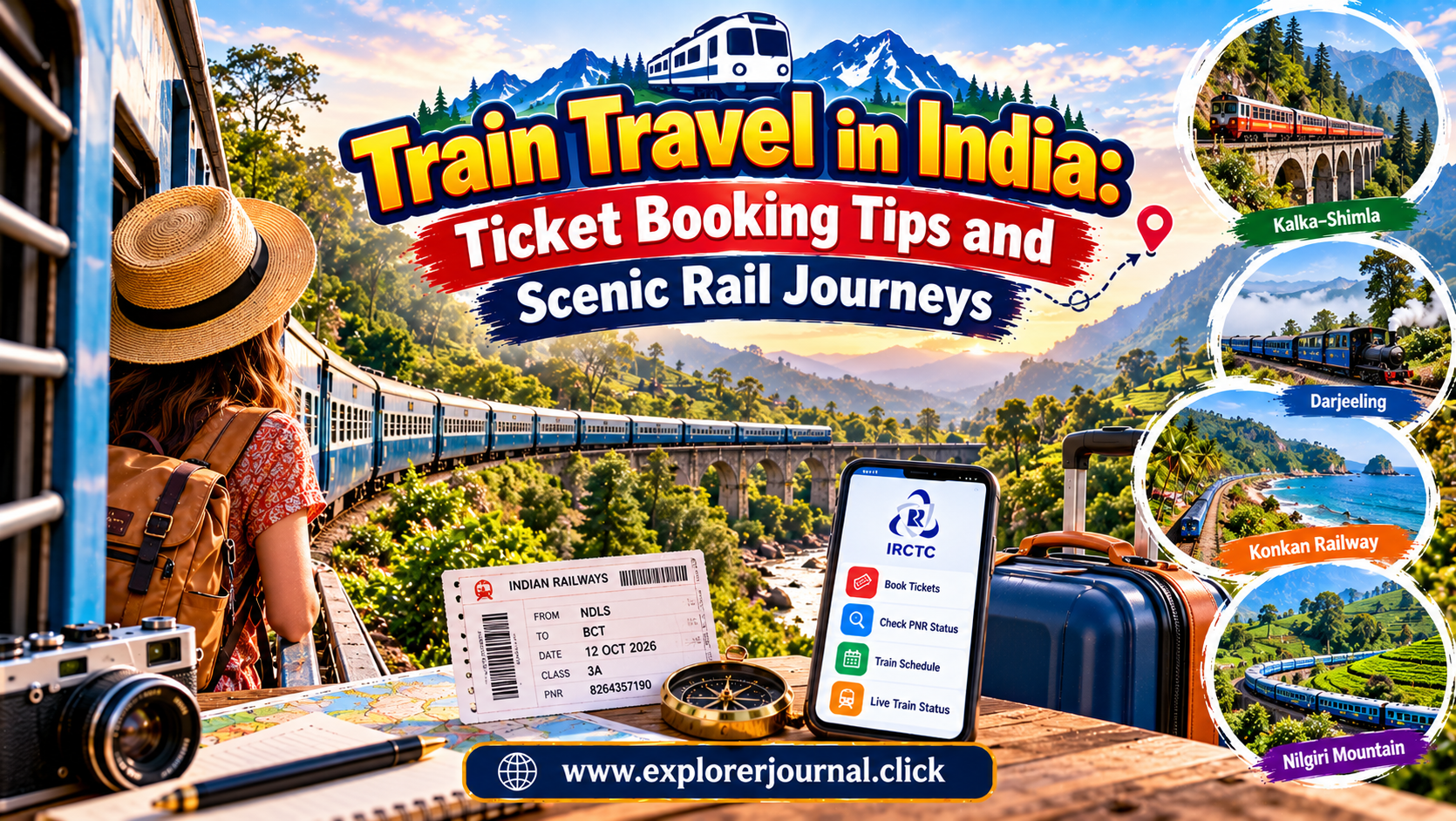
Scenic routes such as the Konkan Railway, Darjeeling Himalayan Railway, Kalka–Shimla Railway, and Nilgiri Mountain Railway demonstrate how rail travel can become an attraction in its own right. Each offers a different combination of landscapes, heritage, and engineering.
Plan reservations through reliable channels, verify current schedules, and allow flexibility for seasonal conditions or operational changes. With sensible preparation, train journeys can become an enjoyable part of exploring India, offering opportunities to appreciate the country’s diversity from the comfort of a railway carriage.