Introduction
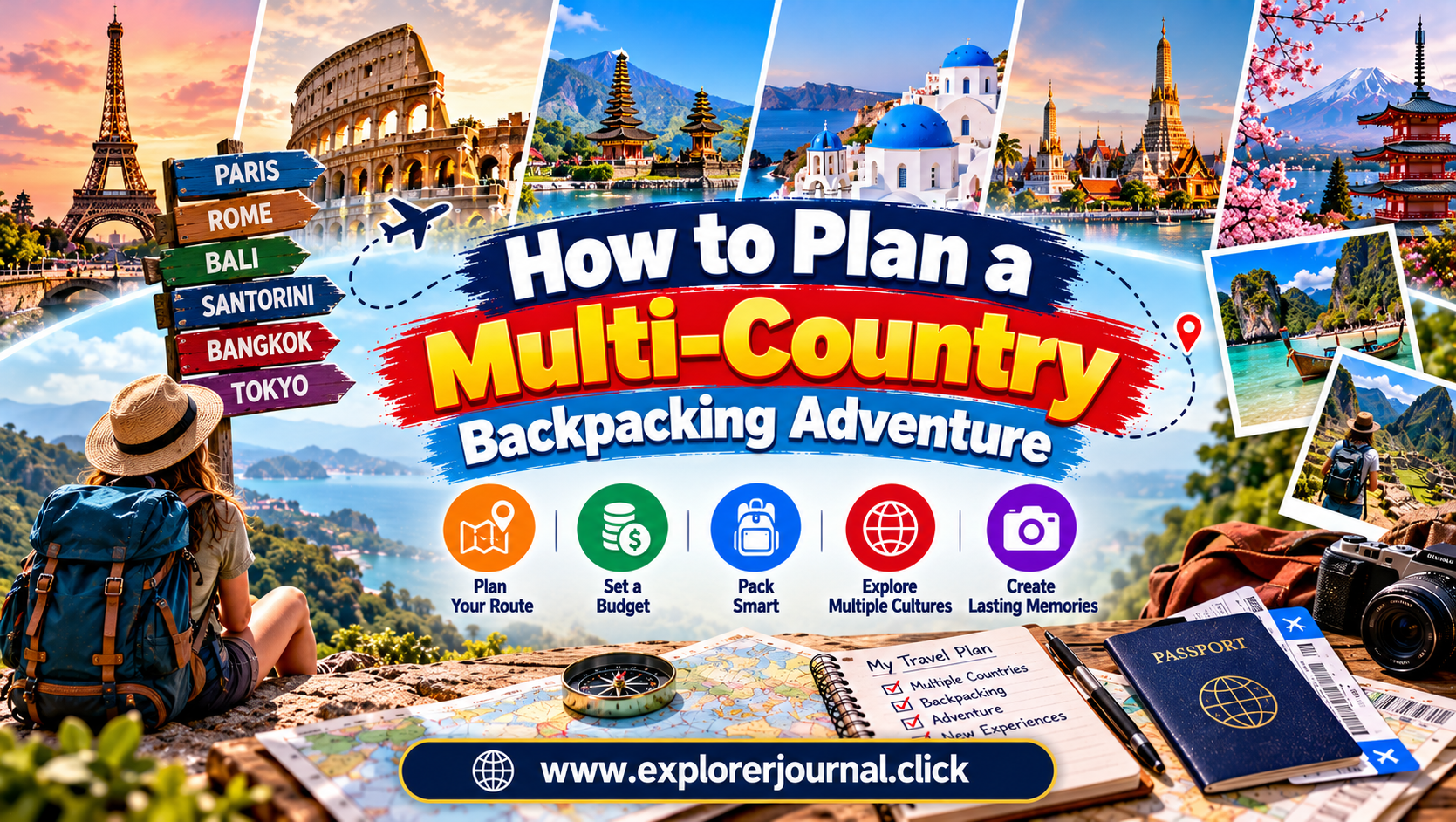
A multi-country backpacking adventure offers an exciting opportunity to explore different cultures, discover remarkable landscapes, meet new people, and experience several destinations within one journey. Unlike traditional holidays that focus on a single location, backpacking across multiple countries requires thoughtful planning, flexible schedules, and careful management of money, transportation, and accommodation.
Whether you dream of traveling through Southeast Asia, exploring European cities by train, discovering South American mountain regions, or combining several destinations across different continents, preparation can make your journey smoother and more rewarding. The challenge is balancing the freedom of spontaneous travel with the practical requirements of crossing international borders and moving between destinations.
A successful backpacking trip does not require an expensive itinerary or complicated arrangements. It requires realistic expectations, suitable equipment, reliable travel information, and an understanding of your priorities. This guide explains how to plan a multi-country backpacking adventure, from choosing destinations and setting a budget to arranging transportation, packing efficiently, and staying safe throughout the journey.
1. Choose Your Countries and Travel Route
The first step is deciding which countries you want to explore and how they connect geographically. Selecting destinations within the same region can reduce transportation costs and minimize time spent traveling between distant locations.
For example, backpackers exploring Southeast Asia might combine Thailand, Vietnam, Cambodia, and Laos. A European journey could connect Portugal, Spain, France, and Italy through trains and buses. In South America, travelers might consider Peru, Bolivia, and Chile, depending on their interests, available time, and entry requirements.
Begin by listing destinations that appeal to you because of their landscapes, culture, food, history, or outdoor activities. Then examine distances between them and identify practical travel connections.
Avoid including too many countries simply to increase the number of passport stamps. Spending several days exploring one destination can be more rewarding than rushing through multiple cities without understanding their character.
Consider the season, local climate, and travel conditions before finalizing the route. A geographically convenient itinerary may still be unsuitable if it coincides with severe weather or restricted transportation services.
2. Decide How Long Your Adventure Will Last
The duration of your backpacking adventure determines how many destinations you can realistically explore. A two-week trip requires a different approach from a journey lasting several months.
Start by identifying the total time available, including international travel days and any commitments you must meet before returning home. Estimate how long you would like to spend in each country and allow additional time for transportation, rest, and unexpected changes.
Remember that crossing borders can involve long journeys, airport transfers, immigration procedures, and waiting periods. Moving between cities frequently can consume more time than expected.
For a shorter trip, choose two or three countries with convenient connections. If you have several months available, you can include more destinations and spend longer discovering local communities.
Build flexibility into your schedule rather than booking every day in advance. Unexpected weather, new friendships, transportation disruptions, or particularly interesting places may encourage you to change your plans.
A realistic itinerary creates room for exploration without turning the entire adventure into a race against the calendar.
3. Establish a Practical Backpacking Budget
Budgeting is essential when traveling across several countries because expenses can vary significantly between destinations. Accommodation, food, transportation, activities, and exchange rates all influence how long your money will last.
Begin by estimating your major expenses, including international flights, visas, insurance, local transportation, and accommodation. Then calculate an approximate daily budget for meals, sightseeing, laundry, communication, and miscellaneous purchases.
Research typical costs in each country instead of assuming that neighboring destinations have similar prices. A city with expensive accommodation may require a different spending strategy from a destination where guesthouses and local meals are affordable.
Keep emergency funds separate from your everyday spending money. Unexpected medical expenses, missed connections, or additional accommodation nights can disrupt even a carefully prepared budget.
Track expenses throughout the journey using a budgeting application or simple spreadsheet. Reviewing spending regularly helps identify unnecessary costs before they become difficult to manage.
Finally, avoid planning around an unrealistically low daily allowance. A sustainable budget should cover essential needs while leaving room for occasional experiences that make the journey memorable.
4. Research Passports, Visas, and Border Requirements
International border requirements are among the most important considerations for a multi-country backpacking trip. Entry conditions depend on your nationality, destination, travel purpose, and intended length of stay.
Check official immigration websites or embassy information for every country on your route. Confirm whether you need a visa, electronic travel authorization, advance registration, or additional documentation.
Review passport validity requirements well before departure. Some destinations require a specified period of validity beyond arrival, while others may require blank passport pages.
Check whether your planned route involves transit through another country and whether separate transit permission is necessary. Do not assume that a valid visa for one destination automatically permits entry into neighboring countries.
Keep digital copies of your passport, visas, insurance documents, and important reservations in a secure location. Carry required originals and maintain access to essential information even when your phone has no internet connection.
Immigration rules can change, so verify important requirements again before departure and before entering each country.
5. Arrange Transportation Between Countries
Choosing suitable transportation helps control costs and determines how much time you spend exploring. Depending on the region, international travel may involve trains, buses, ferries, flights, or shared road transportation.
Trains can provide comfortable connections across parts of Europe and selected Asian regions. Long-distance buses may offer economical alternatives, while ferries connect islands and coastal destinations. Flights can save time when distances are substantial, although airport transfers and baggage charges should be included in the total cost.
Compare the complete journey rather than focusing only on the ticket price. A cheap flight may become less attractive after adding baggage, airport transportation, and overnight accommodation.
Check departure locations, arrival times, baggage rules, cancellation conditions, and border procedures before booking. Allow sufficient time between separate tickets because delays can cause missed connections.
For some routes, booking early offers more choices. For others, flexible arrangements may be preferable when schedules or travel conditions are uncertain.
Choose transportation according to your budget, available time, comfort requirements, and the experiences you want from the journey.
6. Book Accommodation Strategically
Accommodation choices influence both spending and the overall backpacking experience. Hostels, guesthouses, budget hotels, and shared apartments can suit different travel styles and comfort preferences.
Hostels often provide affordable beds and common areas where travelers can meet others and exchange practical advice. Guesthouses may offer a quieter environment, while private rooms can provide additional rest after long journeys.
Consider location as well as price. Accommodation near public transportation or within walking distance of major attractions may save money and reduce travel time.
Read recent reviews carefully, paying attention to cleanliness, security, noise, and the accuracy of property descriptions. Confirm check-in arrangements if you expect to arrive late.
You do not necessarily need to reserve every night before leaving home. Booking the first few nights in each new country can provide reassurance while preserving flexibility for later destinations.
However, reserve accommodation in advance during major festivals, popular holiday periods, and events when availability may be limited.
7. Pack Light and Choose Versatile Equipment
A backpacking trip becomes easier when you carry only what you genuinely need. Heavy luggage can make transfers difficult, especially when using crowded buses, climbing station stairs, or walking through unfamiliar neighborhoods.
Choose a backpack that fits comfortably and suits your body size. Pack versatile clothing that can be layered, mixed, and reused across different settings.
Essential items usually include comfortable walking shoes, weather-appropriate clothing, basic toiletries, necessary medication, travel documents, charging equipment, and a small first-aid kit.
Consider the climate of every destination on your route. A journey involving tropical beaches and cool mountain regions may require clothing that works across different temperatures.
Use packing cubes or small bags to separate clothing, electronics, and personal care items. Keep valuable belongings and essential documents accessible.
Avoid carrying specialized equipment that can be rented easily at your destination unless you need it for a specific reason. Before departure, weigh your backpack and check airline baggage restrictions.
8. Plan Activities Without Overloading Your Itinerary
A multi-country backpacking adventure offers countless possibilities, from historic landmarks and food markets to hiking trails, museums, and local festivals. Choosing activities carefully helps you experience each destination without exhausting yourself.
Begin by identifying the experiences that matter most to you. These might include exploring ancient architecture, learning local cooking techniques, visiting national parks, or discovering traditional neighborhoods.
Research admission requirements, opening hours, seasonal conditions, and advance booking rules. Popular attractions may require reservations, while outdoor activities can depend heavily on weather.
Balance organized sightseeing with unplanned exploration. Walking through a local market, relaxing in a public garden, or discovering a small neighborhood café can become a memorable part of the trip.
Avoid scheduling demanding activities immediately after overnight transportation. Allow time to sleep, eat, and adjust to the new environment.
Most importantly, accept that you cannot experience everything in every country. Choosing fewer activities and enjoying them properly often creates a more satisfying journey.
9. Protect Your Health and Travel Safely
Personal safety requires attention throughout a multi-country trip. Research local conditions before arriving, including transportation practices, common scams, healthcare availability, and relevant travel advisories.
Keep your belongings secure in crowded stations, markets, and tourist areas. Avoid displaying large amounts of cash or leaving phones and passports unattended.
Use reputable transportation providers and confirm vehicle details before entering taxis or ride-hailing services. When exploring unfamiliar neighborhoods, remain aware of your surroundings and plan how to return to your accommodation.
Consider travel insurance that covers suitable medical expenses, emergency transportation, and activities included in your itinerary. Review exclusions and benefit limits before purchasing a policy.
Carry necessary medication and check whether it is permitted in every country you plan to visit. Research recommended vaccinations and other health precautions with an appropriate healthcare professional.
Save local emergency numbers and embassy contacts. Share your general itinerary with someone you trust and update them when major plans change.
10. Manage Money Across Different Countries
Traveling through several countries may involve different currencies, payment systems, and banking fees. Preparing for these differences helps avoid unnecessary expenses and payment difficulties.
Check international transaction charges associated with your bank cards before departure. Consider carrying more than one payment method and storing them separately.
Keep a modest amount of local currency available for transportation, small purchases, and places that do not accept cards. Use reputable exchange providers and review conversion rates before completing transactions.
Avoid carrying all your money in one wallet. Secure backup funds separately and maintain a record of important bank contact details.
Use a budgeting application or spreadsheet to record spending in each currency. Converting expenses into your home currency periodically makes it easier to understand your overall financial position.
Before entering a new country, research ATM availability and payment practices. Some destinations rely heavily on cash, while others widely accept contactless payments.
11. Stay Connected and Navigate Efficiently
Reliable navigation and communication make a multi-country backpacking adventure easier to manage. A smartphone can provide maps, booking confirmations, translation tools, transportation schedules, and emergency contacts.
Research mobile connectivity options before departure. Depending on your destinations, international roaming, a regional SIM card, or an electronic SIM may be suitable.
Download offline maps and save accommodation addresses before traveling between cities. This is particularly useful when arriving late or visiting areas with limited mobile coverage.
Keep electronic copies of tickets and reservations accessible, but retain alternative records for essential travel information.
Use secure connections when accessing financial accounts, protect your phone with a screen lock, and be cautious with unexpected payment requests or unfamiliar links.
Do not rely entirely on technology. Learn important local phrases, understand basic directions, and keep written details of essential addresses when practical.
12. Respect Local Cultures and Travel Responsibly
A multi-country journey exposes travelers to different traditions, social expectations, and ways of life. Learning about local customs helps you interact respectfully and avoid misunderstandings.
Research clothing expectations, religious practices, photography restrictions, and appropriate behavior before visiting culturally significant places.
Learn a few greetings and polite expressions in each country’s language. Even simple efforts can make everyday interactions more welcoming.
Support local businesses when possible by eating at locally owned restaurants, purchasing authentic crafts, and choosing responsible tour operators.
Avoid activities that exploit wildlife, damage natural environments, or disrespect local communities. Follow marked trails, dispose of waste properly, and observe restrictions in protected areas.
Ask permission before photographing people when appropriate, particularly during private ceremonies or sensitive situations.
Responsible travel encourages meaningful cultural exchange while helping preserve the places and communities that make your adventure worthwhile.
Conclusion
Planning a multi-country backpacking adventure requires a balance of preparation, flexibility, and realistic expectations. Choosing a connected route, establishing a suitable budget, understanding visa requirements, and arranging practical transportation provide a strong foundation for your journey.
Light packing, carefully selected accommodation, thoughtful activities, and reliable safety precautions help make travel more comfortable. Managing money, maintaining communication, and respecting local cultures also contribute to a rewarding experience.
You do not need to organize every detail in advance or visit as many countries as possible. Focus on destinations that genuinely interest you, leave room for unexpected discoveries, and allow enough time to appreciate each place.
With sensible preparation and an open mind, a multi-country backpacking adventure can become an unforgettable opportunity to explore the world, develop independence, and create meaningful memories across borders.