Table of Contents
- Introduction
- Discover Italy Through Its Diverse Regions
- Northern Italy: Alpine Scenery, Lakes and Historic Cities
- Central Italy: Renaissance Art and Timeless Landscapes
- Southern Italy: Coastal Beauty and Ancient Traditions
- Famous Italian Dishes Every Traveller Should Try
- Historic Sites That Reveal Italy’s Past
- Best Time to Visit Italy
- Travel Tips for Exploring Italy
- Key Takeaways
- Frequently Asked Questions
Introduction
Italy brings together centuries of history, remarkable architecture, regional cooking and landscapes that change dramatically from one destination to another. You can admire Roman monuments in the morning, enjoy handmade pasta at a family-run restaurant in the afternoon and watch the sun set over a Mediterranean coastline in the evening.
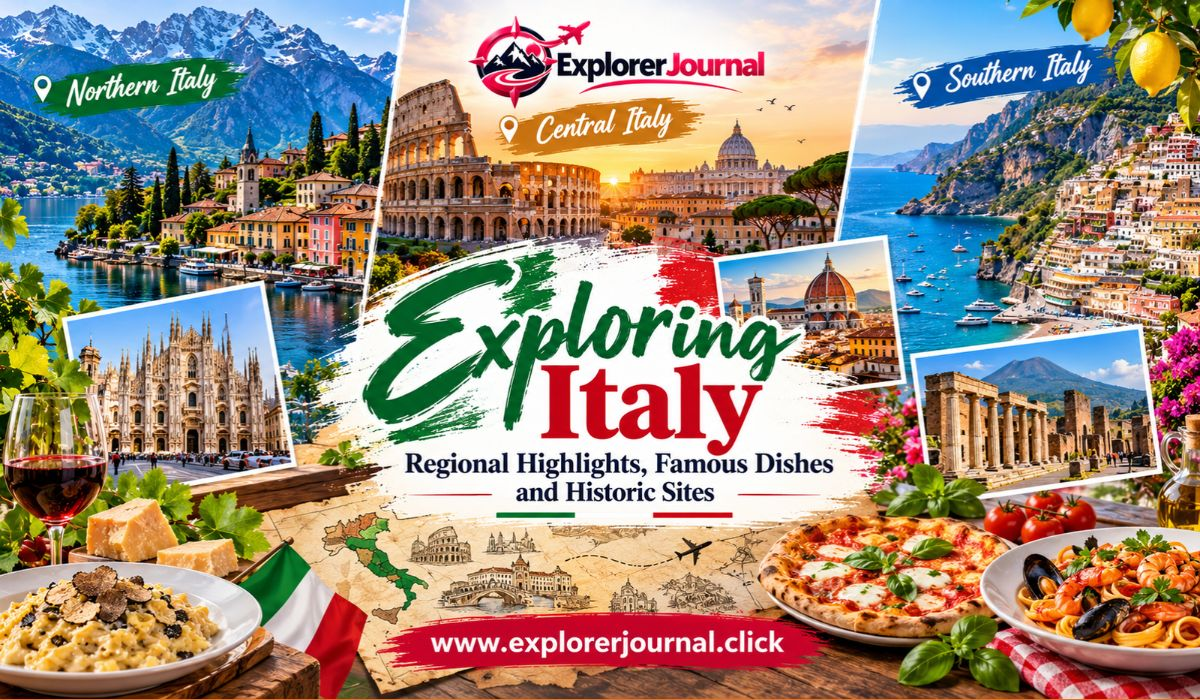
However, Italy is much more than a collection of famous landmarks. Each region has its own identity, shaped by local traditions, historical influences, geography and agricultural products. Northern Italy offers mountain scenery and elegant lakeside towns, while central Italy attracts visitors with Renaissance art and medieval villages. In the south, ancient settlements, dramatic coastlines and distinctive culinary traditions create a different atmosphere.
For travellers, this variety makes planning an Italian holiday both exciting and challenging. With so many places to see, choosing destinations that complement one another is essential.
This guide to exploring Italy covers regional highlights, famous dishes and historic sites to help you plan a rewarding journey through one of Europe’s most fascinating countries.
1. Discover Italy Through Its Diverse Regions
Italy stretches from the Alps in the north to the Mediterranean islands and southern coastline. Its geography influences everything from local architecture to traditional recipes, making regional exploration an important part of the travel experience.
The country is divided into 20 administrative regions, each with its own attractions and specialities. Some are famous for art and architecture, while others are known for wine production, mountain adventures, seafood or rural landscapes.
Northern Italy is a good choice for travellers interested in alpine scenery, fashionable cities and lakes. Central Italy appeals to visitors who enjoy historical towns, museums and countryside drives. Southern Italy offers ancient archaeological sites, coastal destinations and food traditions that often rely on seasonal vegetables, olive oil and seafood.
Rather than trying to cover the entire country in one visit, consider focusing on two or three regions. This approach gives you more time to explore local neighbourhoods, sample regional dishes and discover places beyond the busiest tourist attractions.
2. Northern Italy: Alpine Scenery, Lakes and Historic Cities
Northern Italy combines natural beauty with some of the country’s most influential cultural and commercial centres. From snow-covered peaks to elegant piazzas, this region provides a varied travel experience.
Milan: Fashion, Art and Architecture
Milan is widely associated with fashion and design, but its cultural attractions deserve equal attention. The magnificent Milan Cathedral, known as the Duomo di Milano, dominates the central square with its intricate Gothic architecture.
Art lovers can visit Santa Maria delle Grazie to see Leonardo da Vinci’s famous mural, The Last Supper. Reservations are essential and should be arranged well in advance because visitor numbers are limited.
Milan also offers excellent opportunities to explore Italian aperitivo culture. In the early evening, cafés and bars serve drinks alongside small snacks, creating a relaxed introduction to local social life.
Spend time walking through the Brera district or visiting the city’s galleries if you want to experience more than its luxury shopping streets.
Venice: Canals and Historic Charm
Venice offers an extraordinary setting built across a network of islands connected by bridges and waterways. Its narrow lanes, historic buildings and canals create an atmosphere unlike that of any other Italian city.
St. Mark’s Basilica and the Doge’s Palace are among the most recognisable landmarks. A walk around St. Mark’s Square introduces visitors to the city’s architectural heritage, while a vaporetto ride along the Grand Canal provides views of historic palaces and waterfront buildings.
Venetian cuisine is another reason to visit. Traditional dishes often feature seafood, rice and local vegetables. Cicchetti, small savoury bites served in local bars, provide an enjoyable way to sample different flavours.
Venice can become crowded during busy periods. Exploring early in the morning and visiting residential neighbourhoods away from the main tourist routes can create a more peaceful experience.
Lake Como: Relaxation Beside the Water
Lake Como is famous for its deep blue water, green hills and attractive lakeside settlements. Bellagio, Varenna and Menaggio are popular bases for enjoying the scenery.
Visitors can take ferries between towns, walk along waterfront promenades and explore historic villas with landscaped gardens. The area is particularly appealing to travellers who want a slower pace after visiting major cities.
Although Lake Como is often associated with luxury holidays, visitors can enjoy its scenery through public ferry journeys, lakeside walks and smaller local restaurants.
The Dolomites: Mountains and Outdoor Adventures
The Dolomites offer a completely different side of northern Italy. Their dramatic rock formations, alpine meadows and mountain villages attract hikers, photographers and winter sports enthusiasts.
During warmer months, marked trails provide opportunities for walks ranging from easy scenic routes to challenging mountain hikes. In winter, several areas become popular skiing destinations.
Weather conditions can change quickly at higher elevations. Check trail information before setting out, carry appropriate equipment and follow local safety advice.
3. Central Italy: Renaissance Art and Timeless Landscapes
Central Italy is one of the country’s richest areas for artistic heritage, medieval architecture and traditional food. Its historic cities and rolling countryside are ideal for travellers who want to connect Italy’s past with its present-day culture.
Florence: The Birthplace of the Renaissance
Florence played a central role in the Renaissance, a period that transformed European art, architecture and intellectual life. Today, its museums, churches and public squares preserve that remarkable legacy.
The Cathedral of Santa Maria del Fiore, with its distinctive dome designed by Filippo Brunelleschi, is one of the city’s defining landmarks. The Uffizi Gallery houses important works by Renaissance artists, while the Ponte Vecchio offers a memorable view across the Arno River.
Florence also has a strong food identity. Visitors can sample Tuscan soups, seasonal vegetable dishes and the celebrated bistecca alla fiorentina, a traditional Florentine steak.
Allow enough time to explore the streets beyond the main attractions. Local markets, artisan workshops and small cafés reveal a more everyday side of the city.
Rome: Ancient History Meets Modern Life
Rome is one of the most rewarding destinations for history enthusiasts because ancient ruins, religious landmarks and contemporary neighbourhoods coexist throughout the city.
The Colosseum remains one of the most famous structures from the Roman Empire. Nearby, the Roman Forum and Palatine Hill provide insight into the political, social and religious life of ancient Rome.
The Pantheon is another remarkable landmark, admired for its monumental dome and architectural design. Visitors should also explore Piazza Navona, the Trevi Fountain and the city’s historic streets.
Vatican City, an independent state surrounded by Rome, contains St. Peter’s Basilica and the Vatican Museums. The Sistine Chapel, with its celebrated ceiling painted by Michelangelo, is a major highlight.
Rome’s culinary traditions include carbonara, cacio e pepe and amatriciana. Each dish has its own preparation methods, and trying these recipes in a traditional Roman trattoria can be an important part of the experience.
Tuscany: Countryside, Wine and Medieval Towns
Tuscany is known for rolling hills, vineyards, olive groves and hilltop settlements. The countryside offers an appealing contrast to Florence’s busy streets.
Siena is famous for its medieval centre and Piazza del Campo, while San Gimignano attracts visitors with its historic towers. Smaller towns throughout the region offer local markets, stone streets and traditional restaurants.
Wine enthusiasts can explore areas associated with Chianti and other Tuscan wines. Many producers offer tastings by reservation, allowing visitors to learn about local grapes and winemaking traditions.
A countryside itinerary works best when you allow enough time between stops. Public transport connects many towns, but a rental car can provide additional flexibility for exploring rural areas.
4. Southern Italy: Coastal Beauty and Ancient Traditions
Southern Italy combines archaeological treasures, colourful coastal settlements and strong regional food traditions. Its destinations often offer a more relaxed pace, although popular resort areas can become busy during summer.
Naples: The Home of Traditional Pizza
Naples is widely recognised as the birthplace of modern pizza. Its culinary identity extends beyond this famous dish to include seafood, fried snacks, pastries and traditional pasta recipes.
The historic centre contains churches, narrow streets and workshops that preserve long-standing local traditions. Visitors can also explore the National Archaeological Museum, which displays important objects from the ancient Roman world.
Naples provides convenient access to Pompeii, Mount Vesuvius and parts of the Amalfi Coast. However, each destination deserves sufficient time, so avoid attempting too many day trips during a short stay.
The Amalfi Coast: Clifftop Villages and Mediterranean Views
The Amalfi Coast is known for colourful settlements built along steep hillsides overlooking the sea. Positano, Amalfi and Ravello each offer a different perspective on the coastline.
Positano is famous for its cascading buildings and beach views. Amalfi has a historic cathedral and maritime heritage, while Ravello attracts visitors with its gardens and elevated viewpoints.
Local cooking frequently features lemons, seafood, fresh vegetables and pasta. Small restaurants overlooking the coastline provide an inviting setting for a leisurely meal.
Roads can be narrow and congested, particularly in summer. Consider using ferries or local buses when available, and check seasonal schedules before arranging day trips.
Sicily: Ancient Civilisations and Distinctive Cuisine
Sicily, the largest island in the Mediterranean Sea, has a rich cultural history influenced by Greek, Roman, Arab and Norman periods. This combination is visible in its architecture, archaeological remains and food traditions.
Palermo offers lively markets, historic churches and a varied street-food scene. Catania provides access to Mount Etna, one of Europe’s most active volcanoes, while Syracuse contains important archaeological and historic areas.
Sicilian specialities include arancini, cannoli and pasta alla Norma. Seafood, citrus fruits, pistachios and locally grown produce also play important roles in the island’s cuisine.
Because Sicily is relatively large, choose a base according to your priorities rather than trying to see the entire island in a few days.
5. Famous Italian Dishes Every Traveller Should Try
Italian cuisine is built around regional ingredients, seasonal cooking and recipes passed between generations. Although pasta and pizza are internationally famous, local dishes provide a more complete picture of the country’s food culture.
Pizza Napoletana
Traditional Neapolitan pizza is known for its soft, airy crust and simple toppings. The classic Margherita combines tomato, mozzarella, basil and olive oil.
For an authentic experience, try a pizzeria in Naples that follows traditional preparation methods.
Pasta Carbonara
Carbonara is associated with Rome and is traditionally made using pasta, eggs, Pecorino Romano cheese, cured pork and black pepper. Authentic versions generally do not require cream.
The sauce relies on carefully combining the ingredients to create a smooth coating for the pasta.
Risotto alla Milanese
This northern Italian speciality features rice cooked slowly in broth and flavoured with saffron. The result is creamy in texture, with a distinctive golden colour.
It is commonly associated with Milan and demonstrates how a small number of ingredients can create a memorable regional dish.
Lasagne alla Bolognese
Lasagne is prepared in different ways across Italy, but the Bolognese version is associated with layers of pasta, meat-based ragù, béchamel and cheese.
Bologna and the wider Emilia-Romagna region are also famous for fresh pasta and other traditional dishes.
Regional Desserts
Italian desserts deserve attention as well. Tiramisu combines coffee-soaked biscuits with a creamy mascarpone mixture, while cannoli feature crisp pastry shells filled with sweet ricotta.
Gelato is another favourite, especially during warmer months. Look for shops that emphasise fresh ingredients and balanced flavours rather than relying on overly bright displays.
6. Historic Sites That Reveal Italy’s Past
Italy’s historic landmarks represent thousands of years of cultural development, from ancient civilisations to medieval city-states and Renaissance courts.
The Colosseum in Rome reveals the scale of public entertainment during the Roman Empire. Pompeii, buried following the eruption of Mount Vesuvius in AD 79, preserves streets, buildings and artworks that offer a remarkable view of ancient urban life.
In Pisa, the Leaning Tower forms part of a historic cathedral complex known for its distinctive architecture. Florence’s historic centre preserves important Renaissance buildings and artworks, while Venice’s palaces reflect the influence of its former maritime republic.
The ancient Greek temples of Paestum in southern Italy demonstrate the importance of Greek settlements in the region. Meanwhile, the Trulli of Alberobello in Puglia are known for their distinctive stone buildings with conical roofs.
When visiting these sites, reserve tickets in advance where required and check official access information. Guided tours can help explain architectural details and historical events that might otherwise be easy to overlook.
7. Best Time to Visit Italy
Spring, from April to June, is an appealing time to explore many Italian destinations. Temperatures are often comfortable for walking, gardens begin to bloom and outdoor cafés become lively.
September and October can also be excellent months for sightseeing, particularly if you prefer milder weather than the height of summer. These months can be suitable for countryside visits and food-focused travel, although local conditions vary.
July and August bring long days and beach weather, but popular cities can become extremely hot and crowded. Accommodation prices may also increase in major tourist areas.
Winter offers opportunities to explore museums and historic cities with fewer visitors in some locations. However, mountain destinations may experience snow, and opening hours or transport services can change seasonally.
Choose your travel dates according to your interests. For mountain hiking, coastal relaxation and city sightseeing, the ideal conditions may differ.
8. Travel Tips for Exploring Italy
Plan transport carefully. High-speed trains connect several major cities, including Rome, Florence, Milan and Naples. Regional trains and buses serve many smaller destinations, but rural transport may require additional planning.
Book major attractions early. Popular museums, archaeological sites and guided tours can sell out. Confirm ticket policies and official opening hours before travelling.
Learn a few Italian phrases. Greetings such as buongiorno (good morning), per favore (please) and grazie (thank you) can make everyday interactions easier.
Respect local dining customs. Meal times vary, and many restaurants follow specific lunch and dinner hours. Check opening times before arriving, especially in smaller towns.
Pack comfortable shoes. Historic centres often have cobbled streets, stairs and uneven surfaces. Comfortable footwear makes long sightseeing days easier.
Keep an eye on your belongings. Crowded stations, markets and tourist attractions require ordinary precautions against pickpocketing. Use reputable transport providers and keep important documents secure.
Leave room for flexibility. Some of Italy’s most memorable experiences happen in neighbourhood cafés, small village squares and local food markets. A balanced itinerary should leave time for these discoveries.
Key Takeaways
- Italy’s northern, central and southern regions offer distinct landscapes, cultures and culinary traditions.
- Milan, Venice, Florence, Rome, Naples and Sicily each provide different reasons to visit.
- Regional food specialities include Neapolitan pizza, Roman carbonara, Milanese risotto and Sicilian cannoli.
- Historic sites such as the Colosseum, Pompeii and Florence’s Renaissance landmarks reveal different periods of Italian history.
- Spring and autumn are popular seasons for comfortable sightseeing, while summer suits many coastal holidays.
- Advance reservations, practical transport planning and respectful local behaviour can improve your trip.
Frequently Asked Questions
1. How many days are enough to explore Italy?
Seven to ten days can cover a few major destinations, while two weeks or longer allows a more relaxed journey through several regions.
2. Which Italian regions are best for first-time visitors?
Lazio, Tuscany, Veneto and Lombardy are popular starting points because they include famous cities, historic landmarks, museums and convenient transport connections.
3. What food should you try on your first trip to Italy?
Try Neapolitan pizza, Roman pasta dishes, regional risotto, fresh pasta, gelato and local desserts to experience the variety of Italian cuisine.
4. What is the best month to visit Italy?
May, June, September and early October are popular choices for sightseeing, although the best month depends on your destinations, budget and preferred activities.
5. Is it possible to travel around Italy by train?
Yes, trains connect many major cities and numerous smaller towns, although buses, ferries or rental cars may be more practical for certain rural and coastal destinations.
Exploring Italy is an opportunity to experience far more than its famous monuments and postcard-worthy landscapes. Every region has its own stories, flavours and traditions, from the canals of Venice and the Renaissance streets of Florence to the ancient ruins of Rome and the sunlit coastline of Sicily.
Food provides another way to understand the country. A plate of handmade pasta, a traditional regional dessert or a simple meal prepared with seasonal ingredients can reveal the character of the place where it is served.
The most rewarding Italian journey balances well-known attractions with time for local discoveries. Choose destinations that reflect your interests, plan transport realistically and leave space to enjoy the atmosphere of each place.
Whether you are interested in history, architecture, regional cooking or scenic landscapes, Italy offers countless opportunities to create a meaningful and memorable travel experience.
Switzerland Travel Guide to Alpine Villages, Lakes and Scenic Railways