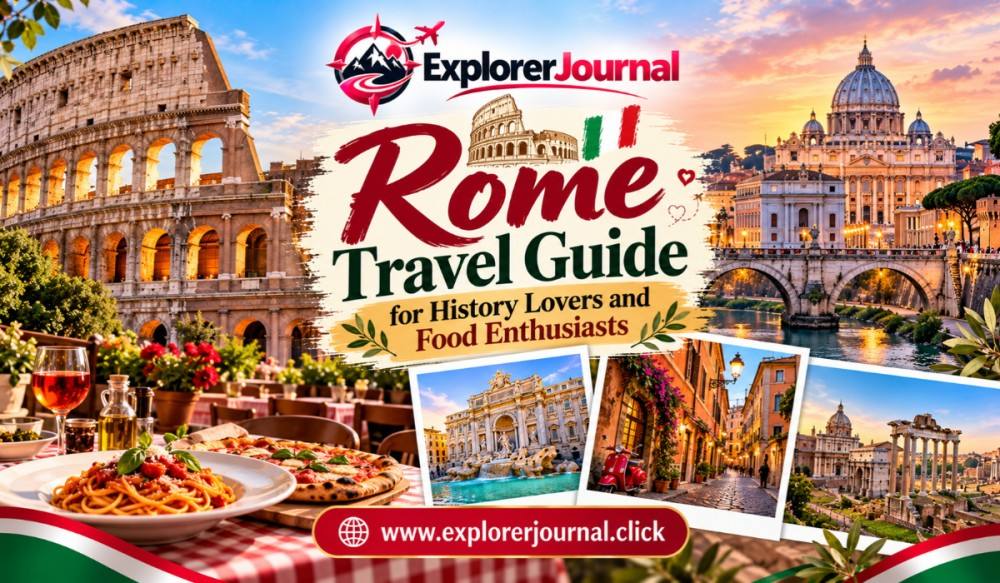
Rome is one of the most captivating travel destinations in Europe, offering an extraordinary combination of ancient monuments, artistic treasures, historic streets, and traditional Italian cuisine. Known as the Eternal City, Rome has influenced architecture, politics, religion, and culture for thousands of years. Its remarkable landmarks tell stories of the Roman Empire, while its neighborhood restaurants, lively markets, and traditional cafés reveal the everyday pleasures of Italian life.
For history lovers, Rome provides opportunities to explore ancient ruins, impressive churches, archaeological sites, and world-famous museums. For food enthusiasts, the city is equally rewarding, with classic pasta dishes, wood-fired pizza, fresh ingredients, traditional desserts, and regional specialties available throughout its neighborhoods.
Planning a visit can feel overwhelming because Rome has so many attractions. This travel guide explores the city’s most important historical landmarks, memorable food experiences, accommodation areas, transportation options, and practical travel tips to help you organize an enjoyable trip.
Why Rome Should Be on Your Travel List
Rome offers a unique opportunity to experience different historical periods within a relatively compact urban area. Ancient Roman structures stand beside Renaissance palaces, Baroque fountains, medieval churches, and modern streets. Walking through the city often feels like moving between chapters of European history.
The Italian capital is also a paradise for travelers who enjoy food. Traditional restaurants serve recipes passed down through generations, while neighborhood bakeries and gelaterias offer simple treats throughout the day. Local markets provide opportunities to discover seasonal produce, cheeses, olive oil, and other Italian ingredients.
Beyond its famous attractions, Rome rewards visitors who explore smaller streets, public squares, and residential neighborhoods. Sitting at an outdoor café or enjoying an evening walk can be just as memorable as visiting a major monument.
Top Historical Attractions in Rome
1. The Colosseum
The Colosseum is one of the most recognizable landmarks in the world and an essential stop for anyone interested in ancient history. Completed in the first century CE, this enormous amphitheater hosted public spectacles, including gladiatorial contests and other organized events.
Its surviving arches, seating levels, and underground structures reveal the engineering abilities of ancient Roman builders. Visitors can learn how the arena operated, how crowds entered the building, and how public entertainment formed part of Roman society.
A guided tour can provide additional context about the monument’s construction and historical significance. Booking tickets in advance is advisable, particularly during busy travel periods, and access to certain areas may require separate reservations.
Allow enough time to appreciate the exterior as well as the interior. The surrounding archaeological landscape also offers excellent opportunities for photography.
2. Roman Forum and Palatine Hill
The Roman Forum was the center of public, political, commercial, and religious life in ancient Rome. Today, its archaeological remains include temples, basilicas, pathways, and monumental structures that help visitors understand how the ancient city developed.
Walking through the Forum reveals the scale and complexity of Roman public life. Informational displays and guided tours can explain the functions of individual ruins and the people associated with them.
Nearby Palatine Hill is traditionally connected with the earliest stories of Rome’s foundation. It later became an important location for imperial residences and offers impressive views over the Forum and surrounding archaeological areas.
Combining these attractions with the Colosseum creates a rewarding historical itinerary. Wear comfortable shoes because the archaeological grounds contain uneven surfaces and considerable walking distances.
3. The Pantheon
The Pantheon is one of the best-preserved monuments from ancient Rome. Its monumental entrance and impressive domed interior demonstrate the sophistication of Roman architecture.
The building is particularly famous for its large central opening, known as the oculus, which allows natural light to enter the interior. Its engineering continues to attract architects, historians, and curious visitors.
Originally associated with ancient Roman religion, the Pantheon was later converted into a Christian church. This continued use helped preserve the structure over the centuries.
The monument is located near lively public squares and narrow streets filled with cafés, restaurants, and small shops. Visitors should check current entry arrangements and any admission requirements before planning their visit.
4. Vatican Museums and St. Peter’s Basilica
Although Vatican City is a separate sovereign state surrounded by Rome, its cultural attractions are an essential part of many visits to the Italian capital.
The Vatican Museums contain extensive collections of paintings, sculptures, historical objects, and decorative art. One of the best-known highlights is the Sistine Chapel, celebrated for Michelangelo’s extraordinary ceiling frescoes and The Last Judgment.
St. Peter’s Basilica is another major attraction, featuring monumental architecture, artistic treasures, and an impressive dome. Visitors interested in religious history and Renaissance art can spend several hours exploring this area.
Because these attractions are extremely popular, advance booking is often helpful. Visitors should dress respectfully and follow photography restrictions, especially inside the Sistine Chapel and religious spaces.
5. Trevi Fountain
The Trevi Fountain is one of Rome’s most famous Baroque landmarks. Its elaborate sculptures, dramatic water features, and architectural setting make it a favorite destination for photographers.
The fountain is traditionally associated with the custom of tossing a coin into the water while making a wish. Visitors should follow current local rules concerning access, crowd management, and the proper use of the surrounding public space.
The area can become extremely busy, especially during peak sightseeing hours. Visiting early in the morning may provide a more relaxed experience.
After admiring the fountain, explore the surrounding streets for cafés, gelaterias, and small restaurants. This part of Rome is particularly convenient for combining sightseeing with a casual meal.
6. Piazza Navona
Piazza Navona is one of Rome’s most beautiful public squares, known for its Baroque architecture, outdoor cafés, and impressive fountains. Its layout follows the shape of an ancient Roman stadium that once occupied the site.
The Fountain of the Four Rivers, designed by Gian Lorenzo Bernini, is the square’s most famous feature. Visitors can admire the surrounding buildings, observe street performers when present, and enjoy the atmosphere of one of the city’s historic gathering places.
The square is particularly attractive in the late afternoon, when people gather at nearby cafés and restaurants. However, establishments directly beside major tourist landmarks may charge more than restaurants on neighboring streets.
A short walk around the surrounding lanes often reveals quieter places to stop for coffee or a snack.
Best Neighborhoods for Exploring Rome
Trastevere: Historic Streets and Local Atmosphere
Trastevere is known for its narrow cobblestone streets, ivy-covered buildings, small squares, and lively dining scene. It offers a charming environment for visitors who want to explore Rome beyond its largest monuments.
The neighborhood is particularly popular in the evening, when restaurants fill with diners and people gather in outdoor spaces. Visitors can discover traditional trattorias, independent shops, and historic churches while walking through the district.
Trastevere is an excellent place to experience Roman food culture, although popular restaurants may require reservations. Exploring a few streets away from the busiest squares can reveal quieter dining options.
Monti: Independent Shops and Cafés
Monti is a historic neighborhood located near the Colosseum. It combines traditional streets with independent boutiques, vintage shops, cafés, and restaurants.
The area is well suited to travelers who want to combine historical sightseeing with shopping and relaxed dining. Small businesses and neighborhood cafés give Monti a distinctive character compared with the city’s more formal commercial districts.
Its central location also makes it convenient for exploring ancient Rome on foot.
Campo de’ Fiori: Markets and Food Culture
Campo de’ Fiori is a lively square known for its market atmosphere and surrounding restaurants. Depending on the day and time, visitors may find fresh produce, flowers, herbs, and other local products.
The surrounding streets contain bakeries, delicatessens, cafés, and food shops. Travelers can browse ingredients associated with Italian cooking and discover convenient options for a quick meal.
Markets are particularly useful for observing everyday shopping traditions. Check local opening hours and remember that vendors may have different schedules throughout the week.
Traditional Roman Food Every Traveler Should Try
Rome’s cuisine is built around recognizable ingredients, seasonal produce, and recipes that emphasize flavor without unnecessary complexity. Food enthusiasts should try several local specialties during their visit.
1. Cacio e Pepe
Cacio e pepe is one of Rome’s best-known pasta dishes. It combines pasta, Pecorino Romano cheese, and black pepper to create a creamy texture without relying on cream.
The recipe appears simple, but preparing the sauce properly requires attention to temperature and technique. Many traditional restaurants serve it as a central feature of Roman cuisine.
For visitors who enjoy pasta, it is an excellent introduction to the city’s culinary traditions.
2. Carbonara
Roman carbonara is traditionally prepared with pasta, eggs, Pecorino Romano, guanciale, and black pepper. The sauce obtains its creamy consistency from the combination of eggs, cheese, and pasta water rather than cream.
Recipes can vary outside Italy, making it interesting to try a version prepared according to Roman tradition.
Look for restaurants that prepare pasta fresh to order and clearly describe their ingredients. Carbonara is a filling dish and works well as a main course during a busy sightseeing day.
3. Amatriciana
Amatriciana is another classic pasta preparation associated with the Lazio region. Its traditional ingredients include tomato, guanciale, Pecorino Romano, and pasta.
The sauce offers a balance of savory, salty, and slightly tangy flavors. It is commonly served with pasta shapes such as bucatini or rigatoni, depending on the restaurant.
Trying several regional pasta dishes allows visitors to appreciate how a small number of ingredients can produce distinctive results.
4. Roman-Style Pizza
Pizza is available throughout Rome, but the city offers several styles worth exploring. Roman-style thin-crust pizza is often crisp and relatively light, while pizza al taglio is baked in rectangular trays and sold by the slice or by weight.
Pizza al taglio is particularly convenient for travelers who want an affordable lunch between attractions. Toppings may include vegetables, cheeses, cured meats, and seasonal ingredients.
Visit a busy bakery or pizzeria to discover different combinations and enjoy a quick meal without committing to a long restaurant visit.
5. Supplì
Supplì are traditional Roman snacks made from rice, usually shaped into small portions, coated in breadcrumbs, and fried. Many versions contain tomato-seasoned rice and mozzarella.
They are commonly found in takeaway shops, pizzerias, and casual food establishments. Their portable size makes them an excellent option for a quick snack.
Travelers can sample supplì alongside pizza or other local street-food dishes.
6. Gelato and Italian Coffee
Gelato is a favorite treat for visitors exploring Rome, especially during warmer months. Traditional gelaterias offer flavors such as pistachio, hazelnut, chocolate, fruit, and seasonal specialties.
For a better chance of finding carefully prepared gelato, look for shops where flavors are stored in covered containers or presented without excessive artificial-looking decoration. These are useful clues, although they do not guarantee quality.
Coffee is another important part of Roman daily life. Espresso is commonly enjoyed at a café counter, while cappuccino is particularly popular in the morning.
Taking a short coffee break provides an opportunity to rest and experience the city’s everyday rhythm.
Where to Stay in Rome
Choosing accommodation near convenient transportation and your preferred attractions can save time during your trip.
Historic center: Staying around the Pantheon, Piazza Navona, or Trevi Fountain puts many central attractions within walking distance. This area is convenient for first-time visitors, but prices can be relatively high.
Monti: This neighborhood offers easy access to the Colosseum and Roman Forum, along with cafés, restaurants, and independent shops. It suits travelers who enjoy a central location with a neighborhood atmosphere.
Trastevere: Travelers interested in traditional restaurants, evening walks, and lively streets may enjoy staying in Trastevere. Check transport connections and nighttime noise levels before booking.
Near Termini Station: Accommodation around Roma Termini can be practical for visitors arriving by train or planning excursions outside the city. Compare individual streets, hotel reviews, and walking routes to choose a suitable location.
Before booking, review cancellation policies, room facilities, transport access, and any applicable local accommodation taxes. A slightly less central hotel near a Metro station may provide better value than a property beside a major monument.
How to Get Around Rome
Rome can be explored through a combination of walking, buses, Metro services, trams, and taxis.
Walking is particularly rewarding in the historic center because many landmarks are relatively close together. However, cobblestones, uneven pavement, and long distances can make comfortable shoes essential.
The Metro is useful for reaching major areas such as the Colosseum and Vatican surroundings, although it does not serve every historic street directly. Buses and trams can fill the gaps, but traffic may affect journey times.
Check current ticket options, fares, and validation requirements before using public transportation. Official taxi ranks and reputable ride services are useful when traveling with luggage or late in the evening.
Planning attractions by neighborhood is one of the easiest ways to reduce unnecessary journeys.
Best Time to Visit Rome
Spring and autumn are often excellent seasons for exploring Rome. April, May, September, and October can offer comfortable conditions for walking between historical landmarks, although weather varies from year to year.
Summer brings longer daylight hours but can also mean high temperatures, crowded attractions, and increased accommodation prices. Travelers should schedule outdoor sightseeing earlier in the morning and take breaks during the hottest part of the day.
Winter can be cooler and wetter, but museums, churches, restaurants, and indoor cultural attractions remain appealing options. Major holidays may affect opening hours and visitor numbers.
Book popular attractions ahead of time when possible, especially if your trip takes place during busy travel periods.
Practical Tips for History Lovers and Food Enthusiasts
Research opening schedules before visiting major attractions, because museums, churches, and archaeological sites may close on specific days or have special access rules.
Reserve tickets for the Colosseum and Vatican Museums early if they are essential to your itinerary. Carry identification where required and follow instructions at religious sites.
For dining, explore restaurants beyond the immediate surroundings of major landmarks. Look for clear menus, transparent prices, and dishes that reflect Roman culinary traditions. Making reservations for popular dinner spots can help avoid long waits.
Learn a few Italian expressions, such as buongiorno for good morning and grazie for thank you. These small gestures can make everyday interactions more pleasant.
Finally, leave room for spontaneous discoveries. A quiet church, a neighborhood bakery, or a small family-run restaurant can become a highlight of your visit.
Rome is an exceptional destination for travelers who want to combine historical exploration with memorable food experiences. From the Colosseum and Roman Forum to the Pantheon and Vatican Museums, the city offers an extraordinary journey through ancient civilization and European artistic heritage.
Its neighborhoods add another dimension to the experience, with Trastevere’s charming streets, Monti’s independent shops, and Campo de’ Fiori’s market atmosphere providing opportunities to discover local life.
Food enthusiasts can enjoy traditional pasta dishes, Roman-style pizza, supplì, gelato, and Italian coffee throughout the city. By choosing convenient accommodation, planning sightseeing routes, and allowing time for relaxed meals, visitors can experience Rome without rushing between attractions.
Whether you are visiting for a weekend or planning a longer Italian holiday, Rome offers a remarkable blend of history, culture, architecture, and cuisine that makes every journey memorable.